The AI-Native SDLC: Redefining Agile for the Agentic Era (2026)
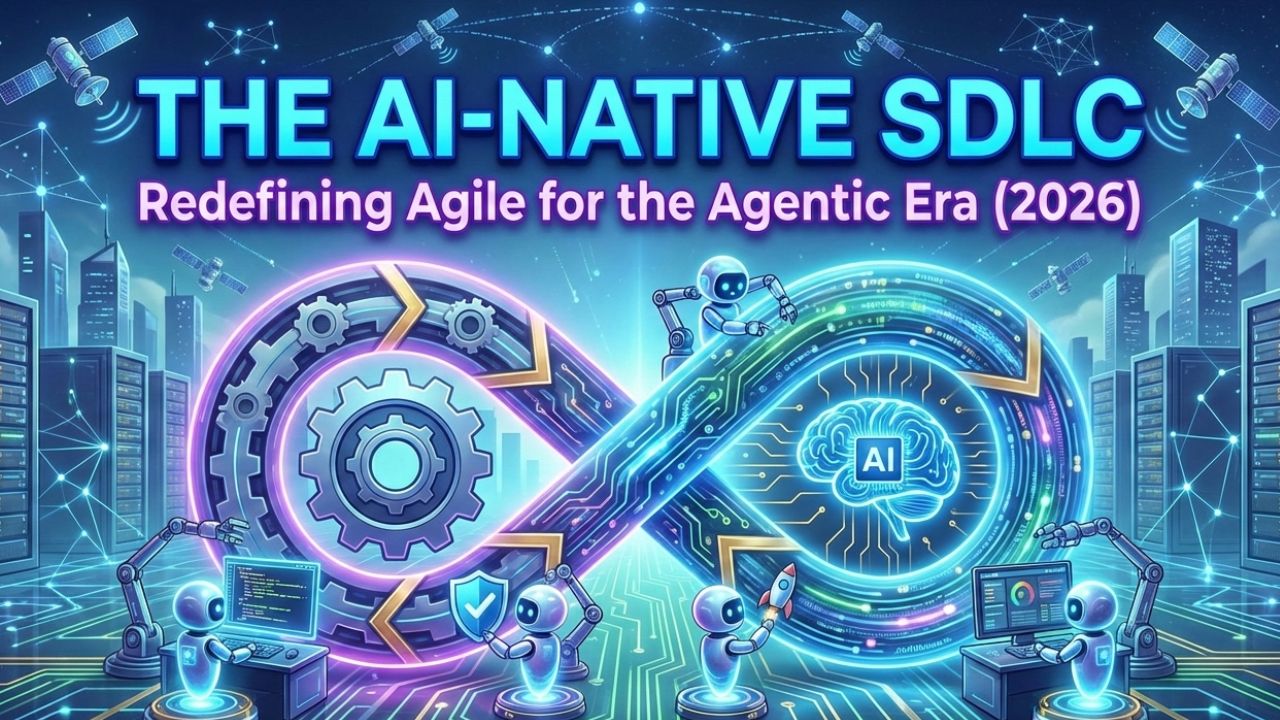
For 20 years, the Software Development Life Cycle (SDLC) has been stable: Plan → Code → Test → Deploy. The bottleneck was always human typing speed and cognitive load.
In 2026, that bottleneck is gone.
With autonomous coding agents like Devin and advanced copilots like Cursor, we are entering the AI-Native SDLC. In this new era, "Writing Code" is no longer the primary activity of a developer. The new primary activity is "Reviewing Generation."
This shift fundamentally breaks traditional Agile methodologies. Daily Standups, Story Points, and Pull Requests must be reimagined for a world where your "Junior Developer" is an AI that never sleeps but occasionally hallucinates.
This guide explores the Agentic SDLC, a new framework where humans move from "Authors" to "Architects" and "Editors."
1. The New Stack: Copilot vs. Cursor vs. Devin
The tools have evolved from "Autocomplete" (2023) to "Autonomy" (2026).
- GitHub Copilot Workspace: The incumbent. Best for enterprise security and integration with the GitHub ecosystem. It doesn't just suggest lines; it plans entire features.
- Cursor (The Challenger): A fork of VS Code that is winning the hearts of developers. Its "Composer" feature allows for multi-file editing that feels like magic.
- Devin (The Agent): The first fully autonomous software engineer. You don't help Devin; you assign it a Jira ticket, and it comes back with a Pull Request.
Strategic Advice: Don't just buy a tool; buy a workflow. If your team is Senior-heavy, Cursor accelerates them. If you have a backlog of tedious bugs, Devin handles the grunt work.
See the showdown: GitHub Copilot Workspace vs. Cursor vs. Devin: The 2026 Coding Agent Battle Read the comparison2. Leadership Strategy: Managing the "Empty Chair"
If you hire an AI agent, does it attend the Daily Standup? This is not a joke; it is a governance problem.
The "Empty Chair" Problem: An AI agent churns out code 24/7. If your human team cannot review it fast enough, you create a "Review Debt" crisis.
The Solution: We propose a new Agile ceremony called the "Agent Sync." Instead of humans updating status, humans review the agent's overnight output and "approve" the next batch of prompts.
Story Points: Stop estimating "Effort." Start estimating "Complexity." An AI can do a 5-point task in minutes, but the risk of that task remains high.
Read the manager's guide: Managing the "Empty Chair": How to Onboard AI Developers into Scrum Teams Learn leadership strategies3. Technical Process: Automating the Pull Request
The biggest bottleneck in 2026 is the Pull Request (PR). Humans hate reviewing code they didn't write.
The Fix: AI-Native Code Review. Tools like Codium and Ellipsis act as the "First Line of Defense." They review the PR before a human sees it. They check for:
- Logic Bugs: "This loop will fail on an empty list."
- Security Flaws: "You are exposing an API key."
- Style Violations: "This variable name is unclear."
By the time the human Senior Engineer sees the PR, it is already clean, secure, and documented. This reduces cycle time by 60%.
Get the tutorial: From "Peer Review" to "AI Review": Automating Pull Requests with Codium and Ellipsis View the guideExplore the Complete AI-Native SDLC Guide
Dive deeper into specific strategies for navigating the Agentic Era with our comprehensive deep dives:
Cost of Coding AI Agents: Is It Time to Replace Your Junior Dev Pipeline? Compare the cost of coding AI agents vs junior developer salary and learn the 2026 financial benchmarks for budgeting "AI token spend." Read the analysis Upskilling Junior Developers: How to Build the "AI Wranglers" Your Team Needs Master upskilling junior developers for AI-native product engineering. Transition from syntax-heavy training to high-value AI orchestration. Learn how to upskill Managing Hybrid Agile Waterfall: Why "Pure Agile" Fails in Regulated AI Projects Bridge the gap between backend stability and agentic velocity. Master bi-modal governance for highly regulated enterprise pipelines. Discover bi-modal governance Build a Self-Healing Sprint Board: Stop Moving Jira Tickets Manually in 2026 Eliminate manual Jira management and use predictive agents to auto-update statuses and prevent sprint failure. Build your board Measuring Agentic Throughput: Why "Velocity" is a Lying Metric in 2026 Stop using legacy velocity. Start tracking the new math of 2026 engineering: agentic throughput and human-agent handoff efficiency. Explore the new metrics4. Frequently Asked Questions (FAQ)
A: It will replace the tasks currently done by Juniors (boilerplate code, bug fixes, unit tests). However, it creates a new role: the "AI Wrangler." We need Juniors who understand how to direct, debug, and validate AI output. The skill set shifts from "Syntax" to "System Design."
A: It is a development lifecycle optimized for AI generation.
Old: Plan → Code → Test → Review → Deploy.
New: Prompt → Generate → Automated Audit → Human Review → Deploy.
The "Code" phase shrinks; the "Audit" and "Review" phases expand.
A: Yes, Cursor offers a "Privacy Mode" where code is not stored on their servers. However, for highly regulated industries (Banking, Defense), GitHub Copilot Enterprise offers stronger indemnity and compliance guarantees.
A: AI tends to write verbose code. To prevent your codebase from exploding, you must enforce strict linting rules and use "Refactoring Agents" that periodically scan the repo to condense and optimize code.