Stop Waiting 3 Days for Code Reviews: Automating Pull Requests with Codium & Ellipsis
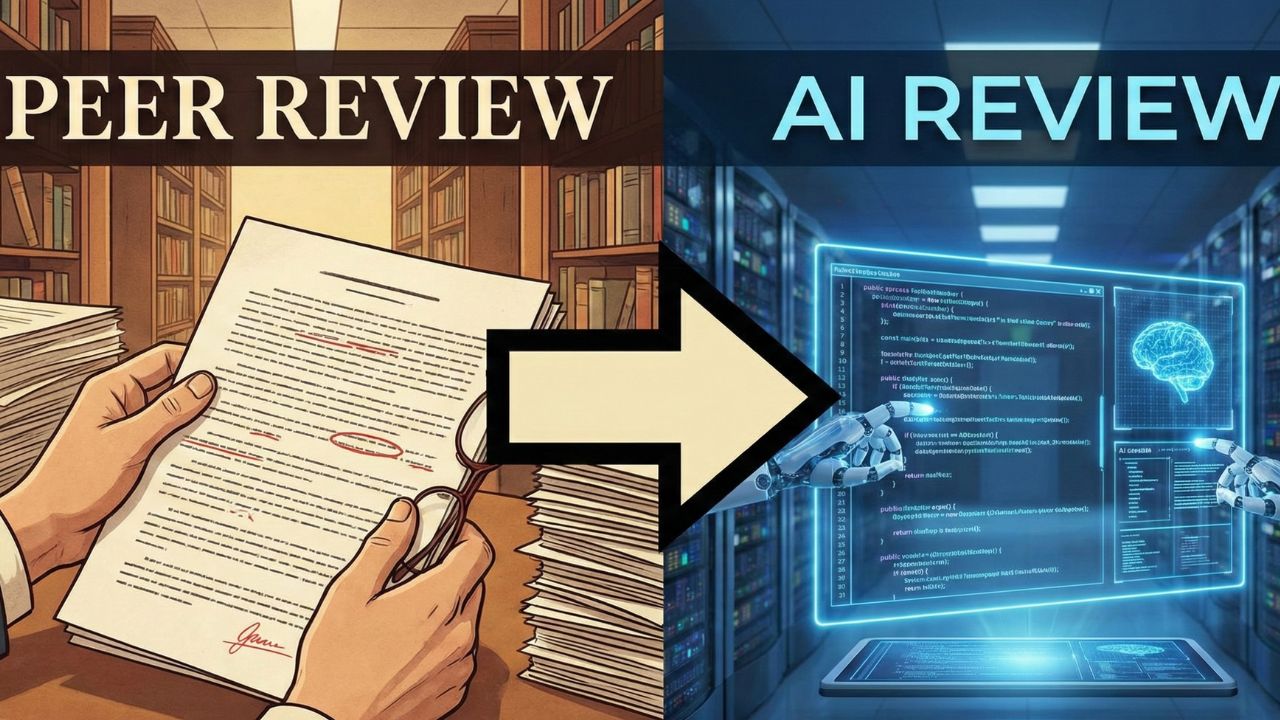
The Pull Request (PR) is undeniably the single biggest bottleneck in modern software delivery. A developer grinds out a critical feature in four hours, opens a PR, and then… waits. They wait up to three days for a peer review. By the time they receive feedback, context switching has destroyed their momentum. What should have been a quick iteration becomes a massive blocker, and overall cycle time balloons out of control.
Every hour spent waiting for a review is an hour of lost capital. In the highly optimized AI-Native SDLC, we solve this bottleneck structurally by introducing an automated "First Line of Defense." Before a human reviewer is ever pinged on Slack or Teams, an AI agent rigorously reviews the code. It scans for deep logic bugs, red-flags security vulnerabilities, and ruthlessly enforces coding style, freeing up your senior engineers to focus purely on high-level architecture and critical business logic.
1. The Tooling Landscape: Codium vs. Ellipsis
As AI-assisted development rapidly matures, two major players have emerged dominating the automated review space. Understanding their distinct strengths is crucial for an effective and frictionless SDLC integration:
- Codium (CodiumAI / PR-Agent): Focuses primarily on Deep Analysis. It excels at summarizing the entire PR context, proactively detecting logic bugs that simple static linters miss, and autonomously generating missing unit test coverage. It functions much like a rigorous, tireless QA engineer dissecting your logic.
- Ellipsis: Focuses heavily on Style, Conventions, and Semantics. It effectively learns your engineering team's specific, idiosyncratic coding style by historically analyzing previous merged PRs. It acts like a strict semantic linter that truly understands English logic, seamlessly converting human PR comments like "Make this more pythonic" into actual, committable code changes.
2. How-To Guide: Setting Up Codium PR-Agent
To demonstrate immediate, quantifiable value, we will focus on integrating Codium's open-source PR-Agent. This tool integrates directly into GitHub or GitLab, quietly listening for webhook events to spring into action exactly when needed.
Step 1: Installation via GitHub Actions
While you can run PR-Agent as a standalone Docker container or a hosted app, the simplest, lowest-friction method for enterprise teams is embedding it directly as a continuous GitHub Action.
name: Codium PR-Agent
on:
  pull_request:
    types: [opened, reopened, ready_for_review]
  issue_comment:
    types: [created]

jobs:
  pr_agent_job:
    runs-on: ubuntu-latest
    steps:
      - name: PR Agent
        uses: Codium-ai/pr-agent@main
        env:
          OPENAI_KEY: ${{ secrets.OPENAI_KEY }}
          GITHUB_TOKEN: ${{ secrets.GITHUB_TOKEN }}
Step 2: Configuration (Building The Brain)
The true power of this implementation lies in the TOML configuration file. Here, you define what "personality" the AI adopts and specify exactly which heuristics it must check before passing the code to a human.
[pr_reviewer]
# Enable specific hardline checks
require_security_review = true
require_test_analysis = true

[pr_description]
# Automatically structure and generate the PR description
publish_labels = true
add_original_user_content = true

[pr_code_suggestions]
# Determine how aggressive the AI should be in refactoring
num_code_suggestions = 3
focus_on = "logic, security, performance"
Step 3: Developer Interaction
Once deployed, the agent functions autonomously. When a developer opens a PR, it instantly posts a comment containing a high-level architectural summary and a bulleted list of identified issues. Developers can then direct it conversationally using slash commands within the PR comments:
/review- Triggers a fresh, comprehensive review analysis on any newly pushed commits./describe- Intelligently rewrites the PR title and description based on the actual code diffs, ensuring perfectly accurate documentation./improve- Automatically suggests (and can seamlessly commit) code snippets to resolve the bugs it initially found.
3. The Results: Achieving 60% Faster Cycle Times
Enterprise engineering teams actively deploying AI code review agents report a drastic, measurable reduction in "Review Ping-Pong"—the tedious, endless back-and-forth arguments about variable naming conventions, bracket placements, and missing test files.
By the time a Senior Engineer actually reviews the Pull Request, the foundation is already solid:
- The code logic is deeply documented and contextually summarized.
- Robust unit tests have been suggested (and often automatically applied).
- Potential security credentials, hardcoded secrets, or sensitive data have been flagged and stripped.
This fundamental operational shift transforms the human code review from an exhaustive, energy-draining "Correction" session into a streamlined "Approval" session, easily cutting SDLC cycle times by up to 60%.
Frequently Asked Questions (FAQ)
A: Codium (often utilized via PR-Agent) excels at deep logic analysis, vulnerability scanning, and robust test generation. Conversely, Ellipsis is frequently favored for its unparalleled ability to strictly enforce internal style guides and perform "linting on steroids" by deeply understanding the semantic intent and history of your specific codebase.
A: Absolutely not. They strictly replace the tedious "grunt work" of code review—catching typos, missing tests, formatting errors, and obvious logical bugs. This elevation allows the human reviewer to dedicate their highly-paid cognitive energy toward system architecture, scalability, and validating complex business logic.
A: Most enterprise-grade tools in this space operate as strictly SOC2 compliant entities and categorically state they do not train their public foundational models on your private code. However, you must always audit the specific privacy policy and enterprise licensing of the vendor, specifically requesting "Zero Data Retention" environments to ensure IP protection.