Build a Self-Healing Sprint Board: Stop Moving Jira Tickets Manually in 2026
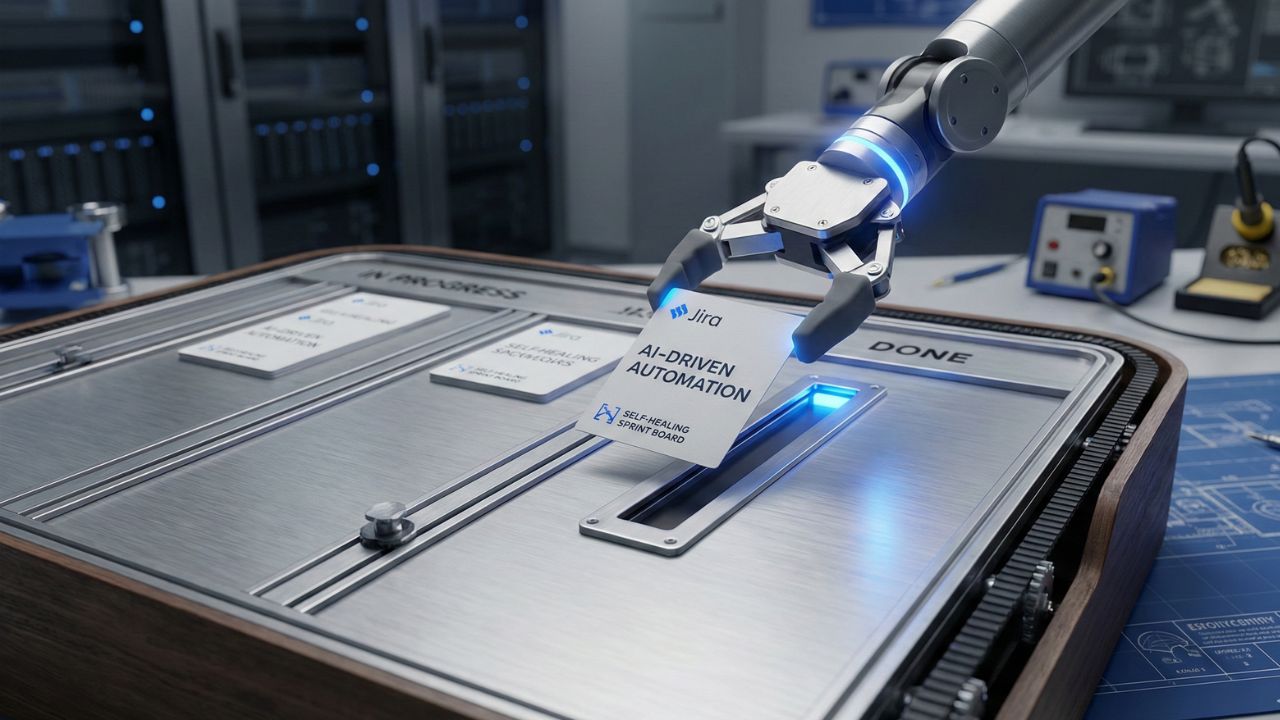
- A "Self-Healing" board uses AI to automatically update ticket status based on real-time activity.
- It eliminates manual Jira drudgery, saving hours of Scrum Master time every sprint.
- The system analyzes GitHub commits, CI/CD pipeline results, and Slack updates to move tickets.
- If a build fails, the AI automatically moves the ticket back to "In Progress" and tags the developer.
- This is the first step toward autonomous project management and "Agentic Agile."
The daily stand-up is over, but your work as a Scrum Master is just beginning. You now face the "Jira shuffle"—manually nagging developers to update their tickets and dragging cards across the board to reflect reality.
It’s time to stop this administrative drudgery and build a self-healing sprint board. In 2026, your project management tool should manage itself.
This deep dive is part of our extensive guide on the Agentic SDLC and the Integral Agile AQAL Framework, which reimagines Agile for the AI era.
A self-healing board isn't just automation; it's an intelligent system that keeps your project's digital twin perfectly synchronized with physical reality, without human intervention.
What is a "Self-Healing" Sprint Board?
A traditional Jira board is a passive record. It only reflects reality if someone remembers to update it. A self-healing board is an active participant.
It uses AI agents to listen to the heartbeat of your development environment—your IDEs, your version control, and your build pipelines. When a developer starts a new branch in GitHub, the board automatically moves the corresponding ticket to "In Progress."
When a pull request is merged, the ticket moves to "Done." Most importantly, if a build fails or a security scan flags an issue, the board "heals" the discrepancy by moving the ticket back to "In Progress" and alerting the owner.
The 4 Steps to Building a Self-Healing Board
1. Establish the Single Source of Truth
Your self-healing board must prioritize "activity" over "assertion." This means the state of the ticket is determined by the state of the code. Link your Jira project to your GitHub/GitLab repositories using official integrations.
2. Configure Automation Triggers
Use Jira Automation (or tools like Zapier/Make) to set up basic movement rules. For example: "When a Pull Request is created, transition ticket to In Review." This covers the happy path of development.
3. Implement AI Agent Listeners
This is where the "healing" happens. Use an AI agent (like a custom GPT or a LangChain-based worker) to analyze the context of Slack/Teams messages and commit logs. If a developer says "I'm stuck on this" in Slack, the agent can flag the ticket with an "Impediment" label automatically.
4. Enable Automated Rollbacks
Configure your CI/CD pipeline to send a webhook back to Jira. If a deployment to the staging environment fails, the board should automatically move all tickets associated with that deployment back to "In Progress."
Why the Scrum Master Role Must Evolve
Some fear that when you build a self-healing sprint board, you eliminate the need for human oversight. The opposite is true.
By automating the "Jira janitor" tasks, you free up the Scrum Master to focus on high-value leadership: coaching the team, identifying systemic bottlenecks, and fostering a true Agile culture. This shift is essential for modern workforce planning.

Frequently Asked Questions (FAQ)
It is an intelligent system that uses AI to monitor real-time engineering activity (commits, builds, deployments) and automatically updates the status of Jira tickets without human intervention. It "heals" by correcting ticket status when a process fails, such as moving a ticket back to "In Progress" after a failed build.
You need a project management tool (Jira, Azure DevOps), a version control system (GitHub, GitLab), a CI/CD platform (Jenkins, CircleCI), and an automation orchestrator (Zapier, Make, or custom scripts using tool APIs).
No. It eliminates the administrative drudgery of the Scrum Master role. This frees them up to focus on higher-value tasks like coaching the team, removing complex blockers, and facilitating better retrospectives, rather than just acting as a "Jira janitor."
Conclusion
The days of manually moving cards on a screen are numbered. By taking the steps to build a self-healing sprint board, you are not just saving time; you are creating a more accurate, transparent, and responsive development process.
In 2026, the most successful Agile teams will be those that have automated the administration so they can focus on the innovation.
Let the bots manage the board, so your humans can manage the product.