10 "Ice-Breakers" That Actually Work for Remote Indian Agile Teams
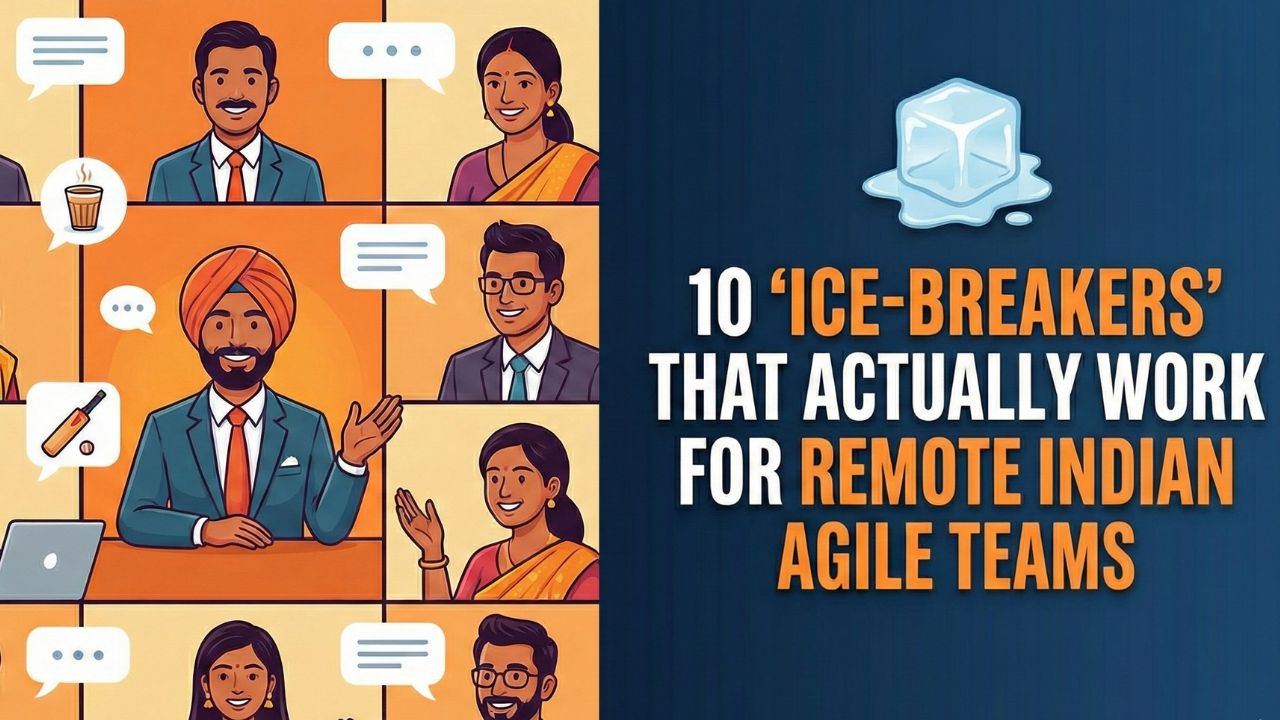
Silence on Zoom calls is awkward. In the Indian cultural context, this silence is often compounded by high "Power Distance"—the tendency for team members to wait for the most senior person to speak first. Standard Western ice-breakers like "Two Truths and a Lie" can feel forced or overly personal for teams that haven't established deep psychological safety yet.
To break this barrier, you need low-stakes, high-passion topics that everyone has an opinion on. The following 10 ice-breakers are tailored specifically for the Indian workspace to wake up the team before your Daily Standup or Retrospective.
The Engagement List
1. The "Chai vs. Coffee" Debate
The Hook: A low-stakes, high-passion opener.
Ask the team to pick a side and, more importantly, a specific type. In India, this isn't just a beverage choice; it's an identity. Expect heated (but fun) debates between the "Adrak (Ginger) Chai" loyalists from the North and the "Filter Coffee" purists from the South. This instantly humanizes the call.
2. "Desi Snack" Showdown
The Hook: Wake up the taste buds and the vocal cords.
Launch a quick poll: "Samosa or Kachori?" or "Vada Pav or Idli?". Food is the great unifier in Indian culture. Asking team members to defend their favorite evening snack breaks the monotony of code reviews and Jira tickets.
3. The "Power Cut" Story
The Hook: Shared empathy for infrastructure struggles.
Ask: "What’s the worst time you lost power or internet this week?" Remote work in India often comes with the background music of UPS beeps and generator hums. Sharing these stories builds empathy and normalizes the interruptions that everyone fears, reducing anxiety.
4. Bollywood/Cricket Trivia
The Hook: The universal languages of India.
Ask one quick question: "Guess this dialogue" or "Who won the 2011 World Cup Man of the Tournament?" (Answer: Yuvraj Singh). Even team members who are usually quiet will often chime in with the answer to a cricket query. It’s a safe, non-work-related way to get voices in the room.
5. The "Traffic Jam" Rant
The Hook: Bonding over shared misery.
"Where were you stuck this weekend?" Perfect for teams in major hubs like Bangalore (Silk Board junction), Mumbai (Western Express Highway), or Gurgaon. Allowing a 2-minute "rant session" about traffic clears the mental buffer and creates a "we are in this together" vibe.
6. "Festival Vibes" Check-in
The Hook: Celebrating diversity.
India has a festival almost every month. Ask: "What’s the next festival you are celebrating, and what’s the sweet dish made at home?" whether it's Diwali, Eid, Christmas, or Onam. This not only acts as an ice-breaker but also educates the team on the cultural diversity within the group.
7. The "Remote Background" Challenge
The Hook: Visual engagement.
Ask everyone to change their Zoom/Teams background to their dream Indian vacation spot (Goa beaches, Manali mountains, Kerala backwaters) for just 30 seconds. It’s a visual break from the blur of home offices and sparks conversations about travel plans.
8. "Weekend Binge" Recommendation
The Hook: The OTT explosion.
Ask: "What did you watch on Netflix/Hotstar/Prime this weekend?" with a strict rule: No Spoilers. With the explosion of OTT content in India, chances are high that multiple team members are watching the same trending series (like Panchayat or Family Man).
9. One Word Pulse Check
The Hook: Quick emotional agility check.
"Describe your energy level today in one word." Examples: "Monday-blues," "Rocket," "Buffering," "Caffeinated." This gives the Scrum Master an immediate read on the room. If three people say "Drained," you might want to shorten the Standup.
10. The "Tech Fail" Confession
The Hook: Psychological Safety.
Share a recent funny tech fail (e.g., "I was talking on mute for 2 minutes" or "I deployed to Prod instead of Dev"). When leaders share their small mistakes, it normalizes failure and signals that the environment is safe for learning, which is critical for Agile adoption.

Frequently Asked Questions (FAQ)
A: This is often due to a high "Power Distance Index" (a cultural dimension defined by Geert Hofstede). In many Indian organizations, there is a cultural norm to respect hierarchy, meaning team members may wait for the leader or the most senior person to speak first. Ice-breakers help flatten this hierarchy by giving everyone an equal voice on a neutral topic.
A: You don't need a full game every day. Use quick ones (like the "One Word Pulse Check") for Daily Standups. Save the more involved ones (like "Tech Fail Confession" or "Traffic Jam Rant") for the start of Retrospectives or Sprint Planning meetings where you need higher energy and engagement.
A: Always offer an alternative. If you ask a cricket question, pair it with a general question like "Or, what is your favorite sport?". However, topics like Food ("Chai vs Coffee") and Infrastructure ("Power Cuts") are almost universally relatable in the Indian context.
Sources & References
- Hofstede Insights: Understanding the Power Distance Index in Indian culture.
- Amy Edmondson: The Fearless Organization (Foundational reading on why speaking up matters).
- Atlassian Team Playbook: Global standards for team health monitors and ice-breakers.
- Scrum.org: Resources on facilitation techniques for Scrum Masters.