6 Ways to Handle "HiPPO" (Highest Paid Person's Opinion) in Sprint Planning
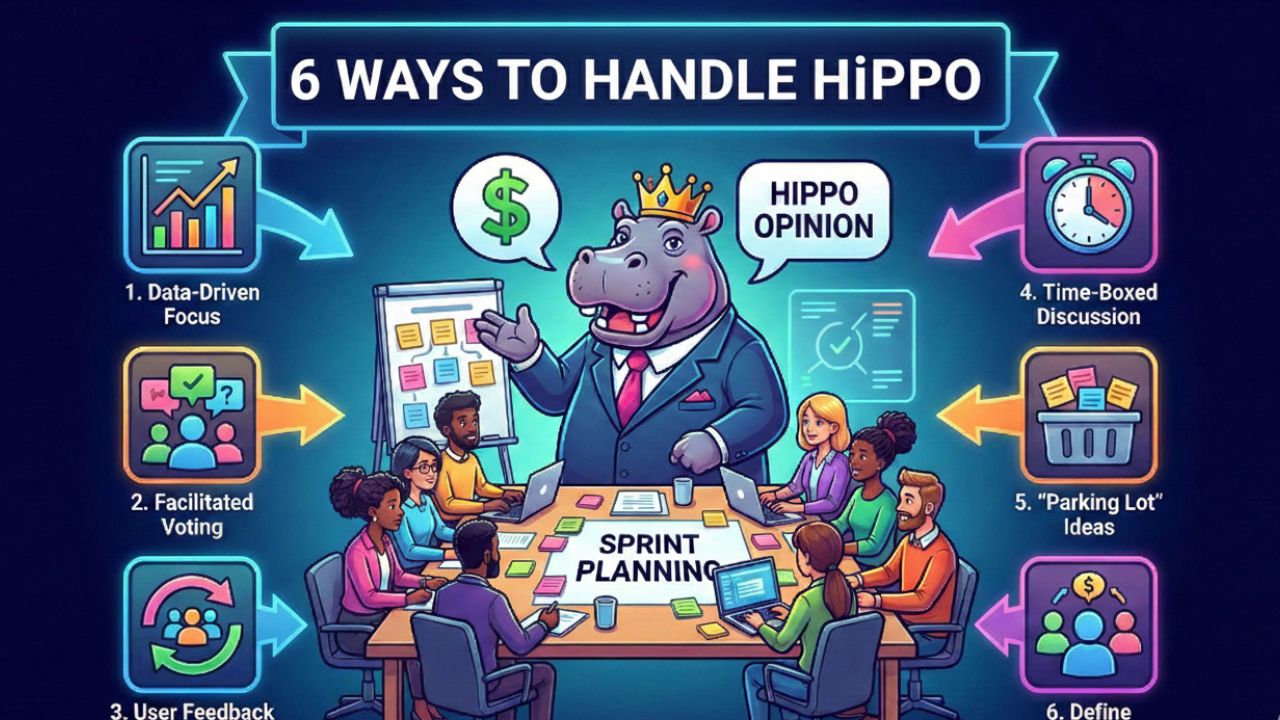
We have all been there. The Sprint Plan is locked, the team is confident, and then—10 minutes before the meeting ends—the VP walks in. "I just had a great idea for a feature. Can we squeeze this in? It’s just a small change."
This is the HiPPO (Highest Paid Person's Opinion) moment. If you say "Yes," you doom the team to overtime and burnout. If you say "No" bluntly, you risk being labeled "uncooperative." Here is a tactical guide for Scrum Masters to protect the team without getting fired.
The Negotiation Playbook
Psychologically, the word "No" triggers defensiveness. "Yes, and..." triggers collaboration. You validate their request but immediately highlight the trade-off.
HiPPOs care about business outcomes. Speak their language. Don't talk about "Story Points"; talk about "Release Dates." Quantify the impact of the context switch.
Often, the HiPPO just wants to see progress. They don't necessarily need the full feature live tomorrow. Propose a "Spike" (a time-boxed research task).
Abstract numbers are hard to grasp. Visual metaphors are powerful. Use the "Glass of Water" analogy.
Scrum is goal-oriented, not task-oriented. If the new request doesn't serve the goal, it's a distraction.
Sometimes, people just want to be heard. Writing it down validates them without disrupting the current flow.

Frequently Asked Questions (FAQ)
A: HiPPO stands for "Highest Paid Person's Opinion." It refers to the organizational bias where the opinion of a senior leader overrides data or the consensus of the experts actually doing the work.
A: Not always. Senior leaders often have strategic context (market shifts, investor pressure) that the team lacks. The goal isn't to silence them, but to make the trade-offs of their requests explicit and visible.
A: Yes, stakeholders can attend, but they should be observers only. The Daily Scrum is for the Developers to plan their next 24 hours. If a HiPPO starts assigning tasks or asking for status updates, the Scrum Master must intervene to protect the team's self-management.
Sources & References
- Patterson, K. et al. Crucial Conversations: Tools for Talking When Stakes Are High. (Essential for mastering the "Yes, and" technique).
- Reinertsen, D. The Principles of Product Development Flow. (Source for "Cost of Delay" concepts).
- The Scrum Guide. (Defines the authority of the Product Owner vs. Stakeholders).