5 Signs Your "Agile Transformation" is Actually Just "Water-Scrum-Fall"
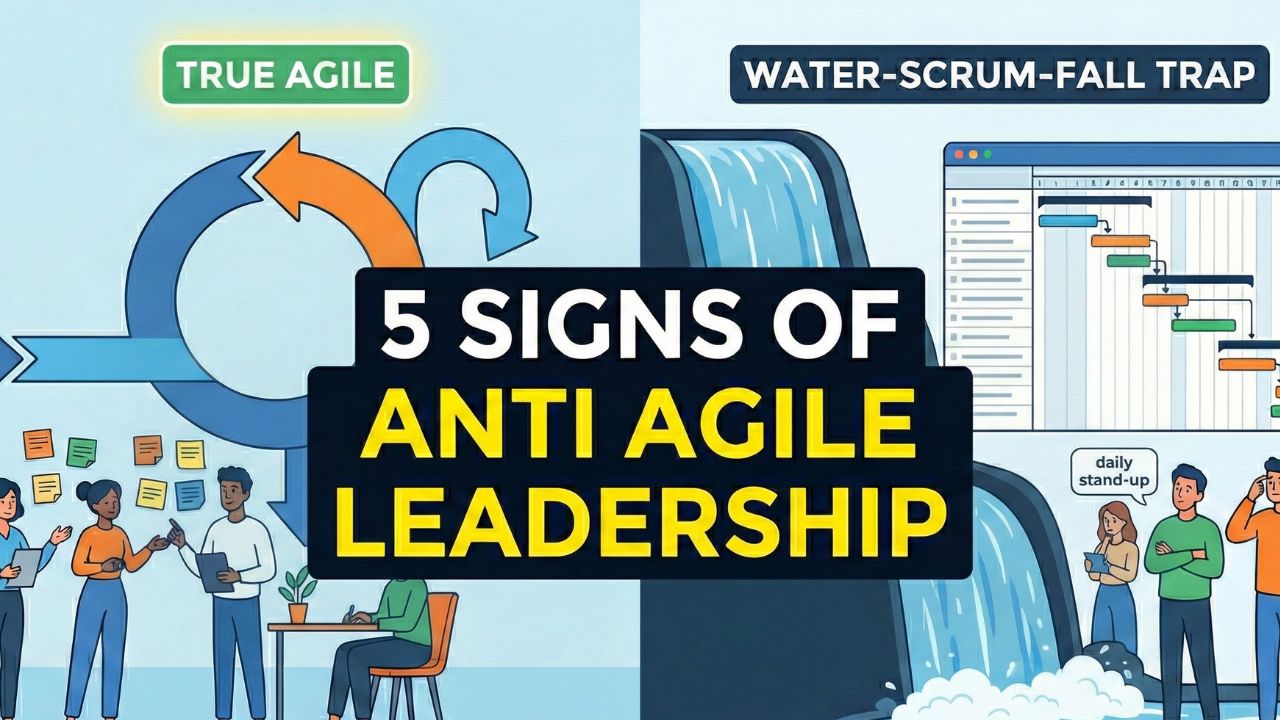
Are you doing Agile, or just doing Waterfall in 2-week chunks? This is the single most common question plaguing large service organizations and GCCs in India today. You have changed the labels—Project Managers are now "Scrum Masters" and Requirements Documents are now "Backlogs"—but the underlying behavior remains sequential and rigid.
This hybrid monster is known as "Water-Scrum-Fall". It feels safe because it doesn't disrupt the organizational hierarchy, but it fails to deliver the core promise of Agile: adaptability. Here is how to spot the trap.
1. Sprints are Just "Coding Phases"
Why this happens: In many service-based contracts, the client demands a signed "Requirements Specification" before funding is released. This forces the team to lock scope upfront. The "Sprints" then become nothing more than time-boxed windows for developers to type code, with no working software to show for it until the end.
The Fix: Shift to "Vertical Slicing." Every sprint must produce a tiny, fully tested, deployable slice of functionality—including the UI, the logic, and the database.
2. The "Hardening Sprint" Safety Net
Why this happens: Teams sacrifice quality to meet "Velocity" targets. They push testing to the end, accumulating a mountain of bugs.
The Fix: Abolish the Hardening Sprint. If the work isn't tested and bug-free by Friday, it isn't "Done." Reduce the scope of the sprint rather than reducing the quality.
3. The "Fixed Scope, Fixed Date" Sprint
Why this happens: This is a sales and contracting issue. Sales teams promise the moon to close the deal, leaving the engineering team to suffer the "Death March" to deliver it.
The Fix: Adopt "Date Driven, Scope Variable" planning. Commit to the date, but force the stakeholders to rank the backlog. When time runs out, the lowest priority items drop off.
4. The Scrum Master is a Secretary
Why this happens: Organizations promote Project Coordinators to Scrum Masters without changing their mindset. They believe their job is to "drive" the team rather than "serve" the team.
The Fix: The Scrum Master must stop assigning tasks. The team pulls work. The Daily Standup is for the Developers to sync, not to report status to the Scrum Master.
5. "Change Control Boards" for User Stories
Why this happens: A lack of trust. Leadership fears that without strict controls, the project will spiral into chaos.
The Fix: The Product Owner (PO) must be the final authority. If the PO says it needs to change, it changes. No committee required.

Frequently Asked Questions (FAQ)
A: It is usually a cultural clash between "Agile Development" and "Waterfall Funding." While the engineering teams want to iterate, the Finance and Sales departments still require fixed-price, fixed-scope contracts that force a Waterfall structure onto the project.
A: Generally, no. In rare cases involving hardware integration or regulatory compliance (like medical devices), a final verification phase is needed. But for pure software, a hardening sprint is a symptom of poor test automation.
A: Stop the status reports. If management wants to know the status, invite them to the Sprint Review. Empower the Scrum Master to say "No" to work that hasn't been refined or estimated by the team.
A: Yes, but it requires "Money for Nothing, Change for Free" clauses. This means the client can swap out features of equal size (Change for Free) or end the project early if they are satisfied (Money for Nothing), rather than rigidly sticking to the original spec.
Sources & References
- Dave West / Martin Fowler: Water-Scrum-Fall (The original article defining this anti-pattern).
- The Scrum Guide: The definitive guide on the role of the Scrum Master and the definition of "Done".
- Mike Cohn: The Need for a Hardening Sprint (Discussion on why stabilization phases indicate a failure of Agile).
- Mike Cohn: Agile Estimating and Planning (Resource on managing fixed-date projects with variable scope).