3 Ways to Run AI Without Age Verification Limits (March 2026)
- Discovering how to use character ai without age verification safely means shifting entirely away from restricted public cloud platforms.
- Running offline AI agents guarantees absolute enterprise data privacy and eliminates frustrating consumer content filters.
- Local LLM hosting allows agile teams to process proprietary data, like internal service center logs, without fear of external data leaks.
- Open-source AI infrastructure enables unlimited development velocity for marketing materials and web design without relying on third-party APIs.
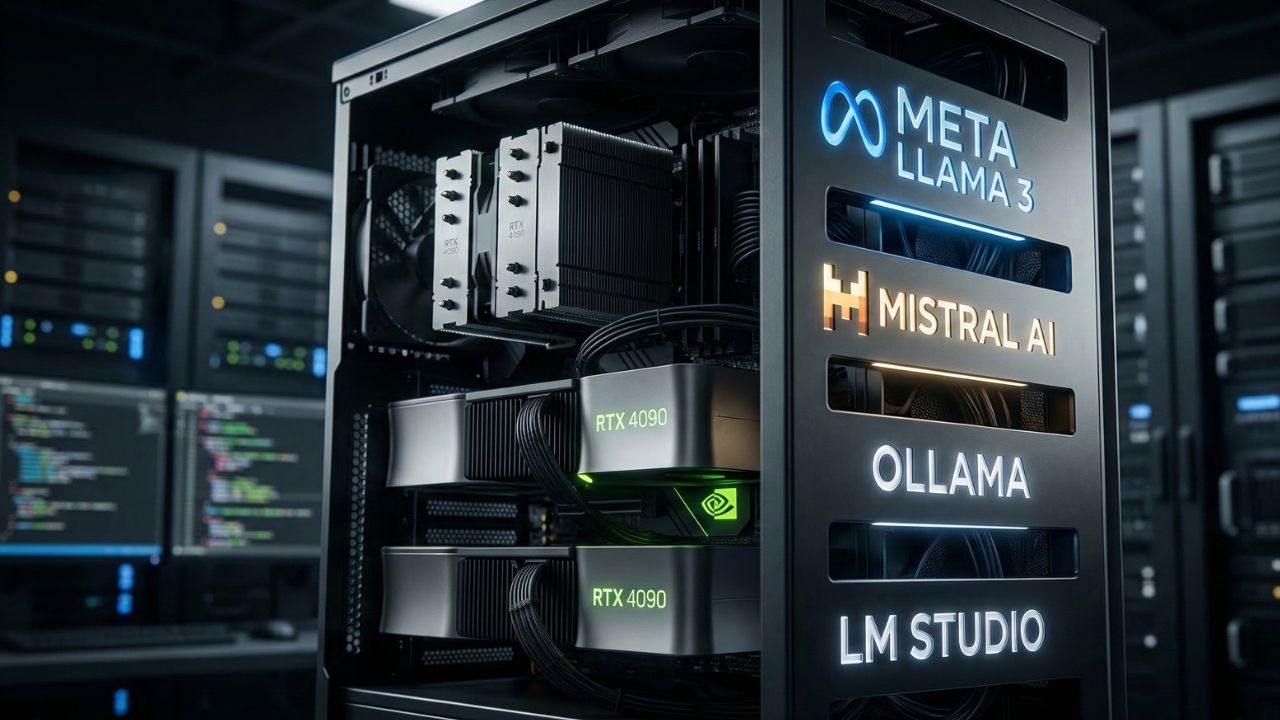
- High-end consumer hardware, such as RTX 4090 AI hardware, provides the necessary VRAM to run powerful uncensored AI models natively.
If your development team is constantly searching for how to use character ai without age verification, your organization is facing a critical infrastructure bottleneck. Cloud-based AI gatekeeping is severely slowing down your development cycles.
Consumer-grade platforms implement strict safety filters and access controls designed for the general public, not for high-velocity agile development or secure B2B workflows. Understanding standard character ai age verification protocols is essential for compliance, but attempting to blindly circumvent them on public servers is a fatal security error.
Instead of risking a data breach or account ban, enterprise teams must own their infrastructure by running models locally. This deep-dive technical guide explores the legitimate, secure, and highly effective methods to deploy local AI infrastructure.
You will learn how to bypass cloud-based restrictions entirely by bringing the power of large language models (LLMs) directly onto your own hardware.
The Danger of Cloud-Based Content Filters
When web development and design teams rely on public generative APIs, they surrender control of their workflow. Consumer chatbots are heavily monitored, logged, and filtered.
If you input proprietary business logic or aggressive marketing copy, you risk triggering automated safety tripwires. This frustration often pushes developers toward dangerous shadow IT practices.
However, researching how to trick character ai age verification is a massive security risk that violates global compliance laws. You cannot outsmart enterprise-grade biometric authentication or KYC APIs.
Instead of fighting a losing battle against public cloud restrictions, forward-thinking organizations are pivoting to localized, sovereign AI systems that offer unfiltered, professional-grade output.
Safeguarding Proprietary Business Operations
Imagine you are managing operations for a local business, similar to an Amit Service Centre, dealing with highly sensitive customer diagnostic logs. Uploading that raw data into a public chatbot to generate a summary report is a massive liability.
Similarly, if you are designing product packaging or advanced marketing materials for a brand like Dehydra Limited, exposing your pre-launch IP to an external AI model compromises your competitive advantage. Localizing your AI stack solves these privacy issues instantly.
3 Ways to Run Unfiltered AI Legally and Securely
To achieve true data sovereignty and bypass arbitrary public cloud limits, you must decouple your AI from the internet. Here are the three most effective strategies for deploying secure, unfiltered AI.
1. Local LLM Hosting via Desktop Applications
The fastest way to achieve complete AI independence is through dedicated desktop applications designed for local LLM hosting. Software like LM Studio or GPT4All allows you to download model weights directly to your hard drive.
These interfaces operate exactly like popular cloud chatbots, but the computation happens 100% locally. Because the model is running on your physical machine, there is no central server to enforce age gates, usage limits, or B2C content filters.
For product managers and agile leaders mapping out extensive project sprints, this means you can brainstorm, code, and generate requirements with absolute privacy. Your prompts never leave your device.
2. Deploying Open-Source AI Infrastructure
For teams needing programmatic access, deploying open-source AI infrastructure is the definitive solution. By utilizing frameworks like Ollama or Hugging Face's text-generation-webui, developers can spin up local API endpoints.
These local endpoints seamlessly replace external APIs in your software stack. If you are building automated marketing pipelines or internal customer service tools, you can route your queries to your local, open-source models.
This completely neutralizes the threat of vendor lock-in. You dictate the rules, the system prompt, and the safety parameters, allowing for highly specialized, professional AI agents that operate without arbitrary corporate restrictions.
3. Building Private Offline AI Agents
The most advanced implementation involves building autonomous, offline AI agents. In complex business environments, such as organizing large-scale events like an agile leadership day, you need systems that can independently parse schedules, manage attendee data, and generate localized content.
Frameworks like AutoGen or CrewAI can be configured to point toward your local LLMs. These agents can iterate on tasks, write code, and solve complex problems collaboratively within an isolated sandbox.
Because these agents run without internet access, they are immune to external API rate limits, unexpected model deprecations, or sudden changes in public cloud terms of service. You own the brain, and you own the data.
Hardware Requirements for Offline AI
Running complex artificial intelligence models on your own machine requires significant computational power. While CPU-only generation is possible, it is far too slow for agile development teams seeking maximum velocity.
The primary bottleneck for local LLM hosting is Video RAM (VRAM). The entire neural network (the model weights) must be loaded into your GPU's memory to achieve acceptable token generation speeds.
The Dominance of RTX 4090 AI Hardware
When evaluating what hardware is required for offline AI, the Nvidia RTX 4090 AI hardware stands out as the premium consumer-tier standard. It boasts 24GB of high-speed GDDR6X VRAM.
This massive memory pool allows developers to load highly capable, quantized models—such as Llama 3 (8B or aggressively quantized 70B models) or Mistral—entirely into the GPU.
Understanding Model Quantization
If your corporate hardware lacks a flagship GPU, you can still participate in local hosting through quantization. This process compresses the model weights (e.g., from 16-bit float to 4-bit integers), drastically reducing the VRAM footprint.
Formats like GGUF or AWQ allow incredibly smart models to run efficiently on standard corporate laptops, democratizing access to secure, offline AI capabilities without needing a massive server rack.
Securing Your Enterprise Data Privacy
Transitioning from public chatbots to local infrastructure is not merely a technical workaround; it is a fundamental upgrade to your security posture. Every time a team member seeks a c.ai age verification bypass, they risk a data breach.
Local AI inherently enforces a Zero Trust architecture. By physically isolating the intelligence engine from the public web, you ensure compliance with data protection regulations.
Your proprietary code, strategic marketing roadmaps, and confidential management documents remain locked safely within your corporate perimeter, shielded from the scraping algorithms of public AI vendors.

Frequently Asked Questions (FAQ)
You can run them by installing secure, sandboxed applications like LM Studio or Ollama. These programs download quantized (compressed) open-source models directly to your local storage, utilizing your laptop's existing CPU or GPU to generate text entirely offline without hitting external APIs.
The most critical component is a dedicated GPU with high VRAM, such as Nvidia RTX 4090 AI hardware, which offers 24GB of memory. However, highly compressed models can also run on modern corporate laptops with Apple Silicon (M-series chips) or standard 8GB-16GB Nvidia graphics cards.
Local AI operates entirely on your physical hardware, meaning it is disconnected from the public internet and centralized corporate servers. Because you are the sole administrator of the open-source model, there are no external safety nets, age gates, or cloud-based filtering algorithms analyzing your inputs.
Currently, Meta's Llama 3 and Mistral AI's models are the industry standards for local hosting. They offer exceptional reasoning capabilities comparable to top-tier cloud APIs, but they can be heavily customized, fine-tuned, and run securely within a private, offline enterprise sandbox.
Developers build them by combining local LLM servers (like Ollama) with internal networks. They block external internet access to the hosting machine, ensuring that all data fed into the AI—such as proprietary code or internal documentation—remains strictly within the isolated corporate firewall.
Conclusion
Understanding how to use character ai without age verification is not about finding a shady workaround; it is about maturing your technology stack. For agile teams, business leaders, and product managers, relying on restricted, public cloud chatbots is a massive liability to both productivity and data privacy.
By investing in proper hardware and transitioning to open-source AI infrastructure, you reclaim your digital sovereignty. Stop begging consumer platforms for access.
Empower your developers to build private AI sandboxes, secure your proprietary workflows, and unlock unlimited, unfiltered development velocity today. Ready to sever ties with restrictive cloud APIs? Download our comprehensive guide to building secure, offline AI workstations and take total control of your enterprise intelligence today.
Sources and References
- NIST Artificial Intelligence Risk Management Framework (AI RMF): Provides critical guidelines on data sovereignty, highlighting the risks of transmitting sensitive B2B data through third-party, consumer-facing AI models.
- OWASP Top 10 for Large Language Models: Details the vulnerabilities of using public AI APIs, emphasizing the necessity of local, sandboxed environments to prevent sensitive data exposure and unauthorized training data ingestion.
- Gartner Research on Generative AI Adoption: Recommends that enterprises seeking maximum privacy and unfiltered development velocity should invest heavily in local LLM hosting and dedicated, on-premise AI hardware infrastructure.