Why Tricking Character AI Age Verification Fails (March 2026)
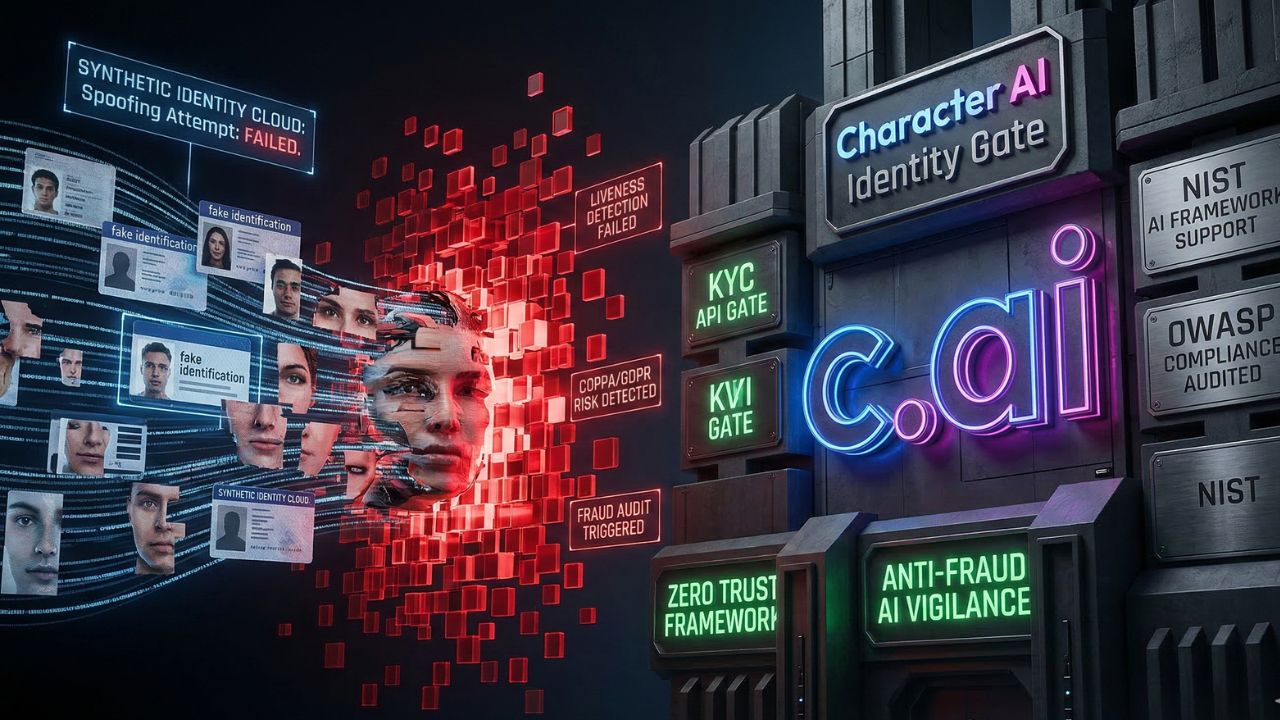
- Identity spoofing against AI systems is the dangerous new frontier of corporate fraud.
- Attempting to bypass security protocols violates global compliance laws and invites regulatory penalties.
- Modern generative AI platforms utilize advanced biometric authentication and KYC APIs to instantly detect fraud.
- Agile teams risking identity spoofing introduce severe vulnerabilities that can result in a devastating data breach.
- AI leadership must fortify verification protocols before the next audit rather than searching for unauthorized workarounds.
In the fast-paced ecosystem of Agile development, Product Managers and Scrum Masters are constantly seeking ways to increase sprint velocity. Sometimes, the pressure to deliver Agentic AI solutions leads development teams down a highly dangerous path.
When developers hit API roadblocks or content filters, a common, desperate search emerges: how to trick character ai age verification. This query is not just a minor policy infraction; it is a critical security failure.
Attempting to bypass these foundational gates completely ignores essential character ai age verification protocols that protect your enterprise infrastructure from catastrophic data leaks.
If your team is wondering how to trick character ai age verification, they are inadvertently inviting massive regulatory fines. Identity spoofing violates global compliance laws, and trying to cheat the system is the fastest way to trigger a $10M data breach. Let’s dive deeply into the technical reasons why these spoofing attempts fail, and how Agile leadership must respond.
The Flawed Premise of How to Trick Character AI Age Verification
Agile sprint planning relies on predictability, transparent risk management, and secure tooling. When developers attempt to integrate unfiltered consumer AI models into their workflow by faking credentials, they shatter that predictability.
The technical reality is that you cannot simply spoof a date of birth anymore. Modern platforms have evolved far beyond simple checkbox confirmations.
They deploy sophisticated, multi-layered security ecosystems designed specifically to catch unauthorized access attempts.
The Rise of KYC APIs in Generative AI
Know Your Customer (KYC) compliance is no longer restricted to the banking sector. Generative AI companies are under immense pressure to prevent underage access and block malicious actors.
As a result, they have heavily integrated advanced KYC APIs into their onboarding flows. These APIs perform real-time cross-referencing against global identity databases.
If an employee uses a synthetic or falsified identity, the KYC API flags the discrepancy instantly. This not only blocks the user but often logs the IP address and the corporate domain associated with the attempt.
Why Biometric Authentication Stops Spoofing
The next layer of defense against identity fraud is biometric authentication. Many leading platforms now require a live selfie scan to match against a provided government ID.
This is a formidable barrier for anyone trying to cheat the system using static images or basic deepfakes. If your developers are wasting sprint cycles trying to generate fake credentials, they are fighting a losing battle against enterprise-grade security tech.
The platforms are actively analyzing micro-expressions, skin texture, and depth perception to ensure a real human is on the other side of the screen.
The Mechanics of Liveness Detection
A core component of modern biometric security is Liveness Detection. This technology is specifically designed to determine whether the biometric sample being presented is from a live human being or a digital recreation.
When an employee attempts to bypass an age gate using a pre-recorded video or a high-quality mask, Liveness Detection algorithms analyze the input for spatial inconsistencies.
They look for subtle physiological markers, such as the natural pulse of blood beneath the skin (photoplethysmography) or involuntary eye movements.
Defeating the Deepfake Threat
You might wonder why deepfakes are failing against modern security APIs. The answer lies in the continuous training of anti-spoofing models.
Security vendors train their AI specifically to detect the artifacts left behind by generative video models. These artifacts—unnatural edge blending, inconsistent lighting, or audio-visual desynchronization—are imperceptible to the human eye but glaringly obvious to an anti-fraud AI.
Therefore, relying on deepfakes to trick a system is a massive waste of resources and a guaranteed failure.
The Catastrophic Consequences of Digital Identity Fraud
When an Agile team member engages in digital identity fraud to access restricted tools, the blast radius extends far beyond their individual workstation. They are actively compromising the entire corporate network.
Consumer platforms track unauthorized access attempts meticulously. If a breach is traced back to a corporate IP address actively engaging in synthetic identity fraud, the legal consequences for the enterprise are severe.
Regulators view this not as a simple employee mistake, but as a systemic failure of corporate governance.
Violating Global Compliance Laws
Identity spoofing violates global compliance laws. Frameworks such as GDPR and COPPA enforce strict penalties on organizations that fail to secure their digital perimeters or actively bypass age-gating mechanisms designed to protect minors.
If an audit reveals that your sprint planning relies on illicit access to consumer AI models, your organization could face millions in fines.
To prevent this, Product Managers should steer teams away from public clouds and investigate secure local LLM hosting to maintain velocity legally.
The Malware Vector of Bypass Tools
Employees frustrated by robust age verification often turn to third-party "bypass tools" downloaded from unvetted forums. These tools are rarely what they claim to be.
In reality, they are sophisticated Trojan horses designed to bypass corporate firewalls and deliver malicious payloads directly into your development environment. This introduces catastrophic network vulnerabilities.
To understand the full scope of this threat, leaders must educate their teams on the severe risks of attempting to bypass AI guardrails.
Implementing Zero Trust Architecture for AI
The only effective strategy to mitigate the risks associated with unauthorized AI access is to adopt a Zero Trust architecture. Zero Trust operates on the principle of "never trust, always verify."
In the context of generative AI, this means that no employee, device, or application is granted implicit trust to access external LLM APIs, regardless of their location on the corporate network.
Every single request must be authenticated, authorized, and continuously monitored for anomalous behavior.
Fortifying Verification Protocols Before the Audit
AI leadership must fortify verification protocols before the next audit. This requires implementing strict internal policies that outright ban the use of unsanctioned consumer AI chatbots for corporate tasks.
Furthermore, IT departments must deploy advanced endpoint detection and response (EDR) solutions capable of identifying when an employee is attempting to access restricted AI domains or utilize known spoofing techniques.
Equipping the Agile Team Legally
Instead of fighting consumer restrictions, equip your Agile teams with legitimate, enterprise-grade AI tools. Investing in dedicated, sovereign AI infrastructure provides the unfiltered power your developers crave without sacrificing security.
By prioritizing legal, compliant access to AI, Product Managers can ensure their sprint planning is based on a stable, secure technological foundation, free from the constant threat of platform bans or regulatory audits.
Conclusion
The pursuit of understanding how to trick character ai age verification is a dangerous distraction that has no place in a professional Agile environment. As generative models become more powerful, the security gates protecting them become more impenetrable.
Identity spoofing is no longer a simple workaround; it is a direct violation of global compliance laws that exposes your entire enterprise to unacceptable risk. Agile leaders, Scrum Masters, and Product Managers must establish a culture of absolute security and compliance.
You must abandon unauthorized consumer workarounds and invest in legitimate, secure enterprise AI infrastructure. Fortify your internal protocols today, ensure your teams have the proper, sanctioned tools they need, and permanently eliminate the threat of shadow AI from your development cycles.
Are you ready to stop fighting consumer filters and start building secure, compliant AI workflows? Contact our enterprise architecture team today to explore sovereign AI solutions.

Frequently Asked Questions (FAQ)
Modern platforms utilize multi-layered security ecosystems that go far beyond simple date-of-birth forms. They rely on real-time database cross-referencing and advanced behavioral analytics. These systems are specifically trained to detect anomalies, rendering basic spoofing attempts entirely ineffective and highly risky for corporate users.
Platforms detect spoofing by deploying sophisticated algorithms that analyze device telemetry, IP reputation, and typing biometrics. Additionally, they use Liveness Detection to analyze uploaded images or videos, instantly flagging synthetic identities, deepfakes, or static photos that lack the natural physiological markers of a living human.
KYC (Know Your Customer) compliance involves verifying a user's true identity to prevent fraud and underage access. In generative AI, this means integrating specialized APIs that cross-reference government-issued IDs against global databases, ensuring the platform remains compliant with international privacy laws and child protection regulations.
Biometric verification APIs prevent fraud by requiring a live, physical input—such as a real-time facial scan—that matches the provided identification document. These APIs actively scan for depth, micro-expressions, and skin texture, making it practically impossible for attackers to bypass the system using masks or manipulated digital imagery.
The consequences include immediate account termination, IP blacklisting, and severe legal repercussions. For enterprises, if employees engage in digital identity fraud, it can trigger massive regulatory audits, violate global compliance laws like GDPR or COPPA, and potentially expose the corporate network to devastating, multi-million dollar data breaches.
Sources and References
- NIST Special Publication 800-207 (Zero Trust Architecture): Provides the foundational framework for implementing zero trust security models, emphasizing the necessity of continuous verification for all digital assets and identities to prevent unauthorized access.
- Financial Action Task Force (FATF) Guidelines on Digital Identity: Outlines international standards for robust KYC compliance and digital identity verification, detailing how organizations must combat synthetic identity fraud and enforce strict authentication measures.
- OWASP Top 10 for Large Language Models: Highlights the critical security vulnerabilities associated with LLM deployments, specifically emphasizing the risks of unauthorized data access and the importance of robust identity verification in AI environments.