Atlassian Intelligence vs. Microsoft Copilot: The Ultimate 2026 Enterprise AI Showdown
🚀 Quick Answer: Key Takeaways
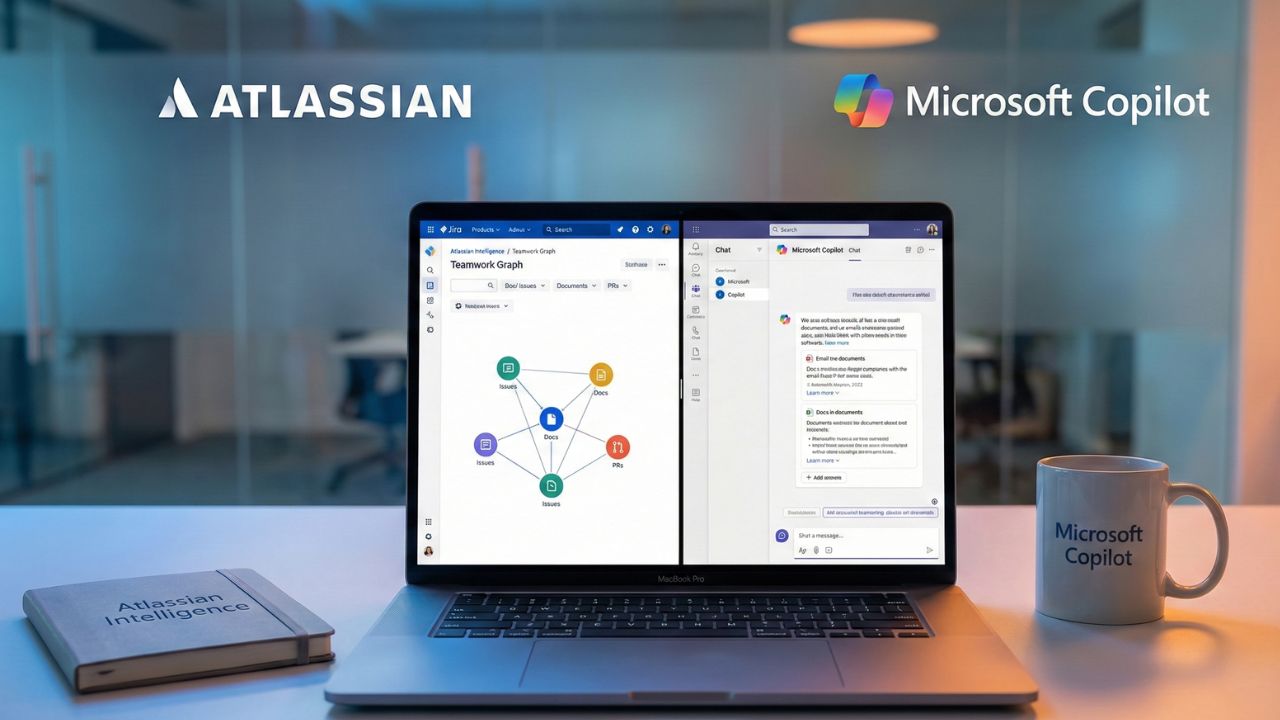
- Context Engine: Atlassian Intelligence utilizes the highly specialized Teamwork Graph to deeply understand project dependencies, while Copilot relies heavily on the M365 Graph (Email, Chats, Docs).
- Jira Integration: Rovo Agents live inside the ticket workflow to automate actions; Copilot acts primarily as an external sidebar assistant seeking to summarize.
- Service Management: Atlassian boasts vastly superior Deflection Rates in Jira Service Management (JSM) due to native, high-fidelity knowledge base indexing.
- Cost Model: Rovo operates as a granular consumption add-on, whereas Copilot is typically bundled into a broader, more rigid enterprise license.
Choosing your 2026 AI technology stack is no longer just about "who has the smartest chatbot"—it is entirely about operational context. This deep dive into the heavyweight battle of Atlassian Intelligence vs. Microsoft Copilot is a core component of our extensive guide on Atlassian Intelligence and Agentic Workflows. Ultimately, the decision comes down to a simple geographical question regarding your data: Does your team live and breathe in Outlook and Teams, or do they execute in Jira, Bitbucket, and Confluence?
Here is the definitive, no-fluff audit for enterprise CTOs and Agile leaders deciding between these two industry giants.
The Core Difference: Teamwork Graph vs. M365 Graph
The fundamental difference in capability lies entirely in the underlying "Brain" powering the AI.
Microsoft Copilot excels at individual and conversational productivity. It continuously leverages the Microsoft Graph to scan your sprawling network of emails, calendar meetings, PowerPoint presentations, and Word documents. It is peerless at answering questions like, "What action items did I miss in yesterday's sync?"
Atlassian Intelligence (powered by Rovo), conversely, excels at project and developmental productivity. It utilizes the highly specific Atlassian Teamwork Graph to accurately map complex technical relationships between:
- A blocking Jira issue and its sub-tasks.
- The originating Confluence product spec document.
- The active Bitbucket pull request.
- The Slack conversation thread resolving the bug.
To put it simply: If you ask Copilot about a project's status, it searches your emails and chats for mentions of it. If you ask Atlassian Intelligence, it evaluates the actual, underlying work items and code commits.
Comparison Audit: Deflection Rates in JSM
For IT Service Management (ITSM) and Help Desk teams, the single metric that matters most is Ticket Deflection—the ability for an AI to successfully resolve a user's problem before it ever reaches a costly human agent. Atlassian possesses a distinct, measurable advantage in this arena because it natively indexes your Confluence Knowledge Base and past resolution workflows.
| Feature Capability | Jira Service Management (JSM) AI | Microsoft Copilot in Teams |
|---|---|---|
| System Access | Native read/write access to historical ticket data, KB articles, and agent workflows. | Primarily conversational; surfaces existing M365 files or SharePoint wikis. |
| Autonomous Action | Can dynamically transition issues, assign code reviewers, and securely close tickets. | Often requires a manual "handoff" to a separate ITSM system via a generic webhook. |
| Business Result | Significantly higher deflection rates because the agent can act, not just chat. | Limited to information surfacing, resulting in a higher human escalation rate. |
Cost & Governance: The "Add-On" Factor
Pricing strategy is a major operational differentiator for enterprise procurement.
Microsoft heavily bundles Copilot into premium enterprise tiers (like E3/E5 licenses), effectively making it a "sunk cost" for many organizations that are already deeply entrenched in the Windows ecosystem. However, this one-size-fits-all model can be expensive if only a fraction of your workforce actively utilizes it.
Atlassian Rovo operates as a specific, opt-in add-on driven by a nuanced credit consumption model. This allows for highly granular financial control—you only pay for the intelligence you use. However, it mandates active monitoring to prevent automated agents from overspending. To thoroughly understand the hidden unit costs of Rovo's consumption model, refer to our deep-dive guide on the Atlassian Rovo Pricing & Credit Calculator.
If you are already running Rovo in production, you must ensure your autonomous agents aren't silently draining your IT budget. Learn how to spot looping scripts and resource hogs in our Monitoring AI Bot Efficiency: Admin Guide to Atlassian Usage Insights tutorial.
Build custom tools and automation interfaces in seconds by chatting with AI using Lovable.

Frequently Asked Questions (FAQ)
Yes, but strictly via external connectors. Copilot can access your Jira data if the Jira Cloud for Microsoft 365 plugin is installed and authorized. However, it fundamentally treats Jira data as "external content," meaning it lacks the deep, native understanding of semantic issue links, blockers, and developmental dependencies that Rovo natively possesses.
Atlassian Intelligence is generally far superior for engineering and DevOps teams because it integrates directly into the source code via Bitbucket and architectural components via Compass. It can deeply explain specific code blocks, auto-generate accurate PR descriptions, and map vulnerability dependencies, whereas Copilot is built for more general-purpose business productivity.
Yes. Atlassian Rovo actively utilizes a Teams Connector that securely allows it to search, synthesize, and summarize your Microsoft Teams chats, effectively and securely bridging the intelligence gap between the two major ecosystems.
The Final Verdict
In the heated debate of Atlassian Intelligence vs. Microsoft Copilot, there is no single, universal winner—only the right context engine for the right operational team. If your organization is heavily document-driven, relies primarily on email, and focuses on administrative business operations, Copilot is the undisputed productivity king.
However, if your company's core value stream flows directly through Epics, Jira tickets, and agile sprints, Atlassian Intelligence provides the critical depth and technical context necessary to automate actual developmental work, rather than just summarizing it.