Atlassian Teamwork Graph: The "Secret Sauce" Behind Agentic Context
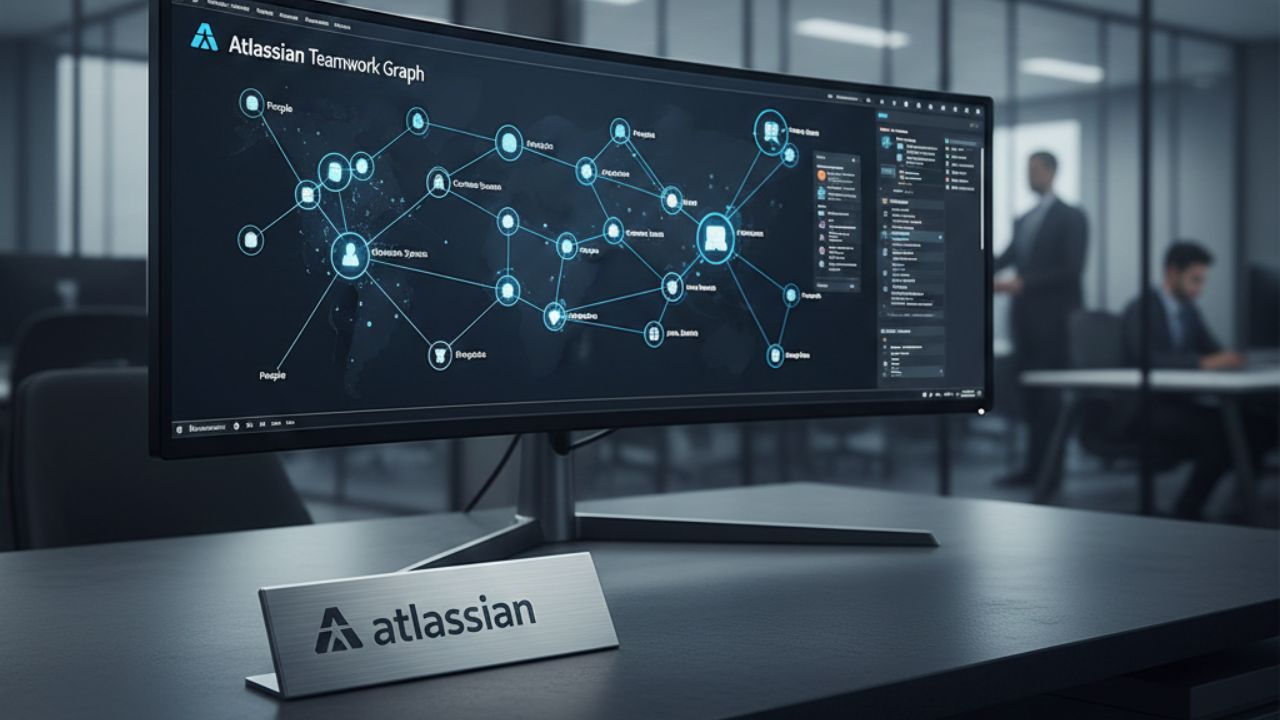
- Organizational Context: The Teamwork Graph acts as an invisible "contextual fabric," meticulously mapping relationships between people, projects, codebases, and data.
- Semantic Discovery: It empowers Atlassian AI to discover critical information based on underlying meaning and intent, rather than just basic keyword matching.
- Enterprise-Wide Search: Seamlessly connects siloed internal Atlassian data with third-party applications like Google Drive and Slack through robust Rovo Connectors.
- Privacy First: Strictly adheres to and enforces existing Jira and Confluence permissions to ensure zero-trust data security is maintained at the AI level.
Understanding exactly how enterprise AI delivers accurate, deeply personalized answers requires a look under the hood at the "contextual fabric" of your organization. This Atlassian Teamwork Graph Guide explores how Rovo uniquely understands your company's complex projects and operational relationships.
This deep dive serves as a foundational pillar in our extensive guide on Atlassian Intelligence and Agentic Workflows. By intelligently mapping scattered data across various silos, the Teamwork Graph provides the essential context required for sophisticated AI Agents for Jira Workflows to function effectively and autonomously.
What is the Atlassian Teamwork Graph?
At its core, the Atlassian Teamwork Graph serves as an enterprise-grade organizational knowledge map that fundamentally connects work across your business. It transcends simple file storage by actively mapping the dynamic relationships between your workforce and their outputs.
It understands intuitively that "Person A" is the lead architect on "Project B," which is extensively documented in "Confluence Page C" and actively tracked via specific Jira Epics. This web of metadata is what separates generic chatbots from powerful enterprise assistants.
Semantic Information Discovery
Traditional keyword search often fails miserably when dealing with nuanced technical queries. The Teamwork Graph powers advanced semantic search within Atlassian Rovo. This paradigm shift allows the AI engine to interpret the underlying intent and business context behind a user's query, bridging the gap between human language and machine retrieval.
Unifying Third-Party Data Silos
No organization works exclusively within a single software suite. Through the deployment of Rovo Connectors, you can extend this intelligent graph to include critical third-party data repositories, such as Google Drive, GitHub, and Microsoft Teams. This creates an unparalleled, unified source of truth where AI can instantly surface cross-platform insights simultaneously.
Security, Privacy, and Permission Handling
A primary, valid concern for IT and enterprise leaders is exactly how the Atlassian Teamwork Graph addresses stringent data sensitivity and compliance protocols.
Strictly Respecting Existing Permissions
The graph is architected from the ground up to respect existing Jira permissions and complex Confluence space restrictions natively. If a user does not have the explicit, role-based permission to view a highly sensitive document in the source application, the AI will flatly refuse to index or include that data in its response to them.
Data Privacy Standards
The entire system is built to handle data privacy flawlessly by ensuring that the AI only processes and synthesizes information the active user is already authorized to see. This robust security model makes it exceptionally safe to deploy even in highly regulated industries like finance and healthcare.
Powering the Agentic SDLC
The sheer depth of context seamlessly provided by the graph is exactly what allows specialized developmental tools, like Atlassian Rovo Dev Agents for the SDLC, to be incredibly effective. By comprehensively understanding the bidirectional relationship between code repositories and upstream project requirements, these autonomous agents can provide highly relevant, deeply technical suggestions that are firmly grounded in your engineering team's specific history and business goals.
Build custom enterprise tools and automation interfaces in seconds by chatting with AI using Lovable.
We may earn a commission if you purchase through this link.
(This does not increase the price for you)
Frequently Asked Questions (FAQ)
It is a dynamic data structure that maps the intricate relationships between people, teams, projects, and content across your organization to give AI deep operational context.
It ensures that sensitive information is strictly protected by only surfacing data that a specific user has the explicit right to access, mirroring existing permissions.
Yes, using powerful Rovo Connectors, you can easily integrate external data sources like Google Drive, Slack, and GitHub directly into the unified graph.
Semantic search uses the graph to fundamentally understand the meaning, intent, and context of words, allowing it to find highly relevant information even if exact keywords aren't utilized.
Absolutely. The graph strictly follows and enforces the complex permission models and space restrictions already established in your Atlassian ecosystem.
The Atlassian Teamwork Graph Guide reveals that the true, lasting power of Enterprise AI isn't just found in the size of the Large Language Model, but in the context of the data it leverages. By creating a comprehensive organizational knowledge map, Atlassian ensures your deployed AI agents are always working autonomously with the most relevant, secure, and impeccably accurate information possible.