Beyond Bangalore: Leading Distributed Squads in Tier-2 India (Jaipur, Kochi, Indore)
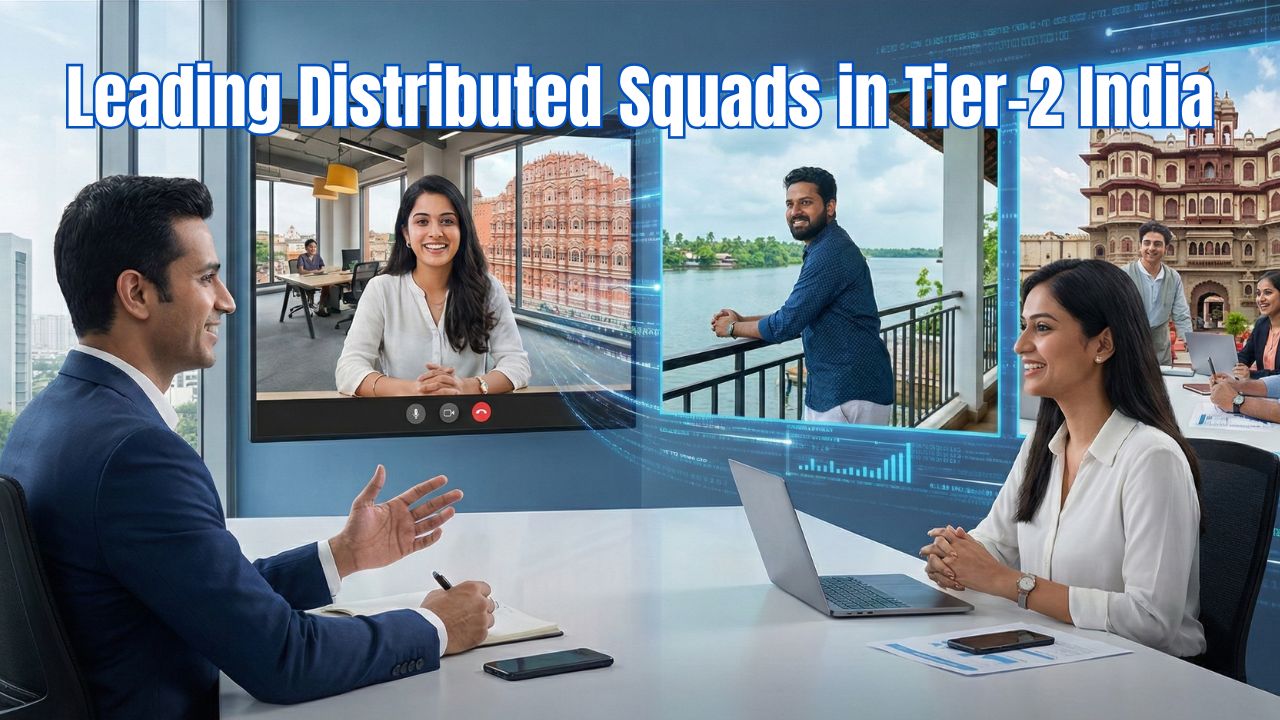
For the last decade, the playbook for setting up a Global Capability Center (GCC) in India was identical: lease a glass building in Bangalore, Gurugram, or Hyderabad, hire 500 engineers, and fight a brutal war for talent.
By 2026, that playbook is obsolete.
The metro markets are saturated. Traffic congestion, skyrocketing real estate costs, and an attrition rate that often touches 25-30% have forced leaders to look elsewhere. The new frontier isn't Vietnam or the Philippines—it is "Nearshoring within India."
If you are a leader sitting in a Metro Hub, your next challenge isn't managing a team down the hall. It is leading distributed teams across the vast, untapped talent pools of non-metro India.
1. Why Tier-2? The "Stickiness" Dividend
Why are companies like Zoho, Infosys, and major US Banks expanding into Tier-2 cities? It isn't just about cost savings (though real estate is 40% cheaper). It is about Talent Retention Strategies in India 2026.
A. The Loyalty Factor
In Bangalore, a developer might jump ship for a 15% hike. In Indore or Jaipur, employees are often living in their hometowns, close to aging parents, with a higher quality of life and lower cost of living.
The Data: Attrition in Tier-2 centers hovers around 8-12%, compared to 20%+ in metros. That "stickiness" translates to retained domain knowledge—the most valuable asset in a GCC.
B. The Untapped "Gen Z" Potential
Gen Z retention is a nightmare for traditional managers. However, Gen Z talent in Tier-2 cities is hungry for global exposure without the "big city burnout." By offering a global career from Kochi or Bhubaneswar, you become an employer of choice, not just another option.
C. Cost Optimization 2.0
It’s not just salaries. The remote work infrastructure in India has improved drastically. 5G is ubiquitous. A "Hub and Spoke" model allows you to reduce your carbon footprint (less commuting) and your real estate footprint (smaller satellite offices), directly impacting your ESG goals.
Note: When calculating the ROI of a Tier-2 center, ensure you are using the right Value Creation Metrics rather than just labor arbitrage.
2. The Model: Hub & Spoke vs. Fully Remote
Leading a team in Jaipur from a cabin in Gurugram requires a structural shift. The most successful GCCs in 2026 are adopting the Hub & Spoke Model.
- The Hub (Metro): Focuses on Strategy, Architecture, and Product Management.
- The Spoke (Tier-2): Focuses on Execution, Engineering, and Operations.

The Modern GCC Network: A Central Innovation Hub connected to specialized Talent Spokes.
Is your leadership style stuck in the 'Hub'? Read our Executive Transition Guide: From 'Doer' to 'Builder'3. The Challenge: Culture at a Distance
The biggest fear regarding GCC expansion to Tier-2 cities is a drop in quality. “Can I trust the code coming out of a remote spoke?”
This is a failure of leadership, not talent. To succeed, you must master Hybrid Agile Leadership:
A. "Commute to Connect, Work to Deliver"
Don't force the Jaipur team to fly to Bangalore for a status update. Bring them to the Hub once a quarter for "Cultural Integration"—hackathons, strategy workshops, and social bonding. The rest of the time, trust them to deliver.
B. Asynchronous Agility
You cannot manage a distributed team with "shoulder surfing." You must move to asynchronous communication.
Shift: Replace the "daily standup" (which often becomes a status interrogation) with written updates. Use the synchronous time for unblocking and problem solving.
C. Combatting "Second Class Citizen" Syndrome
A common pitfall is treating the Spoke team as "back office support" for the Metro Hub.
The Fix: Assign entire product modules to the Spoke. Let the Kochi team own the "Mobile App" end-to-end. Ownership drives quality far better than supervision does.
4. City Spotlights: Where to Go?
- Jaipur: Emerging as a strong hub for FinTech and Data Analytics, with proximity to Delhi/NCR.
- Kochi: With its massive port and tech parks, it is becoming a favorite for Maritime Tech and AI startups.
- Indore: Central India’s education hub (IIT & IIM), offering a dense pool of fresh, high-quality engineering talent.
Your Action Plan for 2026
- Pilot First: Don't lease a building yet. Start by hiring a "Squad" of 5-8 people in a target city using a co-working space.
- Hire the Anchor: Hire a senior leader in that city first. Do not try to manage a remote spoke entirely from the HQ. You need a "Culture Carrier" on the ground.
- Digitize the Watercooler: Create virtual spaces for non-work interaction to maintain GCC workplace culture.
Your Call to Action
The transition from a "Cost Center Manager" to a "Value Creation Leader" is the single most important career pivot you will make this decade. The table stakes have changed. The opportunities are massive. The world is looking at India not just to save money, but to make money.
Register for the Next Leadership SummitFrequently Asked Questions (FAQ)
Q: Is the infrastructure in Tier-2 cities reliable for 24/7 operations?
A: Yes. By 2026, most Tier-2 Smart Cities in India have enterprise-grade connectivity and power backup. However, investing in "last mile" redundancy for home offices is a best practice.
Q: How do we handle client visits?
A: Clients usually visit the "Hub" (Metro). However, sophisticated GCCs are now taking global visitors to their "Spokes" to showcase the diversity and depth of their talent strategies.
Q: Will salaries in Tier-2 cities eventually catch up to Metros?
A: They are rising, but the "Purchasing Power Parity" (PPP) gap remains. An engineer in Indore saves more on a lower salary than an engineer in Bangalore, maintaining the arbitrage advantage.
