How to Build an AI Control Tower: Managing Your Autonomous Bots
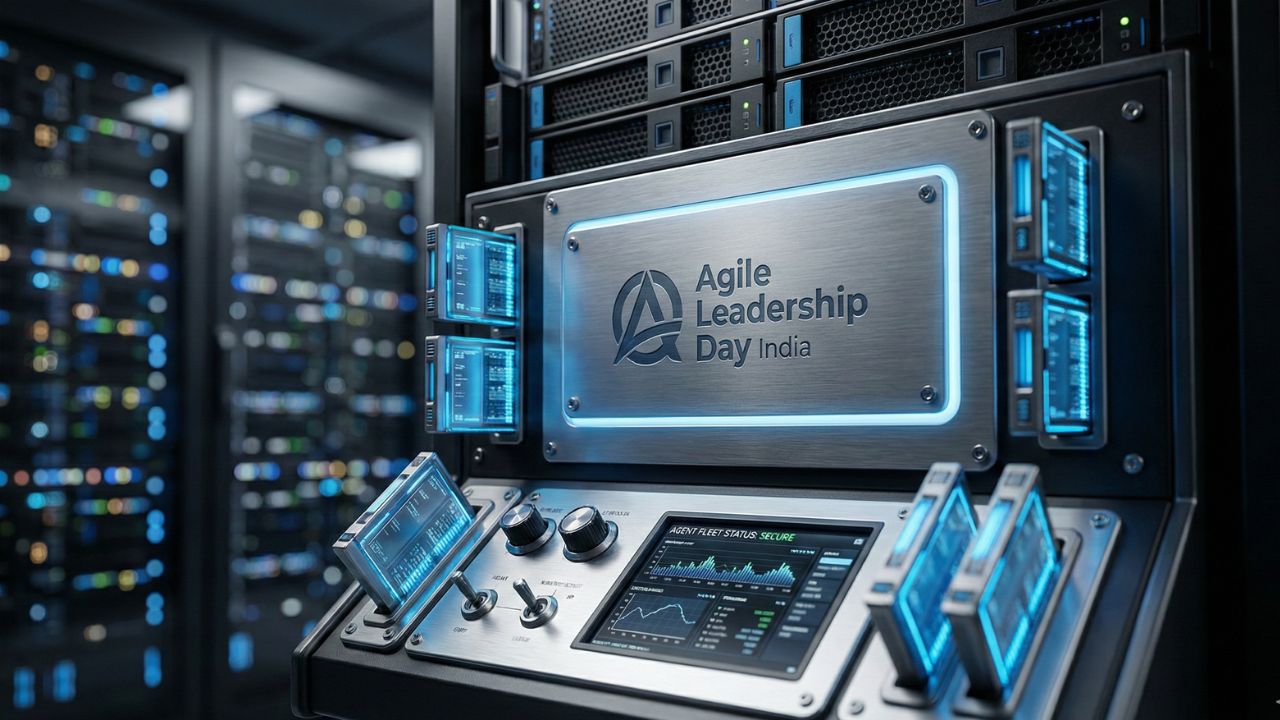
- Centralized Command: An AI Control Tower is the operational heart of GCC 4.0, managing agent lifecycles, not just code.
- The "Kill Switch" Necessity: Learn why a Governance Mesh is essential to prevent rogue agent behavior and hallucinations.
- Scaling to 1,000+: Discover the orchestration layers needed to manage massive fleets of autonomous bots.
- The New C-Suite: Understand the critical role of the Chief AI Officer (CAIO) in agent management.
- Security First: Implement real-time monitoring to secure your digital workforce against adversarial attacks.
Introduction: Taming the Digital Swarm
In the new era of Global Capability Centers, your workforce is no longer just human. It is a hybrid mix of people and autonomous agents. But as you scale from 10 bots to 10,000, you face a critical challenge: governance.
Without a central nervous system, digital workers can drift, hallucinate, or conflict with one another. To succeed, you must master how to build an AI control tower for global agent fleets.
This deep dive is part of our extensive guide on The Modern GCC 4.0 – An Intelligence Arbitrage Hub. An AI Control Tower is not just a monitoring dashboard.
It is a comprehensive operational framework designed to deploy, monitor, audit, and retire autonomous agents safely.
The Architecture of an AI Control Tower
Building a control tower requires moving beyond standard IT monitoring tools. You aren't checking server uptime; you are checking cognitive performance.
1. The Orchestration Layer
Managing a few bots is easy. Managing a swarm requires sophisticated orchestration. You need a centralized platform that assigns tasks based on agent capability, just as a project manager assigns tasks to humans.
- Task Routing: Automatically route complex code refactoring to "Senior" agents and documentation to "Junior" agents.
- Load Balancing: Ensure no single agent model (e.g., GPT-4o or Claude 3.5) is bottlenecked.
Pro Tip: Effective orchestration requires understanding your total capacity.
Predictive Workforce Economic Modeling Read our guide on modeling to balance your human and digital headcount effectively.2. The Governance Mesh
A Governance Mesh is your safety net. It wraps around every agent, enforcing strict rules of engagement.
If an agent attempts to access a restricted database or generate code that violates security compliance, the mesh intercepts and blocks the action immediately.
- Policy-as-Code: Rules are hard-coded into the agent's environment.
- Drift Detection: Alerts you when an agent's output quality degrades over time.
Managing Risk: The "Rogue Agent" Scenario
One of the biggest fears for a CAIO is a "rogue" agent—a bot that executes loop-based errors or hallucinations at scale.
How to Prevent Rogue Behavior:
- Circuit Breakers: Implement automatic "kill switches" that freeze agent activity if error rates spike.
- Human-in-the-Loop (HITL): Require human approval for high-stakes actions, such as deploying code to production.
- Audit Trails: Every decision made by an agent must be logged for forensic analysis.
This level of rigor is especially critical when agents are handling sensitive tasks, such as Agentic Mainframe Modernization ROI, where a single error can impact legacy core systems.
The Role of the Chief AI Officer (CAIO)
The AI Control Tower cannot run on autopilot. It needs a pilot. The CAIO is responsible for the strategic alignment of the agent fleet.
Core Responsibilities:
- Fleet Health: Monitoring the ROI and utilization of the agent workforce.
- Compliance: Ensuring all agents adhere to data residency and privacy laws.
- Lifecycle Management: Deciding when to retire obsolete agents and train new ones.
Frequently Asked Questions (FAQ)
It is a centralized operational hub that governs, monitors, and orchestrates the lifecycle of autonomous AI agents across the enterprise, ensuring security and compliance.
You need a hierarchical multi-agent system. "Manager" agents oversee "Worker" agents, reporting back to the Control Tower dashboard for human oversight of exceptions only.
A Governance Mesh is a security layer that enforces "guardrails" in real-time. It validates agent inputs and outputs against company policy before they are executed.
Track metrics like "Goal Completion Rate," "Token Consumption," and "Hallucination Frequency." Dashboard alerts should trigger instantly if performance dips below set thresholds.
Treat agents as "resources" in your project management software. Assign them tickets and track their velocity just as you would for human developers.
Requirements include Zero Trust architecture, identity management for every agent (non-human identities), and immutable logging of all agent-to-agent communication.
Conclusion
As your GCC matures into an Intelligence Arbitrage Hub, the complexity of your digital workforce will skyrocket.
You cannot afford to manage this new workforce with spreadsheets or basic APM tools. You must understand how to build an AI control tower for global agent fleets.
By implementing a robust Governance Mesh, securing your orchestration layer, and empowering a CAIO, you turn a chaotic swarm of bots into a disciplined, high-performance fleet.
The future of the GCC is autonomous. The Control Tower is how you steer it.
Sources & References
- Internal Strategy Doc: Page Title & Meta Description
- Internal Strategy Doc: Primary Keyword
- Internal Strategy Doc: Pillar Page: The Modern GCC 4.0
- Internal Strategy Doc: User Intent Questions
- Internal Strategy Doc: Predictive Workforce Economic Modeling
- Internal Strategy Doc: Agentic Mainframe Modernization ROI
- External Reference: Gartner: Emerging Tech Impact Radar: Artificial Intelligence in Manufacturing
- External Reference: MIT Sloan Review: Governing the AI-Ready Workforce