Groupthink in Agile Teams: The Silent Killer of Innovation
- Identify the early warning signs of consensus bias hiding within your daily standups.
- Understand how extreme agreeableness silently destroys product innovation and overall ROI.
- Discover why establishing genuine psychological safety encourages profitable, healthy conflict.
- Implement asynchronous workflows to permanently eliminate dominant voices in Sprint Planning.
- Master executive strategies to break the consensus trap before it derails your digital transformation.
Is your Scrum team suddenly too agreeable? If every single sprint planning session ends in rapid, harmonious consensus, you likely have a massive problem on your hands.
While teamwork is highly valued, unchecked groupthink in agile teams is the silent killer of enterprise innovation. When developers suppress their dissenting opinions just to maintain a facade of team harmony, the quality of your product takes a nosedive.
This deep dive is part of our extensive guide on cognitive biases in leadership. Let's explore how this hidden psychological trap ruins product launches and how you can actively foster healthy, profitable conflict.
The Hidden Danger of Extreme Agreeableness
Agile frameworks rely on diverse perspectives to solve complex engineering problems. However, human nature often craves social acceptance over technical accuracy.
When a dominant Senior Developer or Product Owner speaks first, junior members frequently default to agreeing with them. This completely nullifies the benefit of having a cross-functional team in the first place.
The financial impact is devastating. Teams will collectively nod along to terrible ideas, ultimately leading to the sunk cost fallacy in agile projects when those bad ideas inevitably fail in production.
Spotting the Warning Signs in Scrum
Leaders must actively monitor their teams for the subtle symptoms of this cognitive bias. If you see these patterns, intervention is required immediately:
- Zero pushback on user stories: Backlog refinement sessions lack critical questions or pushback on scope.
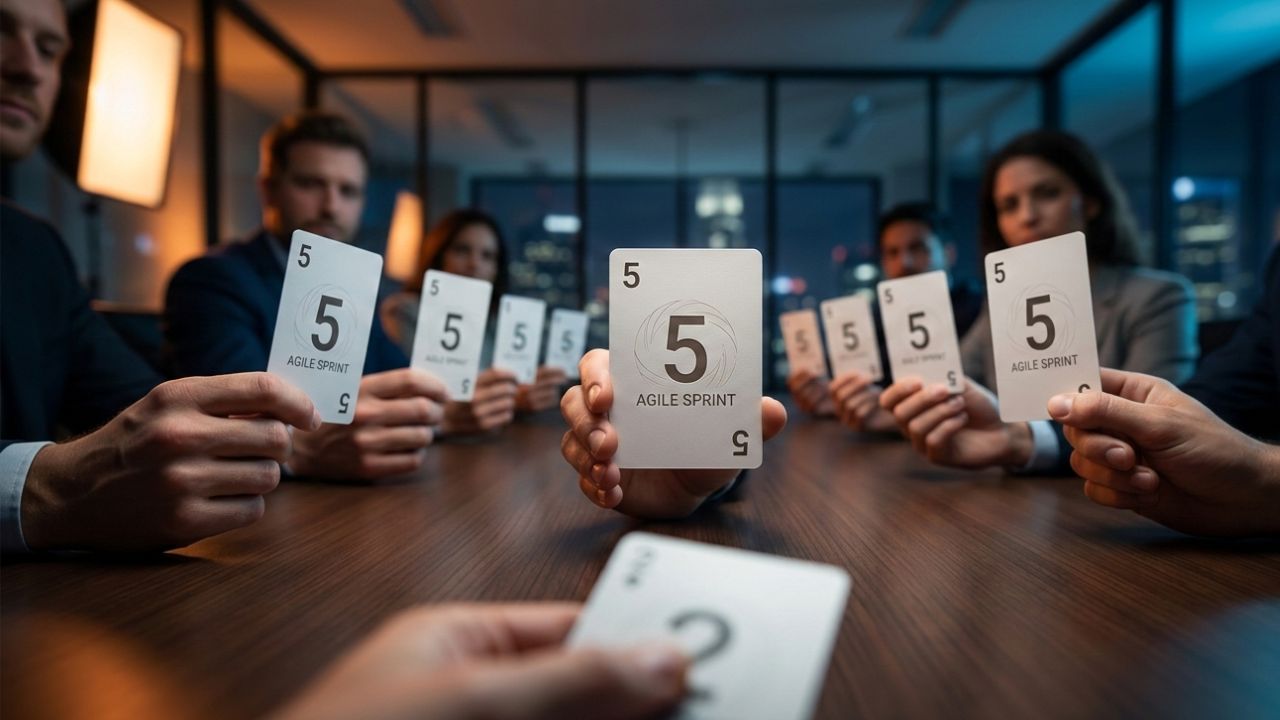
- Identical pointing in estimation: Every team member instantly holds up the exact same story point card during planning poker.
- The "Illusion of Unanimity": Silence is actively misinterpreted as complete agreement during critical technical debates.
- Rationalizing away risks: The team collectively ignores glaring red flags to maintain their current sprint trajectory.
How to Engineer Profitable Conflict
You cannot simply tell an agreeable team to "argue more." You must systematically engineer workflows that actively invite and protect dissenting opinions.
To overcome the innate status quo bias in digital transformation, you need to rewire how your team communicates from the ground up.
Utilizing Asynchronous Workflows
Real-time meetings are the perfect breeding ground for group consensus bias. The loudest, most extroverted voice almost always wins the room.
Shift critical technical debates to asynchronous text. Have team members submit their estimates and architectural opinions via documented comments before the meeting even starts.
This completely removes the social pressure of disagreeing in real-time. It forces the team to evaluate the actual data, rather than just blindly agreeing with the highest-paid person in the room.
Building True Psychological Safety
Psychological safety does not mean everyone is always happy. It means team members feel completely safe taking interpersonal risks without fear of retaliation.
- Reward the dissenter: Publicly praise the developer who points out a fatal flaw in your sprint plan.
- Play Devil's Advocate: Assign a specific team member the explicit role of challenging the group's assumptions during every meeting.
- Embrace failure: Treat failed sprint experiments as valuable learning data, not punishable offenses.

Frequently Asked Questions (FAQ)
It stifles creativity and critical problem-solving. Teams operating under this bias will routinely deliver subpar, buggy products because no one was willing to challenge the initial, flawed technical plan.
Warning signs include a lack of debate during backlog refinement, identical story point estimations, ignoring negative customer feedback, and a general atmosphere where maintaining peace is valued over delivering quality.
Scrum Masters should withhold their own opinions until the end, enforce anonymous voting for story pointing, and actively ask quiet team members for their specific thoughts before closing a topic.
When employees genuinely believe they will not be punished or mocked for disagreeing, they are far more likely to voice concerns. Psychological safety transforms toxic silence into highly profitable, constructive debate.
Asynchronous workflows force individuals to form and document their own opinions independently, entirely isolated from the social pressure and real-time influence of dominant team members.
Conclusion
To maintain a competitive edge, modern executives must actively combat the human urge for easy consensus. Unchecked groupthink in agile teams will inevitably lead to stagnant products, frustrated talent, and massive financial waste.
By actively engineering a culture that rewards dissenting voices and leverages asynchronous communication, you can spark genuine, disruptive innovation.
Stop rewarding silent agreement and start demanding critical, independent thinking from your Agile teams today.
Sources & References
- Internal Link: Cognitive Biases in Leadership
- Internal Link: Sunk Cost Fallacy in Agile Projects
- Internal Link: Status Quo Bias in Digital Transformation
- External Source: Harvard Business Review - The Dangers of Groupthink in Cross-Functional Teams.
- External Source: Scrum Alliance - Building Psychological Safety to Combat Consensus Bias in Sprint Planning.
- External Source: American Psychological Association (APA) - The Psychology of Conformity and Group Dynamics in the Workplace.