The Secret Behind Microsoft's $10B Japan AI Investment

Microsoft has announced a massive $10 billion investment in Japan to expand its hyperscale AI infrastructure, enhance advanced cybersecurity protocols, and upskill the local workforce. This strategic commitment will accelerate sovereign AI development and secure critical enterprise data ecosystems across the APAC region.
This historic capital injection represents Microsoft's largest ever single investment in the Japanese market. Beyond the staggering financial figure, it signals a fundamental restructuring of the global technological landscape. For decades, the Asia-Pacific tech ecosystem has operated as a secondary node to US-centric cloud computing hubs. Latency issues, cross-border data transfer limitations, and evolving digital trade barriers have forced CTOs and enterprise architects into defensive postures.
With this move, Microsoft is directly attacking the latency constraints that hinder advanced enterprise artificial intelligence deployments in Asia. By flooding the market with dedicated GPU clusters and specialized compute architecture, they are essentially dragging the future of sovereign AI capabilities onto Japanese soil. The implications for software developers, tech founders, and regional business leaders are immediate and profound.
Breaking Down Microsoft's $10 Billion Commitment to Japan
To understand the sheer magnitude of this commitment, we must look past the PR fluff and analyze the hard capital allocations. The $10 billion is not simply a slush fund for software development. The vast majority of this capital expenditure (CapEx) is directed toward concrete, high-density physical infrastructure.
Data centers built ten years ago are largely ill-equipped to handle the intensive cooling and power requirements of modern AI models. Microsoft is deploying the latest generation of advanced AI accelerators directly into its Tokyo and Osaka data center regions. This localized compute power allows Japanese enterprises to train complex, proprietary Large Language Models (LLMs) without their sensitive data ever leaving the sovereign borders of the country.
Furthermore, this infrastructural leapfrogging provides a massive structural advantage for the local startup ecosystem. Founders building complex AI agents and high-frequency algorithmic tools can now leverage enterprise-grade cloud capabilities with single-digit millisecond latency, a feature previously reserved for applications hosted near Silicon Valley nodes.
The Timeline for the AI Infrastructure Expansion
The deployment of this hyperscale architecture is not a distant vision; it is an aggressive, immediate roll-out. The timeline indicates that the initial wave of specialized AI server racks will be operational within the next twelve months.
Over the following two to three years, entirely new data center campuses will break ground. This phased deployment ensures that the region will see continuous capability upgrades. By the end of 2028, Japan is projected to house one of the highest concentrations of AI-dedicated compute power outside of the North American continent, reshaping how data routing and cloud load-balancing are managed globally.
Enhancing APAC Cybersecurity and Sovereign Data
As the volume of compute increases, so does the surface area for cyber warfare. A critical pillar of Microsoft’s $10 billion play is the establishment of the region's most advanced cybersecurity laboratory. Built in direct collaboration with the Japanese government and top-tier enterprise partners, this initiative focuses on predictive threat modeling and zero-day vulnerability defense.
The reality of modern enterprise IT is that data residency is no longer just a compliance checklist; it is a matter of national security. Governments across APAC are aggressively tightening regulations regarding where citizen and financial data can be processed. Microsoft's localized compute expansion perfectly aligns with this regulatory shift.
By keeping processing power local, enterprises can utilize the full power of Microsoft Copilot and Azure AI services while maintaining strict adherence to local laws. This strategic shift necessitates that technology leaders rethink their broader sovereign AI strategy, as fragmented, localized data ecosystems become the new global standard for enterprise operations.
The Massive Workforce Upskilling Initiative
Hardware is useless without the human capital to direct it. Alongside the server racks and cooling towers, Microsoft has committed to upskilling over 3 million people in Japan over the next three years. This is a monumental undertaking aimed at preventing a massive skills bottleneck.
The program targets a diverse cross-section of the workforce. For software engineers and scrum masters, the focus is on advanced prompt engineering, AI-native CI/CD pipeline integration, and managing distributed ML architectures. However, the upskilling extends far beyond the engineering department.
Business leaders, public sector employees, and non-technical managers will receive intensive training on AI literacy and strategic deployment. By saturating the local talent pool with AI expertise, Microsoft is effectively building a massive, loyal user base that defaults to the Azure ecosystem for all future digital transformation projects. This moves the needle from simple vendor procurement to deep, systemic ecosystem lock-in.
What This Means for Global Hyperscale Competition
Microsoft's aggressive expansion in Japan is a direct shot across the bow of its primary cloud competitors. AWS and Google Cloud are now forced to accelerate their own APAC infrastructure plans or risk losing the enterprise market to Azure’s localized dominance. The tech race has moved past software features and into the realm of sovereign physical infrastructure.
For Global Capability Centers (GCCs) and outsourcing hubs, particularly those in India and the Philippines, this localized compute explosion represents both a threat and an opportunity. If a Japanese corporation can automate complex workflows securely within its own borders with near-zero latency, the traditional arbitrage model of offshore outsourcing is threatened.
However, GCCs that rapidly pivot to managing and optimizing these multi-region sovereign AI deployments will find themselves indispensable. The future belongs to engineering teams that can architect secure, high-speed, compliant AI solutions across a fragmented global cloud. The $10 billion Microsoft Japan investment is the starting gun for this new era of sovereign enterprise computing.

Frequently Asked Questions
The timeline spans roughly 36 months, with immediate deployment of the newest generations of GPUs to existing Tokyo and Osaka server centers within the first year. Full build-outs of entirely new sovereign data architecture are projected for completion by early 2028.
It fundamentally decentralizes hyperscale compute. Instead of relying solely on US-based data centers, APAC nations can now route their complex LLM API queries through localized hubs, dramatically reducing latency and bypassing international data choke points.
The initiative establishes the first dedicated joint Microsoft-Japan cybersecurity laboratory. It focuses on preemptive threat detection for national utility grids, leveraging AI-driven analytics to counter sophisticated state-sponsored cyber warfare techniques targeting the APAC region.
Yes, a significant portion of the $10 billion capital expenditure is allocated not just to upgrading existing infrastructure, but to constructing entirely new, high-density AI data centers designed specifically to cool and manage intensive GPU workloads.
Microsoft has pledged to upskill over 3 million individuals in Japan alone. This creates a ripple effect across APAC, elevating the standard for AI literacy, advanced prompt engineering, and sovereign systems management, forcing neighboring GCCs to adapt rapidly.
Sources and References
- Microsoft Official Press Release: Accelerating AI in Japan
- Nikkei Asia: Global Tech Giants Expand APAC Data Centers
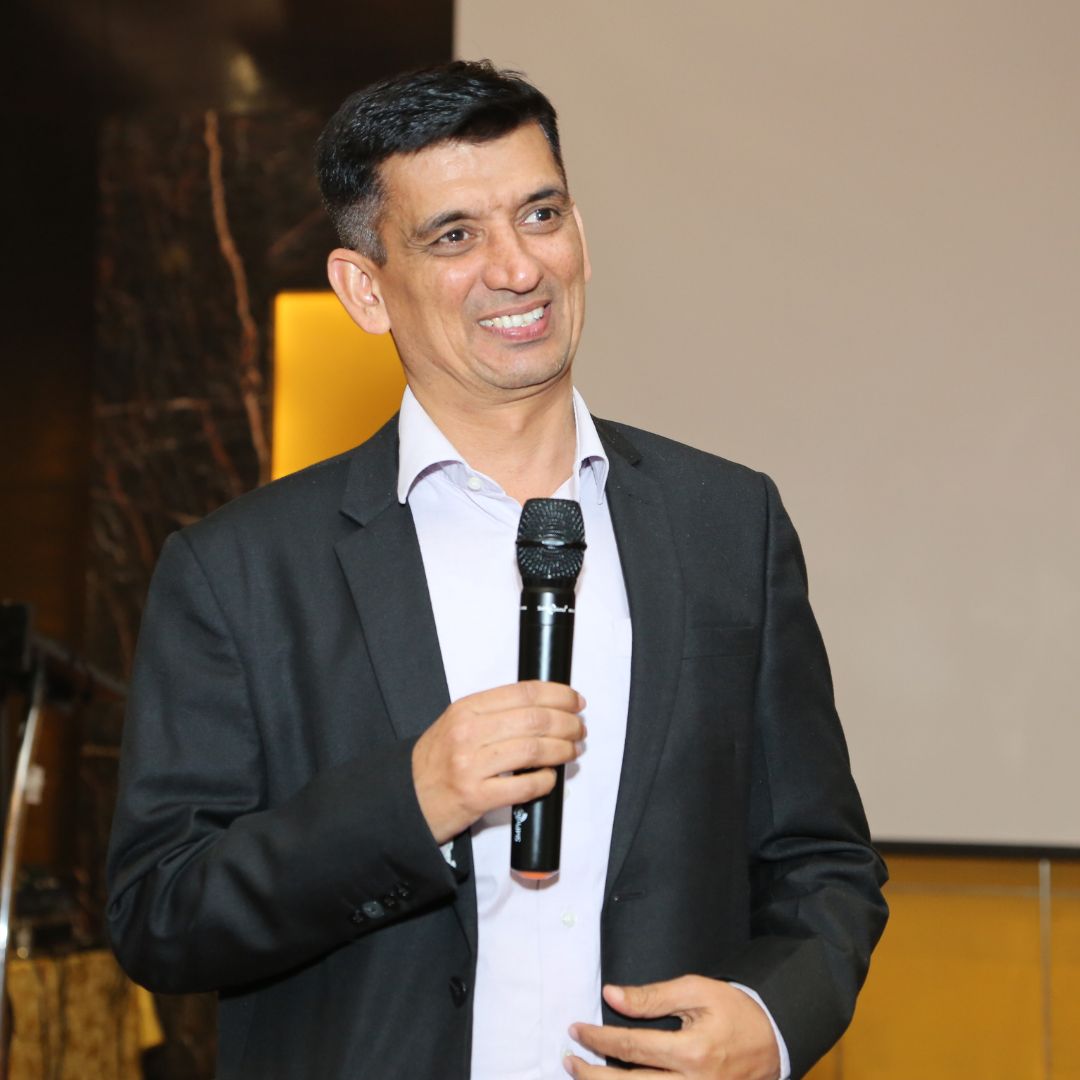
About the Author: Sanjay Saini
Sanjay Saini is an Enterprise AI Strategy Director specializing in digital transformation and AI ROI models. He covers high-stakes news at the intersection of leadership and sovereign AI infrastructure.
Connect on LinkedIn