Why DocMorris Just Killed Offshore Healthcare BPOs

Key Takeaways
- The Death of Triage Call Centers: DocMorris’s implementation of Google Gemini proves that manual patient triage, prescription processing, and tier-1 healthcare support are fully automatable, rendering traditional offshore staffing models obsolete.
- The Pivot to AI Orchestration: Indian Global Capability Centers (GCCs) must immediately abandon legacy headcount scaling and transition toward managing, auditing, and securing sophisticated AI pipelines.
- Sovereign Cloud Dominance: The partnership emphasizes a secure, private infrastructure strictly within EU boundaries, demanding that IT providers master regional data compliance rather than cross-border data processing.
The recent announcement detailing the partnership between Google and DocMorris—one of Europe’s leading online pharmacies—is being celebrated across the industry as a profound leap forward for digital health. By integrating Google's Gemini models to create a "digital health companion," the initiative promises an intuitive, highly personalized healthcare journey for over 11 million active customers. However, beneath the surface of this corporate triumph lies a blaring siren for Indian IT service providers and offshore Business Process Outsourcing (BPO) firms.
We are witnessing a monumental shift in how global healthcare infrastructure is managed. The DocMorris and Google partnership is not simply an evolution in app development; it is the definitive end of the traditional offshore healthcare support ecosystem. By replacing traditional call center support, symptom checking, and e-prescription processing with natively integrated conversational AI, the billable-hour model for European healthcare outsourcing is effectively being obliterated.
The Collapse of the Billable-Hour Model in Healthcare BPO
For decades, the foundation of the Indian offshore IT and BPO industry has relied heavily on a predictable formula: labor arbitrage. Western healthcare companies outsourced their labor-intensive, repetitive tasks—such as patient onboarding, insurance verification, call center triaging, and manual prescription data entry—to highly staffed facilities in India, the Philippines, and other emerging markets. The business model scaled linearly: if a company wanted to handle more patients, they simply hired more offshore agents.
The DocMorris integration with Google Cloud and Gemini fundamentally breaks this economic equation. Generative AI does not scale linearly; it scales exponentially. A single, finely tuned multimodal AI model can handle a million concurrent patient inquiries, cross-reference symptoms with medical databases, and process complex e-prescriptions in a fraction of a second. The AI does not require shift changes, it does not experience fatigue, and most importantly, it operates at a cost that makes the traditional offshore billable hour look outrageously expensive.
When an autonomous digital companion can seamlessly guide a patient from the onset of symptoms directly through to the redemption of an e-prescription, the vast army of human intermediaries currently employed in offshore centers becomes redundant. The immediate consequence is a severe contraction in traditional BPO contracts as European and American healthcare providers realize they no longer need to pay for human latency.
How Generative AI and Gemini are Replacing Traditional Call Centers
To fully grasp the magnitude of this disruption, one must understand the specific capabilities of the technology being deployed. DocMorris is not simply adding a rudimentary chatbot to their website; they are fundamentally re-architecting their customer experience around Google's Gemini models. These models possess deep multimodal reasoning, meaning they can understand context, parse complex medical terminology, and maintain conversational state across a patient's entire digital journey.
In a legacy setup, a patient attempting to resolve a confusing prescription issue would likely call a support line, navigate a frustrating IVR menu, and eventually speak to an offshore representative reading from a rigid script. The representative would then manually update a database—a process fraught with the potential for human error and compliance risks.
With the new DocMorris architecture, the AI acts as an intelligent orchestrator. It securely accesses the patient's history, understands the nuances of the inquiry via natural language processing, and resolves the issue autonomously while maintaining strict data privacy protocols. The traditional Tier 1 and Tier 2 support roles are entirely bypassed. For Indian IT leaders, the writing is on the wall: providing bodies to read scripts is no longer a viable business strategy.
The Imperative Pivot: From Manual Headcount to AI Orchestration
The realization that manual healthcare data entry and offshore call centers are dead should not signal the end of the Indian IT industry, but rather force an aggressive, immediate evolution. To survive the automated purge triggered by partnerships like DocMorris and Google, Global Capability Centers (GCCs) must execute a hard pivot toward AI orchestration.
What does this pivot entail? It means abandoning the pitch of "cheaper labor" and adopting the mantle of "intelligence management." GCCs must restructure their value proposition around building, deploying, monitoring, and securing the very AI pipelines that are displacing their legacy workers. The future lies in providing the architectural expertise required to integrate enterprise LLMs into existing hospital and pharmacy networks.
Leaders looking to navigate this transition must urgently review their internal frameworks. A comprehensive AI adoption strategy for Indian GCCs is no longer an optional innovation initiative; it is a matter of corporate survival. IT service providers must re-train their vast workforces to transition from standard execution roles to becoming "humans-in-the-loop," focusing heavily on algorithmic auditing, edge-case resolution, and managing the ethical guardrails of healthcare AI.
Sovereign Cloud Consulting: The New Moat for Indian IT
One of the most critical aspects of the DocMorris announcement is the emphasis on security and digital sovereignty. The company explicitly chose Google Cloud to ensure that personal health data is processed securely within EU data centers, fully compliant with stringent European privacy regulations. This "secure by design" approach highlights a massive new opportunity—and requirement—for the offshore IT sector.
As healthcare data becomes increasingly weaponized and regulated, Western enterprises are demanding absolute control over where their data lives and how it is processed by AI models. Indian IT firms must become masters of Sovereign Cloud Consulting. Rather than merely migrating databases, offshore partners must architect solutions that guarantee local data residency while still leveraging the power of global hyperscaler AI tools.
The new competitive moat for an IT service provider will be their ability to deploy a localized, compliant version of Gemini or other LLMs inside a heavily fortified sovereign cloud environment, ensuring that highly sensitive patient data never crosses restricted geopolitical borders.
Real-World Impacts on Offshore Billing Models
As the technological landscape shifts, so too must the financial structures that govern outsourcing. The traditional Full-Time Equivalent (FTE) billing model is inherently incompatible with an AI-first ecosystem. When DocMorris successfully handles millions of interactions via conversational AI at a fraction of a cent per API call, why would they continue to pay a vendor an hourly rate for equivalent human output?
Indian IT and BPO firms must aggressively transition to outcome-based or consumption-based billing models. Instead of charging for hours worked, vendors will need to charge based on the successful resolution of patient journeys, the reduction of operational latency, or the uptime and accuracy of the AI pipelines they manage. This shift requires a fundamental restructuring of how GCCs forecast revenue, manage margins, and pitch to prospective enterprise clients.
Rethinking the Tech Stack: Transitioning to AI-First Architectures
The architectural implications for developers and system architects are equally profound. Building traditional, monolithic CRUD (Create, Read, Update, Delete) applications with static frontend interfaces is quickly becoming a commoditized skill. The DocMorris digital health companion requires a fluid, dynamic tech stack built entirely around the capabilities of the underlying LLM.
Engineers previously focused on writing rigid backend logic must now master conversational state management, Retrieval-Augmented Generation (RAG) pipelines, and secure API integrations with models like Gemini. The challenge is no longer just returning a database query; it is synthesizing complex medical data into empathetic, accurate, and contextually aware natural language responses in real time. This requires an entirely new discipline of "Generative UI" architecture, where the interface adapts instantly based on the AI's real-time assessment of the patient's needs.
The Roadmap for GCC Workers: Skills to Survive the Autonomous Shift
For the millions of workers currently employed in the Indian IT and BPO sectors, this transition will be disruptive, but it also offers a clear path upward. The skills required for the next decade will not be focused on manual repetition, but on managing the machines that perform it.
Professionals must upskill rapidly in areas such as prompt engineering for medical domains, AI system monitoring, data compliance auditing, and conversational UX design. The role of a customer support agent will evolve into an "AI Trainer" or "Exception Handler," responsible for stepping in only when the AI encounters a highly complex or ethically ambiguous edge case that requires nuanced human judgment. By leaning into these high-value orchestration roles, the workforce can insulate itself against the immediate shockwaves of the generative AI revolution.
Explore the Complete DocMorris AI Disruption Series
- The Generative UI Architecture Google is Hiding
- Cut Enterprise AI Token Costs by 300% Before Scaling
Frequently Asked Questions
By replacing manual data entry, triage, and customer support with autonomous agents like Gemini, significantly reducing the need for large offshore headcounts.
Conversational AI automates symptom checking, prescription processing, and customer inquiries, effectively eliminating the standard Tier 1 and Tier 2 support roles.
GCCs must shift from providing cheap labor for repetitive tasks to architecting, managing, and securing complex AI pipelines and sovereign cloud deployments.
Yes, multimodal LLMs like Gemini are capable of handling nuanced healthcare queries, rendering traditional offshore script-reading roles obsolete.
Transitioning to outcome-based billing, training staff in AI oversight, and offering specialized services in sovereign data compliance and LLM fine-tuning.
It destroys the billable-hour model. When an AI can handle a transaction in milliseconds, charging clients by the human hour becomes economically unviable.
Workers need skills in AI system architecture, conversational state management, ethical AI auditing, and prompt engineering.
Healthcare data must remain within strict geographic boundaries (like the EU). Outsourcers must build expertise in localized, secure cloud environments rather than cross-border data processing.
To drastically lower operational costs, improve patient response times, and offer hyper-personalized, 24/7 care that human-only teams cannot match.
Organizations must upskill their workforce to become 'humans-in-the-loop,' focusing on quality assurance, edge-case resolution, and algorithmic governance rather than primary execution.
Sources and References
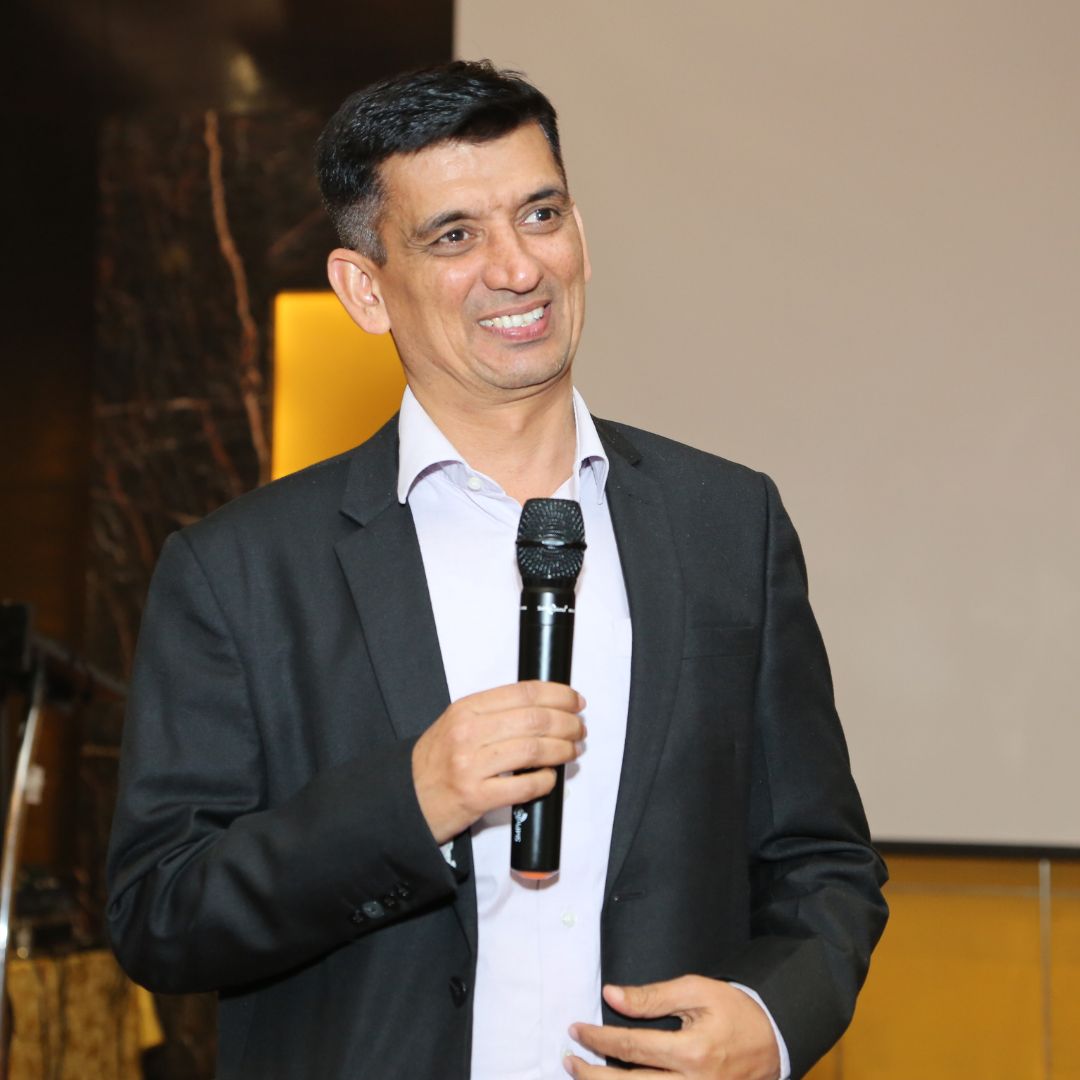
About the Author: Sanjay Saini
Sanjay Saini is an Enterprise AI Strategy Director specializing in digital transformation and AI ROI models. He covers high-stakes news at the intersection of leadership and sovereign AI infrastructure.
Connect on LinkedIn