Credit Stolen? What To Do When A Coworker Stole My Credit (3 Proactive Ways)
- Immediate Action: Address credit theft in the moment with the "Add-On" technique, not after the meeting.
- Documentation is King: Use project management tools to create an undeniable timestamp of your contributions.
- The "We" vs. "I" Balance: Generosity with credit makes your claims of ownership more credible, not less.
- Fact-Based Confrontation: When you ask "coworker stole my credit, what to do?", the answer is always data, never emotion.
- Strategic Visibility: Send weekly "ship" emails to stakeholders to establish the narrative before others can rewrite it.
Introduction: The Silent Career Killer
Nothing drains motivation faster than watching a colleague climb the ladder using your ideas as the rungs.
It’s a sinking feeling. You deliver the work, they deliver the presentation, and suddenly, they are the hero. You are left seething in silence, wondering: coworker stole my credit, what to do?
Reacting with anger makes you look petty. Doing nothing makes you look invisible. The high-performer approach finds the middle ground: strategic visibility.
This deep dive is part of our extensive guide on eliminating blame culture in agile teams. While that guide focuses on team dynamics, this page focuses on you—protecting your professional equity in a cutthroat environment.
Strategy 1: The "Digital Breadcrumb" Method
The most effective defense against credit theft is a preemptive strike. You must create an audit trail that exists before the theft occurs.
Toxic coworkers rely on ambiguity. They thrive in hallway conversations and unrecorded meetings.
How to execute this:
- The "Pre-Meeting" Brief: Never walk into a brainstorm empty-handed. Circulate a 1-page memo of your ideas 2 hours before the meeting. This timestamps your intellectual property.
- The "Post-Meeting" Recap: Immediately after a verbal agreement, send an email: "Great discussion. As agreed, I will execute on [My Idea] by Friday."
If you are dealing with a broader culture of manipulation beyond just credit theft, you may need the strategies outlined in our Office Politics 2026: The High Performer’s Guide to Surviving Toxic Teams.
Strategy 2: The "Yes, And..." Correction
What happens when the theft happens live in a meeting?
Most people freeze. They fear that speaking up will make them look defensive. High performers use the "Yes, And..." technique. You validate the thief’s statement (to avoid looking aggressive) but immediately reclaim the context (to assert ownership).
The Script:
- The Thief: "So, I think we should pivot to a subscription model." (Your idea).
- The Pivot: "I’m glad you agree with the pivot! When I ran the numbers for that model last week, I found that churn might increase by 5%. Here is the data I prepared..."
This technique professionally addresses a coworker who took credit for your idea by exposing that you hold the data, and therefore, the ownership.
Strategy 3: The "Impact Report" Routine
Credit theft often happens because management doesn't know what you do all day. If you only communicate during annual reviews, you leave a 12-month gap for others to rewrite your history.
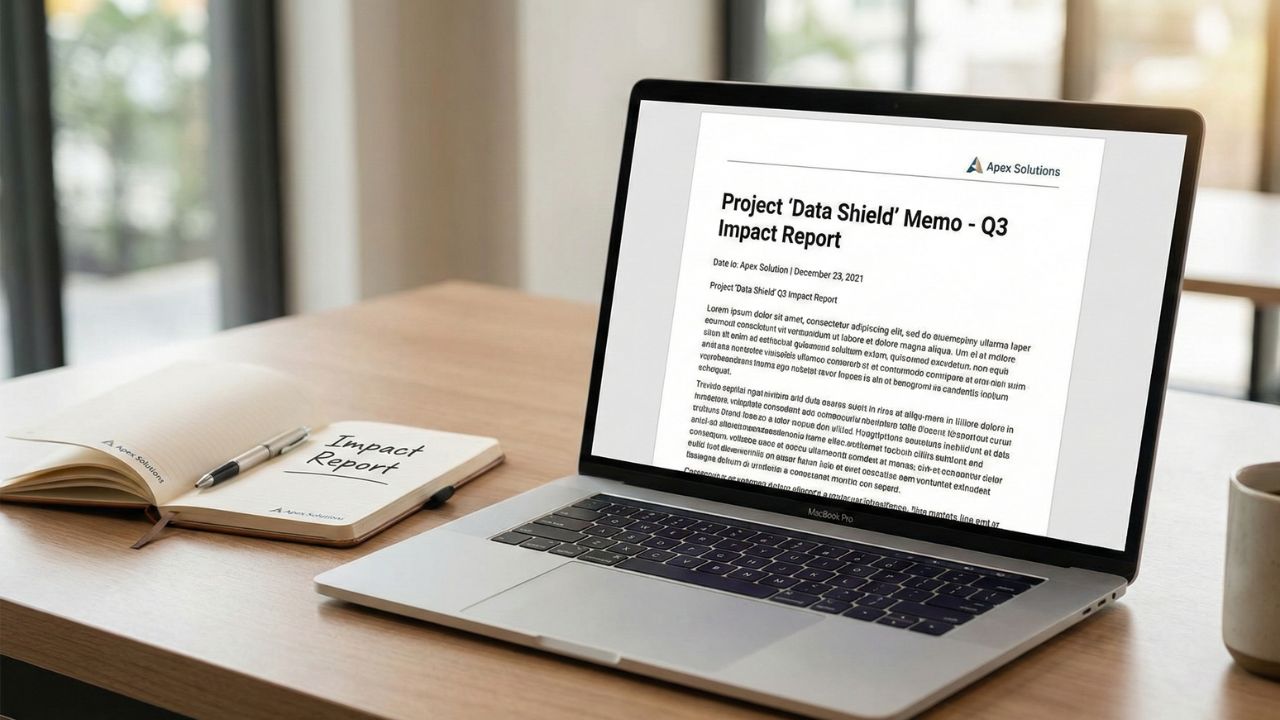
The Solution: Send a bi-weekly "Impact Report" to your manager.
- Format: Bullet points only.
- Content: "Shipped [Feature X]," "Solved [Problem Y]," "Initiated [Project Z]."
- Tone: Objective and brief.
This creates a documented history of your work impact to prevent stolen credit. It also helps when you need to speak up about your impact without sounding arrogant, because you are sharing facts, not boasting.
For more on navigating the social side of these interactions, check our guide on Workplace Rumors: How to Address Them Head-On and Gain Respect.

FAQ: Handling Credit Theft Scenarios
Approach them privately first if it's a one-time offense. Use the "Confusion" frame: "I noticed in the meeting you presented the project as yours. I was confused because we worked on that together. Can you clarify why my name wasn't on the slide?" This forces them to explain without you making an accusation.
Generally, no. HR deals with policy violations, not "idea theft," unless it involves intellectual property or harassment. Reporting minor credit issues can make you look difficult. Solve it through better documentation and public correction first.
Be a "Credit Multiplier." When praised, say: "Thank you. I couldn't have built this without [Name]'s help on the design." Leaders who share credit are trusted more, making it harder for others to steal from them later.
Tie your success to the company's goals. Instead of "I did a great job," say "The project succeeded in raising Q4 revenue by 10%, which was my primary target."
Conclusion
You cannot control a toxic colleague's lack of integrity, but you can control the narrative.
By leaving digital breadcrumbs, correcting the record in real-time, and consistently reporting your impact, you make it impossible for anyone else to claim your wins.
The next time you ask, "coworker stole my credit, what to do?" remember: the best revenge is not a confrontation. It is a paper trail so clear that the truth speaks for itself.
Sources & References
- Internal Strategy Map: Sub-Page 2 - Credit Stolen?
- Internal Strategy Map: Sub-Page 1 - Office Politics 2026
- Internal Strategy Map: Sub-Page 3 - Workplace Rumors
- External Reference: Harvard Business Review - "How to Respond When Someone Takes Credit for Your Work"
- External Reference: Forbes - "5 Ways To Deal With A Co-Worker Who Steals Your Ideas"