The "Invisible Employee" Problem: Are You Accidentally Punishing Your Remote Team?
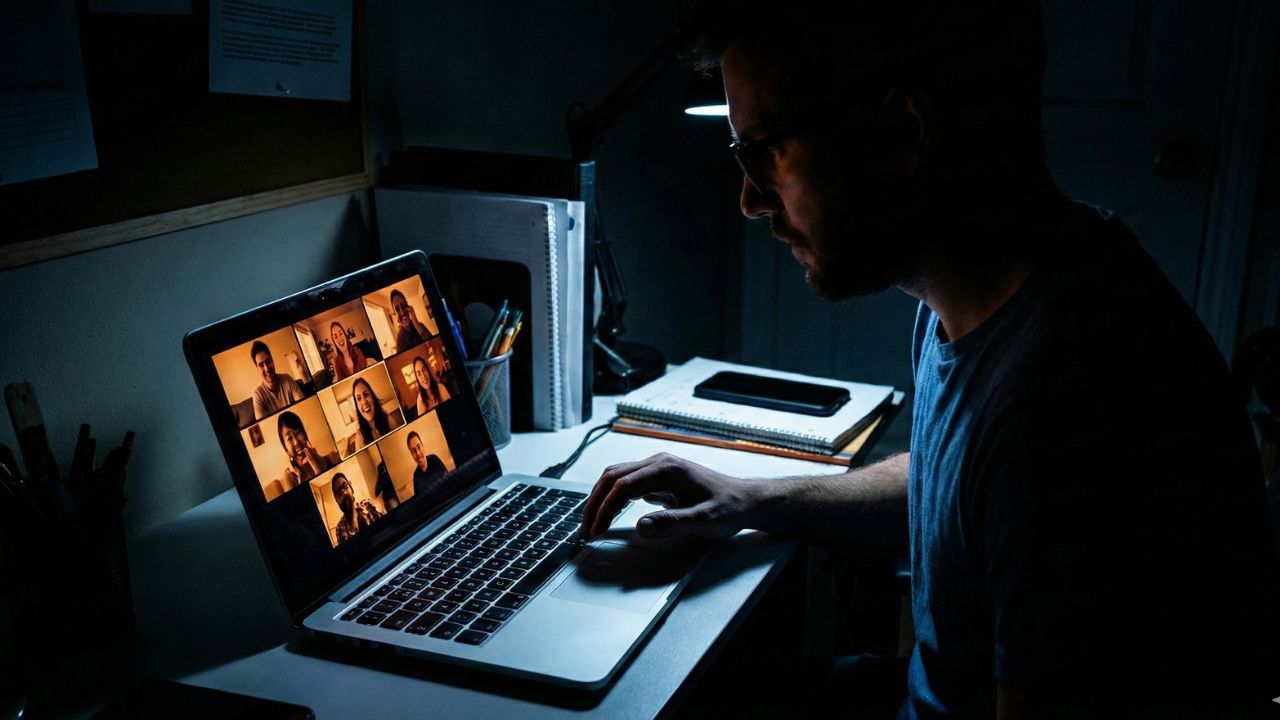
- The Threat: Proximity Bias means leaders unconsciously favor the people they physically see every day.
- The Stat: In many organizations, in-office employees are 40% more likely to get promoted than fully remote ones.
- The Fix: You must artificially structure meetings and reviews to level the playing field.
- The Goal: Judge talent by output (results), not input (hours spent visible at a desk).
It starts innocently enough.
You are in the office kitchen. You run into a developer. You chat about a new feature idea. By the time the coffee is brewed, you’ve assigned them the project.
It feels efficient. But you just committed Proximity Bias.
You gave the opportunity to the person you saw, not necessarily the best person for the job.
Meanwhile, your top-performing remote engineer sits at home, completely unaware that the decision was already made.
This article is a critical component of our comprehensive framework on The "3-2" Hybrid Model is Dead: Rethinking Return to Office.
If you do not actively fight this bias, you will create a two-tier culture where remote workers feel like second-class citizens.
And eventually, they will quit.
What is Proximity Bias?
Proximity Bias is the instinctive tendency for leaders to give preferential treatment to employees who are physically close to them.
It is an evolutionary trait. We trust what we can see.
In a traditional office, this wasn't a problem because everyone was visible.
In a hybrid world, it is a disaster.
The "In-Crowd" vs. The "Out-Crowd"
The "In-Crowd" (office workers) gets:
- Access to unspoken information.
- Casual mentorship moments.
- Faster feedback loops.
The "Out-Crowd" (remote workers) gets:
- Formal, scheduled updates only.
- Silence until something goes wrong.
- A feeling of isolation.
The Signs You Are Guilty
You probably think you are a fair leader. Most of us do.
But bias is, by definition, unconscious.
Ask yourself these uncomfortable questions:
- The "Go-To" Person: When a crisis hits, do you call the person in the next cubicle, or do you check the Skills Matrix?
- The Meeting Warm-up: Do you spend the first 5 minutes of a hybrid meeting joking with the people in the room while the Zoom participants stare at a mute screen?
- The Promotion List: Look at your last round of promotions. What percentage of them were "office-first" employees?
If the answer to number 3 is "mostly office people," you have a proximity bias problem.
Tactical Fix: "Remote-First" Meetings
The conference room is the most dangerous place for a hybrid team.
When 4 people are in a room and 3 are on Zoom, the people in the room dominate the conversation.
They interrupt each other. They use the physical whiteboard. The audio quality for the remote folks is terrible.
The Rule: "One Remote, All Remote"
If even one person is joining remotely, everyone should join from their own laptop.
Yes, even if you are sitting next to each other.
Why this works:
- Equal Real Estate: Everyone’s face is the same size on the screen.
- Audio Clarity: No more straining to hear the person at the far end of the table.
- Digital Records: Chat logs and recorded sessions preserve the context for everyone.
Fixing Performance Reviews
The biggest risk of proximity bias is in Performance Management.
It is easy to see that "Dave stayed late on Tuesday."
It is hard to see that "Sarah pushed clean code at 10 PM."
To fix this, you must move from Observation-Based management to Outcome-Based management.
Stop measuring:
- Punctuality.
- Hours visible in the office.
- "Hustle" (which is usually just anxiety masquerading as work).
Start measuring:
- Sprint Velocity.
- Defect Leakage.
- Customer Satisfaction Scores.
Once you eliminate bias based on location, you realize that talent can come from anywhere.
You can stop fishing in a 20-mile radius and start looking globally.
However, hiring across borders brings its own challenges. Before you hire your first international nomad, read our guide on "Work From Anywhere" Policy: Compliance Nightmare or Talent Magnet?.
Frequently Asked Questions (FAQ)
A: Are they more productive, or are they just louder? Studies show remote workers often have higher deep-work productivity.
Ensure you are measuring actual output, not just "busyness."
A: You cannot force spontaneity. But you can create space for it.
Dedicate the first 5 minutes of standups to social chat, or use "Donut" bots in Slack to pair people up for random virtual coffees.
A: Show them the attrition data. High-performing remote talent will not stay where they are ignored.
Frame inclusivity as a retention strategy, not just a fairness issue.
Conclusion
Proximity Bias is the silent killer of hybrid teams.
It is human nature to favor what we can see. But effective leadership requires overcoming human nature.
If you let visibility dictate your promotions, you will end up with a team of people who are great at "being seen" but mediocre at "doing work."
Audit your meetings. Check your promotion data. Make the invisible employee visible.
References
- Harvard Business Review: "The Power of Proximity to Coworkers" – Research by Emanuel, Harrington, and Pallais (2023) detailing the trade-off between short-term coding output and long-term mentorship/human capital.
- Gartner HR Research: Insights on the "Hybrid Paradox" and "Proximity Bias," highlighting that 34% of remote workers are less likely to be promoted compared to on-site peers due to visibility disparities.
- MIT Sloan Management Review: Analysis of cognitive biases in distributed teams, specifically focusing on how "Out-of-Sight, Out-of-Mind" and "Confirmation Bias" distort leadership performance evaluations.