GCC Product Ownership Framework 2026: Why India is Moving to the Enterprise Core
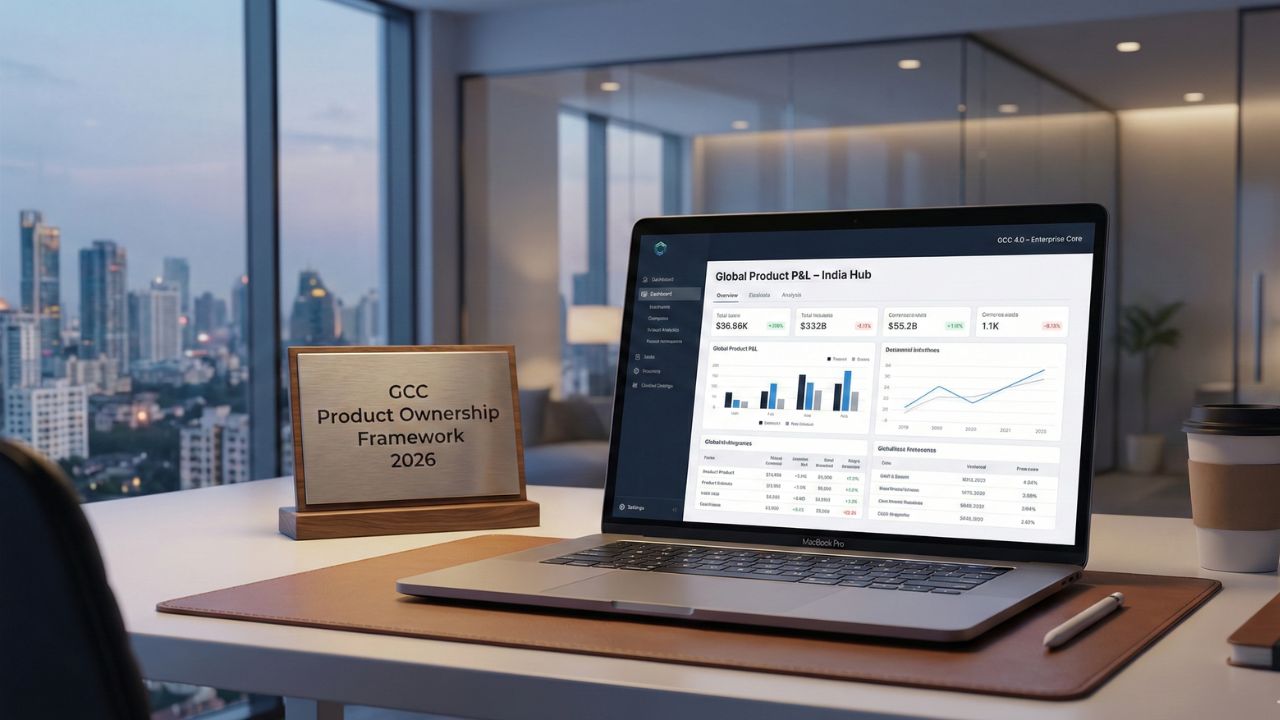
- Shift to P&L: GCCs are transitioning from cost centers to entities with full global profit and loss responsibility.
- The "Mini-CEO" Model: India-based product leaders now manage the entire global product lifecycle, not just execution.
- Decision Sovereignty: Success in 2026 requires clear decision rights between global HQ and India hubs to avoid bottlenecks.
- Maturity Evolution: The GCC 4.0 model moves beyond "project thinking" toward a product-centric operating model.
Introduction
The landscape of global capability centers has fundamentally shifted. The GCC product ownership framework 2026 represents a pivotal move where India hubs are no longer just "delivery arms" but the strategic heartbeat of the organization.
This deep dive into autonomous leadership is part of our extensive guide on The Modern GCC 4.0. As enterprises seek "intelligence arbitrage," understanding how to transfer global P&L responsibility to India GCC hubs has become a competitive necessity rather than a cost-saving experiment.
The GCC 4.0 Product Maturity Model
Moving to the enterprise core requires a structured evolution. The GCC 4.0 product maturity model defines how centers transition from simple task execution to full-scale innovation.
From Project Execution to Product Thinking
In previous iterations, India hubs focused on project execution—meeting deadlines for features defined elsewhere.
In 2026, the focus is product thinking, where teams own the problem statement, user experience, and long-term roadmap alignment with global OKRs.
Empowering the "Mini-CEO"
A cornerstone of this framework is the emergence of the "Mini-CEO" role. These are India-based product managers who:
- Have total revenue influence over their specific product lines.
- Manage autonomous squads that operate with high velocity.
- Possess a global-local mindset, balancing localized engineering talent with global market needs.
Defining Decision Rights: HQ vs. India Hubs
A common friction point in the GCC product leadership operating model is the ambiguity of authority. To successfully own the entire global product lifecycle, centers must establish a clear "Decision Rights" matrix.
Strategic Rights: HQ typically retains "North Star" alignment and brand-level architectural standards.
Operational Rights: India hubs gain full autonomy over tech stack selection, feature prioritization, and resource allocation.
Financial Rights: Moving toward 2026, GCCs are increasingly evaluated on their ability to drive top-line growth, not just bottom-line savings.
While building these autonomous teams, leadership must also address modern technical hurdles, such as determining who owns AI generated code in an Indian GCC, to ensure IP sovereignty is maintained during the innovation process.
Frequently Asked Questions (FAQ)
It is a framework where Indian centers transition from back-office support to owning the end-to-end strategy, development, and commercial success of global products.
Transferring P&L involves decentralizing budget authority and holding India-based "Mini-CEOs" accountable for revenue targets and product-market fit rather than just headcount metrics.
Key roles include the Global Product Head (India-based), Autonomous Squad Leads, and Principal Architects who manage the roadmap from ideation through to global deployment.
Alignment is achieved through shared digital dashboards and quarterly synchronized planning sessions where India-led innovation is mapped directly to the enterprise’s primary growth pillars.
Primary risks include "siloization," where the India hub drifts away from the core brand identity, and potential IP leakage if governance frameworks are not robust.
Conclusion
The GCC product ownership framework 2026 is the final step in India’s journey to the enterprise core.
By moving from a "service provider" mentality to an "owner" mentality, organizations can unlock unprecedented speed and innovation. However, this transition requires a fundamental shift in how we define leadership, decision rights, and value.
Would you like me to help you draft a transition roadmap for shifting P&L responsibility to your India hub?