Stop Bypassing AI Safety: Cut Enterprise Breaches by 40%
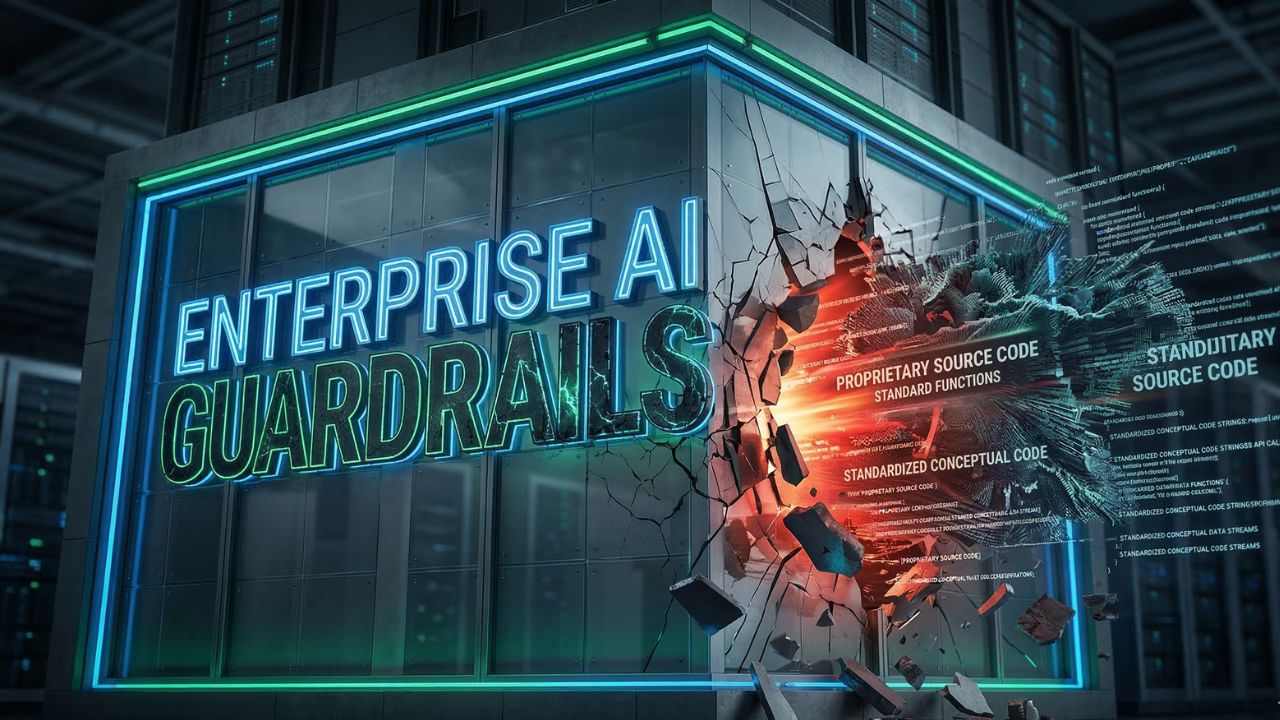
- Shadow AI is Rampant: Over 80% of employees use unapproved AI tools, bypassing corporate oversight entirely.
- Massive Financial Impact: Ignoring these unauthorized workarounds adds an average of $670,000 to data breach costs.
- Data Exfiltration: An alarming 77% of employees have pasted company data directly into consumer-grade generative AI tools like ChatGPT.
- Agile Integration is Non-Negotiable: Preventing bypasses requires embedding enterprise AI red teaming directly into your sprint planning for AI agents.
Your employees are already bypassing your basic AI filters to get work done, exposing your proprietary data in the process.
Product managers and engineering leads often assume that a written corporate AI policy is enough to maintain security. It is not. When knowledge workers are pressured to increase velocity, they will find workarounds.
"Shadow AI" isn't a buzzword; it's your engineers bypassing restricted models to ship code faster, and it is a critical vulnerability.
To truly secure your infrastructure, you must move Beyond the Bypass: The Enterprise Guide to AI Safety and Guardrails.
If you want to stop the leaks by implementing an enterprise-grade AI safety framework that actually works, you cannot rely on blanket bans. You must build secure, high-velocity alternatives.
Here is exactly how to integrate security into your Agile workflows, stop internal bypasses, and mitigate the risk of unauthorized AI usage at work.
The True Risk of "Bypassing" AI Safety in Corporate Environments
Understanding the risk of "bypassing" AI safety in corporate environments requires looking beyond traditional IT threats. This is not just about downloading unsanctioned software.
When employees use personal accounts to access generative AI, they create a permanent, untraceable footprint of your intellectual property on external servers.
Nearly 40% of all employee interactions with AI tools now involve sensitive corporate data. If your developers are debugging proprietary source code in an open LLM, you have already experienced a breach.
Why Banning AI Fails
- Bans Drive Behavior Underground: Research consistently shows that nearly half of employees will continue using personal AI accounts even after an organizational ban is enacted.
- The Productivity Imperative: Nearly 71% of surveyed professionals state that the primary driver for using unapproved tools is the massive boost to productivity and efficiency.
- Consumer-Grade Accessibility: If your internal, approved tools are clunky or heavily restricted, employees will simply use their personal devices to access better external models.
The consequences of unauthorized AI usage at work are devastating.
Breaches involving shadow AI disproportionately expose customer PII and intellectual property, leading to severe regulatory fines and immediate loss of market trust.
How to do Sprint Planning for AI Agents: The Security-First Approach
The only way to effectively balance employee productivity with AI safety is to engineer authorized, secure, and highly capable internal agents.
This requires a fundamental shift in how your Agile teams operate. You must build AI governance directly into your product backlog.
When structuring "How to do Sprint Planning for AI Agents," Scrum Masters and Product Owners must prioritize security epics alongside feature development.
Treating security as a secondary objective guarantees that your internal LLMs will be vulnerable to jailbreaks.
Sprint 0: Defining the Shadow AI Policy
Before writing a single line of agentic code, dedicate Sprint 0 to defining your boundaries.
What is a shadow AI policy? It is a framework that explicitly outlines sanctioned AI tools, data classification standards, and the exact protocols for requesting new AI capabilities.
Your Definition of Done (DoD) for all future agent features must mandate compliance with this policy. If an agent feature cannot prove data isolation, it does not ship.
Sprint 1: Integrating Enterprise AI Red Teaming
You cannot secure internal LLMs against jailbreaks without adversarial testing. During Sprint 1, allocate specific story points to enterprise AI red teaming.
Assign engineers to act as malicious actors whose sole goal is to break the agent's constraints. Can they use prompt injection to extract the agent's system prompt?
Can they force the agent to bypass its internal safety filters and execute an unauthorized database query? Every successful jailbreak must be logged as a high-priority bug in the backlog.
Sprint 2: Monitoring API Traffic for AI Bypass Attempts
A secure agent must be observable. In Sprint 2, the team should focus on building robust telemetry.
How do you monitor API traffic for AI bypass attempts? Your developers need to implement middleware that inspects payloads moving between your internal agents and backend LLMs.
- Implement Rate Limiting: Look for sudden spikes in API requests, which often indicate an automated bypass script.
- Semantic Filtering: Deploy lightweight evaluator models to scan outgoing prompts for signs of data exfiltration or prompt manipulation.
- Alerting Pipelines: Ensure that anomalous traffic immediately triggers a Jira ticket or a Slack alert for the DevSecOps team.
If you are unsure how to architect this middleware, review AI Safety Guardrails .
Sprint 3: Internal Threat Detection and Mitigation
Detecting external threats is standard practice, but how can you detect prompt injection attacks internally?
This is where your Agile team must build internal guardrails. Employees often use prompt injection inadvertently by feeding an agent convoluted, contradictory instructions in an attempt to force a specific output.
Sprint 3 should focus on training the agent to recognize and gracefully reject complex prompt injection structures.
The agent should pause, explain the policy violation to the internal user, and log the attempt for security review.
The Financial Reality of Shadow AI
The cost of ignoring these Agile security practices is quantifiable. Organizations that suffer data leaks due to shadow AI face an average breach premium of $670,000.
Can bypassing AI safety lead to intellectual property theft? Absolutely.
When proprietary algorithms, product roadmaps, or financial projections are pasted into public chatbots, they are often used to train future iterations of those models.
Your competitors could eventually prompt an external AI to reveal your strategic secrets.
Actionable Next Steps for Product Leaders
- Audit Your Network: Run an immediate discovery scan to identify unapproved AI SaaS platforms connecting to your corporate environment.
- Acknowledge the Gap: Accept that if 77% of employees leak data through ChatGPT, your current security posture is insufficient.
- Upgrade Internal Tools: Provide enterprise-grade, sandboxed AI agents that match the performance of external consumer tools.
FAQ: Bypassing Enterprise AI Safety
Employees primarily bypass AI safety filters to increase productivity and efficiency. When corporate-approved AI tools are slow, highly restricted, or lack the advanced capabilities of public models, workers will use shadow AI to accelerate their workflows and meet tight deadlines.
The primary risks include severe data leakage, compliance violations, and financial penalties. When employees paste sensitive data into unauthorized AI, it exposes intellectual property and customer PII, increasing average data breach costs by an estimated $670,000.
Detecting internal prompt injections requires monitoring API traffic and deploying evaluator LLMs. These secondary models analyze incoming prompts for adversarial language, hidden commands, or attempts to override system instructions, blocking the request before the primary agent processes it.
A shadow AI policy is a targeted governance framework designed to address the unauthorized use of AI tools. It outlines acceptable AI applications, strictly defines how sensitive data can be processed, and establishes clear consequences for bypassing corporate IT controls.
Yes. When employees bypass safety controls to paste proprietary code, strategic plans, or client data into external, consumer-grade LLMs, that data can be absorbed into the model's training data. This effectively exposes your intellectual property to the public and your competitors.

Secure Your Agile AI Workflows Today
Relying on legacy security perimeters will not protect your enterprise from the modern realities of AI adoption.
You must accept that your workforce will use these tools, with or without your permission.
By restructuring your Agile ceremonies to actively address the risk of "bypassing" AI safety in corporate environments, you can provide secure, powerful tools that keep your data inside your walls.
Would you like me to generate a complete Agile Sprint Backlog, complete with user stories and acceptance criteria, for building your first internal AI middleware filter?