Open Source vs Proprietary Agents: Should You Build Your Own Sovereign AI?
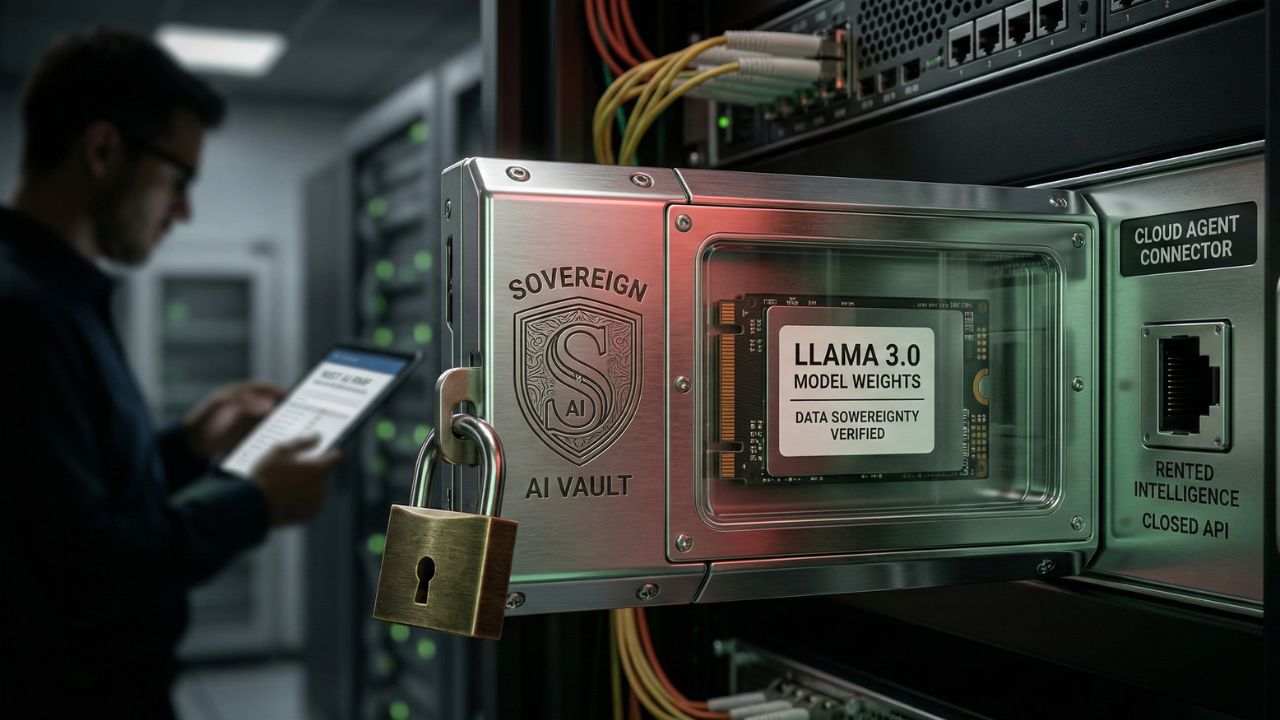
- Proprietary agents offer rapid deployment and managed infrastructure but create significant vendor lock-in and data privacy risks.
- Open source agents provide complete control and data sovereignty, aligning with NIST IP protection standards.
- Building your own "Sovereign AI" requires substantial internal engineering expertise and ongoing maintenance costs.
- The decision hinges on whether you view AI as a utility to be rented or a core competency to be owned.
The debate between open source vs proprietary agents is the definitive strategic crossroads for enterprise AI in 2026. It is not just a technical choice; it is a decision about the future sovereignty of your intellectual property and unique business logic.
This deep dive is part of our extensive guide on Best agentic AI platforms for enterprise.
Organizations must weigh the immediate convenience of "renting" intelligence against the long-term security and control of "owning" it. This analysis explores the financial, security, and operational realities of building sovereign agent swarms versus relying on closed-source vendors.
The Case for Proprietary Agents (Renting Intelligence)
For many enterprises, speed is the ultimate currency. Proprietary platforms (like OpenAI's Assistants API or Anthropic's Claude) offer instant access to state-of-the-art models.
You are essentially renting a fully staffed, high-performance vehicle. The vendor handles the immense complexities of infrastructure, model training, and security patching.
The Vendor Trap
However, this convenience comes with a high price tag: dependency. When you build on a proprietary stack, your operations are entirely beholden to their API stability, pricing model changes, and terms of service.
Furthermore, you are constantly sending data—potentially sensitive intellectual property—across the wire to a third party.
The Case for Open Source (Sovereign AI)
Choosing open source is a commitment to Sovereign AI. It means your organization retains absolute control over the model weights, the training data, and the inference environment.
This approach is crucial for highly regulated industries that cannot tolerate third-party data processing.
NIST and IP Protection
Building with open source aligns directly with NIST AI RMF guidelines regarding sovereign AI and intellectual property protection. You define the guardrails. You determine how the agents reason.
You ensure that your unique competitive advantage doesn't leak out to train a public model. If security is your primary concern, you must understand the protocols required to protect these self-hosted systems.
See our guide on Securing enterprise agent swarms for details on kill-switches and identity management.
The Hidden Costs of "Free" Open Source
Do not mistake "open source" for "free." While the model license might cost nothing, the Total Cost of Ownership (TCO) can be staggering.
You take on the full responsibility for:
- Expensive GPU compute infrastructure.
- Complex ML engineering talent to manage the stack.
- Continuous maintenance, fine-tuning, and security hardening.
If your organization lacks deep technical maturity, the technical debt of a custom build will quickly overwhelm you. Leaders without engineering teams may find it safer to start with Low-code agent builders for leaders instead.

Frequently Asked Questions (FAQ)
Here are answers to common questions regarding agent procurement strategies.
It depends on your priority. Buy proprietary for speed-to-market and ease of use. Build with open source for long-term cost control, data sovereignty, and customization.
While you control the data, you are solely responsible for securing the infrastructure. Risks include unpatched vulnerabilities in libraries and misconfigured access controls, requiring robust internal security protocols.
The ROI comes from avoiding vendor lock-in price hikes, protecting intellectual property from competitors, and ensuring compliance in regulated sectors where data cannot leave the firewall.
Yes, this is the primary advantage. You can deeply customize open-source models (like Llama 3) on your proprietary data to create highly specialized agents that outperform general-purpose models.
Establish strict engineering standards, use mature orchestration frameworks, and ensure you have dedicated budget and talent for ongoing maintenance before starting the build.
Conclusion
The choice between open source vs proprietary agents ultimately comes down to your organization's risk appetite and technical maturity.
Renting intelligence is faster, but owning it is safer in the long run. Whichever path you choose, ensure your strategy prioritizes the protection of your unique business logic above convenience.
Sources & References
- Pillar Page: Best agentic AI platforms for enterprise
- Neighbor Sub-Page: Low-code agent builders for leaders
- Compliance Mapping: NIST AI RMF Section 1.2 (Sovereign AI and IP Protection)
- Neighbor Sub-Page: Securing enterprise agent swarms