RAGAS vs DeepEval vs TruLens Comparison: Which Framework Actually Saves Your Cloud Bill?
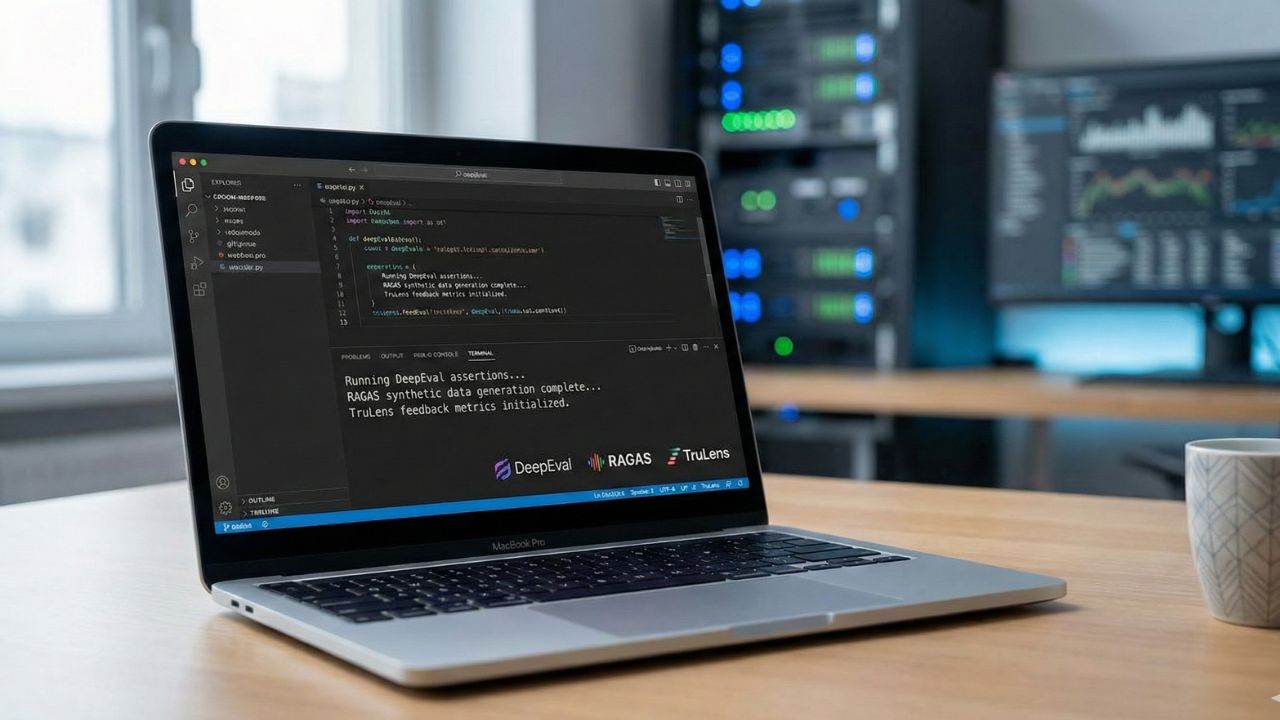
- RAGAS: Best for synthetic data generation and creating test sets from scratch. High granular metric control but can be token-heavy.
- DeepEval: The "Pytest" for LLMs. Best for CI/CD integration and developers who want unit-test style assertions.
- TruLens: The king of observability. Best for tracking the "Feedback Triad" in production and monitoring drift.
- Cost Verdict: DeepEval generally offers the most optimized token usage for regression testing, while TruLens saves money long-term by catching expensive drift early.
Introduction: The Hidden Cost of AI Quality
Running a Generative AI application in 2026 is expensive. But evaluating it? That can be a financial black hole if you aren't careful.
When you run an ragas vs deepeval vs trulens comparison, you aren't just looking for the best accuracy metrics. You are looking for a tool that won't double your OpenAI bill just to tell you your model is "good enough."
This deep dive is part of our extensive guide on ai quality assurance and model evaluation.
In this guide, we break down the three market leaders—RAGAS, DeepEval, and TruLens—to determine which framework offers the best balance of context precision, latency, and cloud cost savings.
1. RAGAS: The Synthetic Data Specialist
Best For: Early-stage development and dataset creation.
RAGAS (Retrieval Augmented Generation Assessment) is famous for its unique metrics like Faithfulness and Answer Relevancy.
However, its true superpower lies in synthetic test data generation. If you don't have a human-labeled "Golden Dataset," RAGAS can generate one for you using your document store.
- Pros: Excellent for calculating context recall and precision without human ground truth.
- Cons: The evaluation chains can be slow and token-intensive, leading to higher latency of RAGAS evaluations.
- Verdict: Use RAGAS to build your initial test suite, then switch to a lighter framework for daily checks.
2. DeepEval: The Developer’s Choice for CI/CD
Best For: Enterprise AI security and regression testing.
DeepEval positions itself as the "Pytest for LLMs." It fits naturally into existing engineering workflows. If your team is asking does DeepEval support CI/CD, the answer is a resounding yes.
It allows you to define "assert" statements for your AI. For example, you can assert that an output does not contain PII or hallucinated facts.
- Pros: Native support for CI/CD for AI. It is highly optimized for speed and allows you to use open-source judges to cut costs.
- Cons: Requires a more developer-centric mindset to set up effectively compared to drag-and-drop tools.
- Verdict: The best tool for preventing regression bugs before they hit production.
3. TruLens: The Production Observability King
Best For: Monitoring RAG drift and live performance.
While RAGAS and DeepEval focus on testing, TruLens shines in LLM observability. It utilizes the Feedback Triad metrics: Context Relevance, Groundedness, and Answer Relevance.
TruLens is essential for answering how to monitor RAG drift with TruLens. It sits in your production pipeline, evaluating responses in real-time to ensure your bot doesn't "drift" away from accurate answers.
- Pros: deeply integrated with standard orchestration tools (like LlamaIndex and LangChain).
- Cons: Can add latency to production calls if not configured asynchronously.
- Verdict: Essential for long-term reliability.
Related: Once TruLens detects an issue, you need a plan. Check out our ai drift detection and monitoring playbook to handle alerts effectively.
🔎 Comparison Matrix: Cost & Performance
| Feature | RAGAS | DeepEval | TruLens |
|---|---|---|---|
| Primary Use Case | Synthetic Data & Research | CI/CD & Unit Testing | Production Monitoring |
| Token Cost | High (Complex Chains) | Low (Optimized) | Medium (Dependent on Sampling) |
| Setup Difficulty | Medium | Low (If you know Python) | Medium |
| Key Metric | Context Precision | G-Eval / Faithfulness | Feedback Triad |
Stop wasting time building slides manually. Create stunning Agile presentations and documents in seconds with AI using Blackbox AI.

FAQ: RAGAS vs DeepEval vs TruLens
RAGAS is better for generating test data and initial research. DeepEval is superior for ongoing engineering, CI/CD pipelines, and ensuring your code changes don't break the model.
It varies by model, but using GPT-4 as a judge can cost $0.03-$0.06 per test case. To reduce token costs in AI testing, we recommend using smaller models (like GPT-4o-mini) or open-source local models for routine tests.
Yes, DeepEval is designed to integrate directly with GitHub Actions and GitLab CI, failing the build if your AI model's performance drops below a certain threshold.
They are Context Relevance (Is the retrieved text useful?), Groundedness (is the answer supported by the context?), and Answer Relevance (does the answer actually address the user's query?).
DeepEval is currently the leader here, offering specific test cases for bias, toxicity, and PII leakage that can be automated in your deployment pipeline.
Conclusion
There is no single "perfect" tool, but there is a perfect strategy for 2026:
- Use RAGAS to build your baseline datasets.
- Use DeepEval to guard your CI/CD pipeline.
- Use TruLens to watch your model in production.
By combining these frameworks, you ensure faithfulness without letting your cloud bill spiral out of control.