Why Self-Hosted LLM Observability Beats SaaS
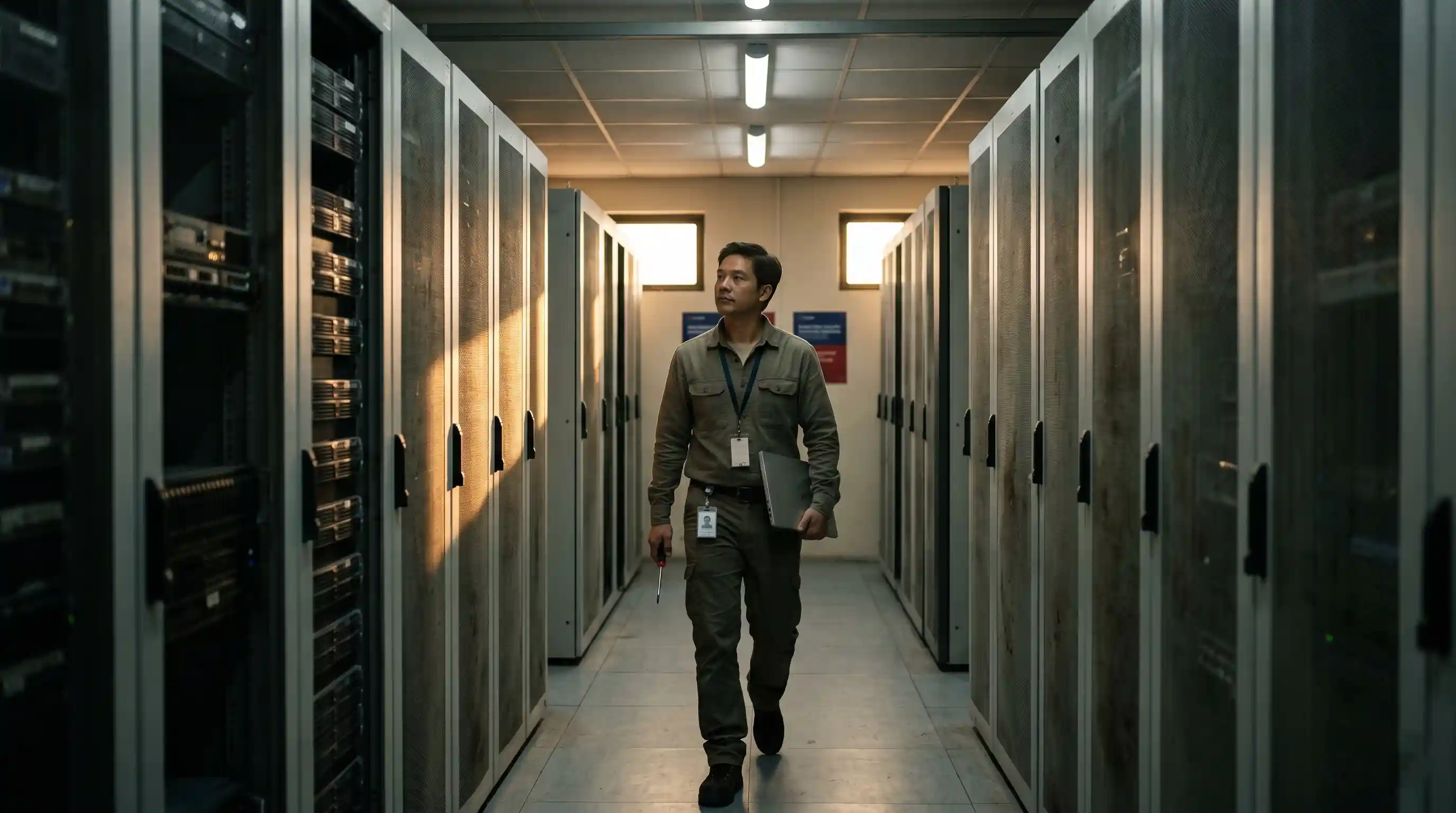
- Volume Economics: Self-hosted observability completely removes per-trace licensing fees, making it highly cost-effective for enterprise-scale LLM traffic.
- Data Residency: On-premise deployments ensure sensitive prompt data remains strictly within your corporate network, satisfying DPDP and GDPR mandates.
- Infrastructure Overhead: Running an open-source platform like Langfuse requires managing robust backend systems, including ClickHouse, Redis, and object storage.
- Open Standard Alignment: You can self-host an open-core platform while still natively leveraging vendor-neutral OpenTelemetry GenAI conventions.
Self-hosted LLM observability with Langfuse can cut SaaS bills until the hidden ops cost hits. See whether self-hosting actually pays off for you.
As trace volumes scale in production environments, relying solely on managed vendor platforms can lead to unpredictable, skyrocketing invoices.
However, taking control of your tracing backend requires aligning your infrastructure with a standardized framework. For a broader perspective on architectural alignment, explore AI Agent Observability with OpenTelemetry to avoid future integration bottlenecks.
The Financial Equation: SaaS vs. Self-Hosting
Escaping the Volume Billing Trap
SaaS platforms provide excellent initial velocity, getting your team up and running in a single afternoon. However, these managed solutions inevitably bill you based on total trace volume and long-term data retention.
When deploying high-throughput, multi-agent systems, a free developer tier can quietly snowball into a five-figure monthly invoice.
Self-hosting shifts this financial model entirely. By eliminating per-trace SaaS fees, organizations trade variable software licensing costs for predictable, fixed internal infrastructure compute.
Calculating the Hidden Operational Costs
While the software license might be free, the infrastructure footprint is not. Self-hosted architectures introduce a hidden operational cost: the engineering hours required to maintain the stack.
Your internal platform team assumes full responsibility for database scaling, persistent storage provisioning, and zero-downtime version upgrades.
For smaller organizations, this operational burden can quickly outweigh the financial savings of cancelling a SaaS subscription.
Infrastructure Requirements for Langfuse
Deploying with Docker and Kubernetes
Langfuse is currently the open-source leader for operational telemetry and cost analytics. Deploying it into your own environment requires setting up its specific infrastructure dependencies.
These systems include a Postgres database, ClickHouse for analytics, and Redis for caching. Engineering teams typically utilize provided Docker Compose files for staging environments.
For high-availability production clusters, deploying via Helm charts onto an enterprise Kubernetes cluster is the standard architectural pathway.
Scaling the Observability Backend
As your agents process more complex tasks, the sheer volume of trace data will stress your local ingestion pipelines. Scaling a self-hosted observability backend requires decoupling the ingestion workers from the visualization web layers.
You must provision adequate high-speed SSD storage for ClickHouse and set aggressive sampling rules at the OpenTelemetry collector level.
Properly sizing these nodes ensures your tracking UI remains highly responsive during sudden AI traffic spikes.
Data Residency and Enterprise Compliance
Securing Prompts for DPDP and GDPR
For regulated industries, the self-hosting decision is rarely about cost; it is driven by strict data residency obligations under frameworks like the EU AI Act and India's DPDP Act.
Because generative traces capture full prompt payloads and completion text, sending this data to a third-party SaaS provider introduces severe governance risks.
Self-hosting guarantees that all evidentiary spans and customer interactions never leave your secure corporate perimeter.
Integrating with Internal Platform Architectures
When you own the observability datastore, you can integrate it directly into your broader operational framework.
Connecting trace data to your master platforms allows for automated incident responses without navigating external API rate limits.
Evaluating Open-Source Alternatives
Langfuse vs. Arize Phoenix vs. SigNoz
While Langfuse excels at operational telemetry, it is not the only viable self-hosted solution.
Arize Phoenix offers a highly potent, open-source alternative built specifically around the OpenInference schema, making it ideal for deep RAG evaluation.
SigNoz provides an excellent pure-OpenTelemetry APM experience if your team wants to unify standard microservice tracking with LLM spans.
Conclusion & CTA
Self-hosting your LLM observability infrastructure trades monthly vendor invoices for ultimate data sovereignty and total architectural control.
While managing the backend databases introduces operational friction, the ability to secure proprietary prompts and scale trace ingestion without financial penalties makes it an essential strategy for mature enterprise AI deployments.

Frequently Asked Questions (FAQ)
You can self-host Langfuse by provisioning a Linux server and deploying its official Docker Compose stack. For enterprise environments, you utilize Kubernetes Helm charts to orchestrate its core components, which include the web application, worker nodes, and the underlying PostgreSQL and ClickHouse databases.
Yes, self-hosting becomes significantly cheaper at high production scale because it eliminates SaaS per-trace billing. However, organizations must carefully offset these savings against the internal cloud compute costs and the salaries of the platform engineers required to maintain the stack.
A robust self-hosted Langfuse deployment requires a PostgreSQL database for state management, a ClickHouse instance for high-speed trace analytics, Redis for queuing and caching, and compatible object storage for larger telemetry payloads.
For quick deployments, you execute the standard docker-compose up command using the official repository manifest. For highly available production clusters, platform teams configure Kubernetes Helm values to manage resource limits, auto-scaling, and persistent volume claims across the cluster.
The hidden costs stem directly from the perpetual engineering effort required to maintain system uptime. Your internal DevOps teams must dedicate hours to managing database backups, scaling ClickHouse nodes, applying security patches, and troubleshooting ingestion bottlenecks.
Self-hosting ensures that highly sensitive prompt inputs, customer data, and LLM completions are processed and stored entirely within your own cloud boundary. This physical data isolation satisfies the strict local processing mandates required by DPDP and GDPR frameworks.
Yes. Modern open-source platforms like Langfuse and Arize Phoenix provide native OTLP ingestion endpoints. This allows you to instrument your application with standard OpenTelemetry GenAI conventions and simply route the export traffic to your self-hosted collector.
Scaling requires transitioning from single-node deployments to distributed clusters. You must independently scale out your ingestion worker instances to handle high-throughput traffic spikes, while adding sharded compute nodes to your ClickHouse database to maintain fast query speeds.
Choose Langfuse for superior operational cost-tracking and framework-agnostic tracing. Select Arize Phoenix if your primary goal is deep RAG evaluation built natively on OpenInference standards. Opt for SigNoz if you want to combine traditional APM metrics with your LLM traces.
You should switch to a managed SaaS platform when the internal engineering cost of maintaining ClickHouse and resolving ingestion outages exceeds the predictable price of a vendor subscription. It is also advisable if your platform team lacks deep database administration expertise.