The Cognitive Squad: Why Your New "Developer" is a Fleet of AI Agents
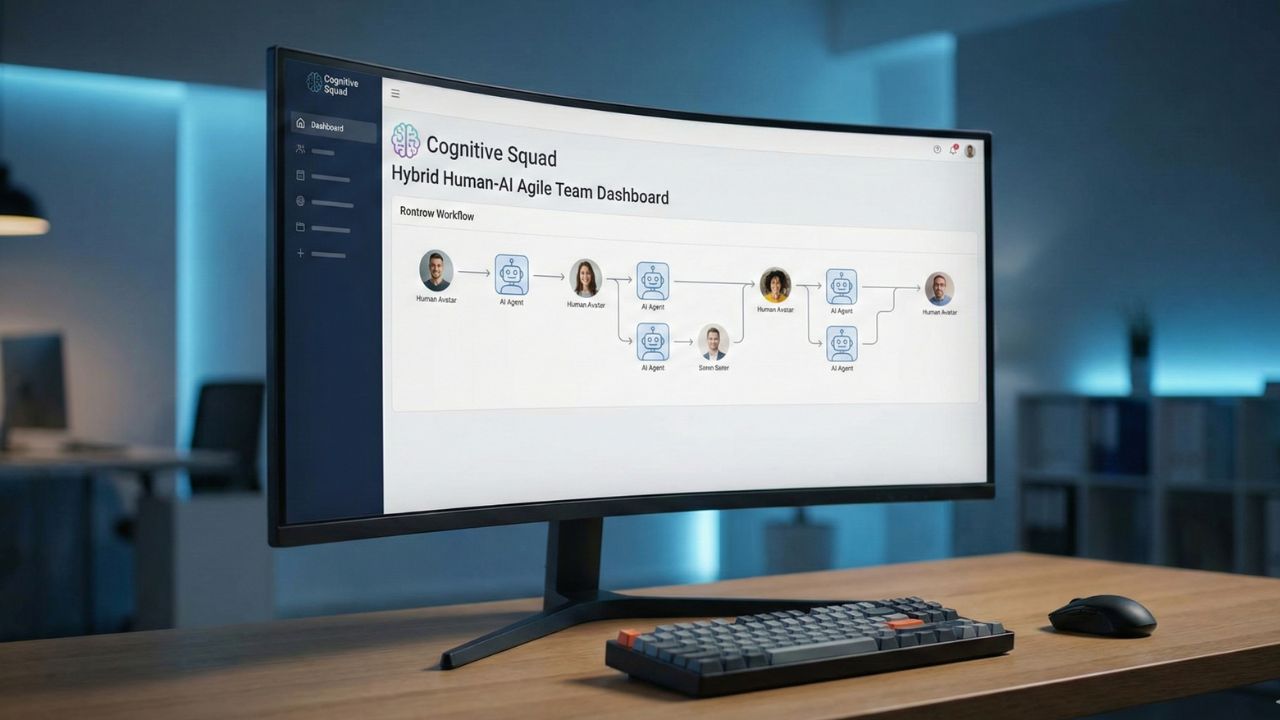
- Managing hybrid human-AI agile teams requires a fundamental shift from manual coding to prompt orchestration.
- Leaders must prioritize psychological safety for AI-augmented workers to prevent automation anxiety.
- Mastering hybrid workforce orchestration 2026 involves treating AI agents as collaborative squad members, not just tools.
- Implementing the "Build-Buy-Borrow-Bot" talent strategy is essential for scaling modern development.
- Successful upskilling scrum teams for AI agents focuses on cognitive delegation and algorithmic management.
The landscape of software development has permanently shifted. We are no longer just leading human developers; we are now tasked with managing hybrid human-AI agile teams. This deep dive is part of our extensive guide on agile transformation.
Lead the hybrid revolution. Discover the 2026 guide to managing cognitive squads where humans and AI agents co-create value in an Agile framework. As organizations integrate autonomous coding agents, the challenge isn't the technology—it's the human integration.
By properly orchestrating these digital coworkers, your squad can achieve unprecedented velocity without sacrificing quality. This evolution marks the transition from individual contributors to cognitive ecosystem managers.
The Dawn of Autonomous Digital Coworkers
Leading autonomous digital coworkers means moving beyond basic coding assistants. Today's AI agents can independently test, debug, and deploy. This shift forces us to rethink traditional team structures.
Instead of writing every line of code, humans are stepping into editorial and strategic roles. We are witnessing a rapid culture shift from manual coding to prompt orchestration. The developer of 2026 is an architect of intents rather than a writer of syntax.
Rethinking the Agile Talent Strategy
To thrive in 2026, tech leaders are adopting the "Build-Buy-Borrow-Bot" talent strategy. This framework ensures that high-performing squads have the right mix of organic and synthetic intelligence to meet enterprise demands.
- Build: Train existing staff on cognitive delegation.
- Buy: Hire new human talent with AI-aware leadership traits.
- Borrow: Use contractors or gig workers for specialized spikes.
- Bot: Deploy AI agents for repetitive, high-volume tasks.
If you are struggling to measure the financial ROI of this new strategy, you might want to review our insights on outcome based pricing for agile services to ensure your budgets align with actual value realization.
Ensuring Psychological Safety for AI-Augmented Workers
The sudden influx of AI can trigger severe anxiety among traditional developers. Establishing psychological safety for AI-augmented workers is paramount for maintaining a healthy culture. When AI automates developer tasks, human team members often fear for their job security.
Leaders must reframe AI as a co-pilot rather than a replacement. Focus on how AI removes the drudgery. This allows humans to tackle complex, creative problem-solving and focus on human-centered AI design, where empathy and context still reign supreme.
Preventing Hybrid Meeting Fatigue
Ironically, faster AI output can lead to human exhaustion. Teams must actively work to prevent "AI Burnout" and meeting fatigue in hybrid teams. The increased volume of code and documentation generated by bots requires human oversight that must be managed sustainably.
Implement strict human-in-the-loop boundaries for code reviews. Use digital worker oversight tools for cognitive load reduction and ensure human developers have dedicated "focus blocks" away from AI-generated alerts. Sustainable pace remains a core Agile tenet, even in the age of bots.
Upskilling Scrum Teams for AI Agents
You cannot manage a 2026 squad with 2018 skills. Upskilling scrum teams for AI agents is non-negotiable. Developers must master algorithmic management and cognitive delegation to effectively lead their fleet of agents.
Scrum Masters need to adapt their ceremonies for this new reality. For more on adapting your sprint events, explore our guide on AI for agile ceremony facilitation. This transformation ensures the team remains the unit of delivery, even as the team's composition changes.

Frequently Asked Questions (FAQ)
How do you integrate AI agents as full members of a Scrum team?
Assign AI agents specific personas and workflow triggers within your tracking software, treating them as specialized team members who handle designated backlog items like automated unit testing or documentation.
What is "Trust in AI Technology" and how does it impact Agile teams?
It refers to the team's confidence in the AI's output. High trust accelerates delivery, while low trust creates bottlenecks as humans over-review the AI's code, leading to friction in the sprint.
How to manage psychological safety when AI automates developer tasks?
Maintain transparent communication about job evolution, celebrate human-AI collaboration examples, and provide clear pathways for human upskilling into strategic roles.
What is the "Build-Buy-Borrow-Bot" talent strategy?
It is a modern resourcing framework that includes deploying digital agents ("Bot") alongside traditional methods like hiring ("Buy"), training ("Build"), and contracting ("Borrow") human talent.
Can AI agents attend daily standups and sprint reviews?
Yes, AI agents can "attend" by automatically piping in their progress reports, blocker alerts, and code quality metrics directly into the team's communication channels like Slack or Teams.
What are the key traits of an AI-aware Agile leader?
They possess strong emotional intelligence, understand algorithmic management, promote human-centered AI design, and excel at cognitive delegation.
Conclusion
The future of software development relies on seamless hybrid workforce orchestration 2026. Successfully managing hybrid human-AI agile teams requires more than just technical integration; it demands profound cultural empathy. By redefining roles, prioritizing psychological safety, and mastering algorithmic delegation, you can transform your squad into a true cognitive powerhouse. Embrace the change, and let your human developers lead the fleet.
Sources & References
- Internal Pillar: Agile Transformation Guide
- Internal Reading: AI-Powered Agile Ceremonies: Why Your Scrum Master is Now an AI Orchestrator
- Internal Reading: Outcome-Based Agile Economics: Why Your CFO Still Hates Your Velocity
- External Reference: Forbes Tech Council - "The Rise of Digital Coworkers in Agile Environments" (2025)
- External Reference: MIT Sloan Management Review - "Navigating Psychological Safety in the Age of Autonomous AI" (2026)