The "Wagile" Reality: Why 100% Pure Agile is a Myth for Legacy Giants
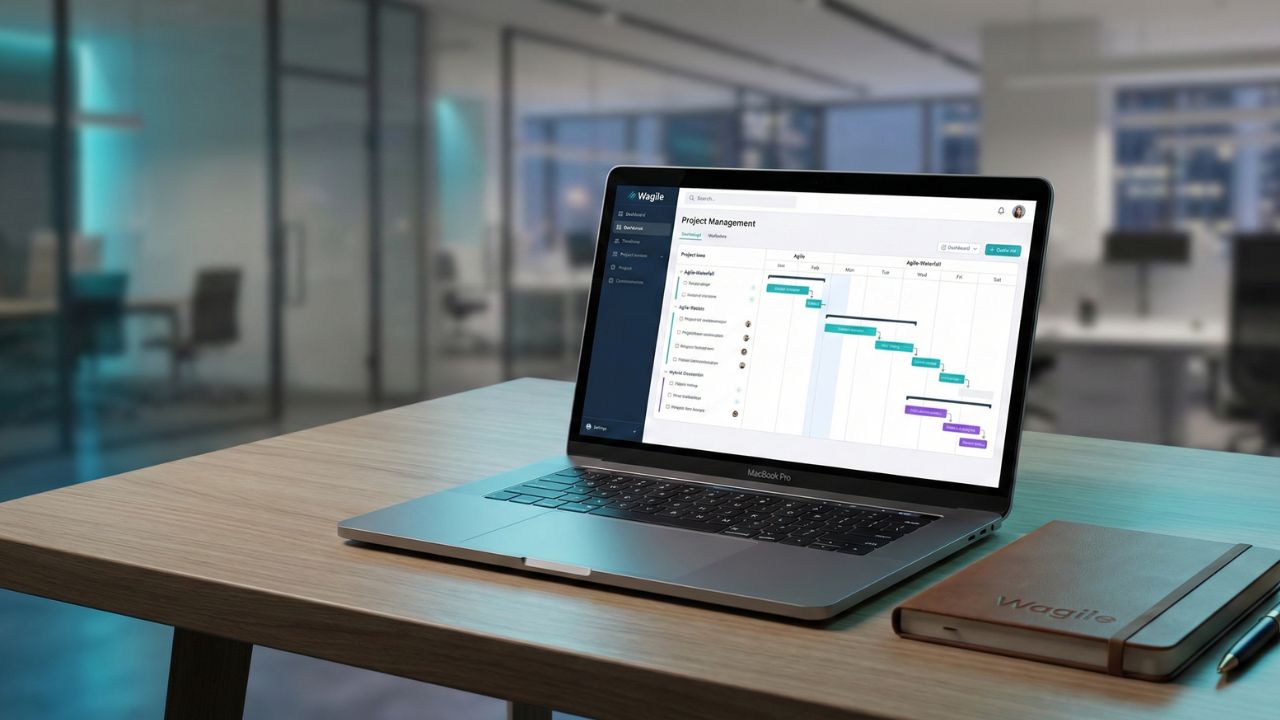
- Managing hybrid agile waterfall projects 2026 is essential because 100% pure Agile is often impossible in heavily regulated industries.
- Enterprise leaders must master bi-modal governance for global enterprises to balance backend stability with frontend velocity.
- Success requires strategically integrating scrum with waterfall milestones so that iterative development aligns with fixed quarterly board reviews.
- Leveraging hybrid agile delivery models for GCCs (Global Capability Centers) minimizes risk while maximizing value output.
- Transitioning involves adopting "Shift-Left" QA and establishing "Contractual Agile" for fixed-bid initiatives.
In the tech industry, purists often argue that anything less than 100% Scrum is a failure. However, for massive, regulated organizations, this is a dangerous misconception. This deep dive is part of our extensive guide on agile transformation.
To survive and thrive, enterprise leaders must master managing hybrid agile waterfall projects 2026. This approach acknowledges the 2026 bi-modal reality where backend stability meets frontend velocity in regulated industries. Rather than forcing a singular framework, successful companies are learning to optimize the "Wagile" approach.
Understanding Bi-Modal Governance
Bi-modal governance for global enterprises is the practice of managing two separate but coherent modes of IT delivery. Mode 1 is traditional and sequential (Waterfall), focusing on safety, compliance, and accuracy. Mode 2 is exploratory and non-linear (Agile), focusing on agility and speed.
You cannot treat a legacy core banking system update the same way you treat a mobile app feature rollout. Agile for regulated legacy industries requires respecting the heavy governance of Mode 1 while freeing Mode 2 to innovate.
Integrating Scrum with Waterfall Milestones
The true challenge lies in execution. Integrating scrum with waterfall milestones requires establishing clear intersection points between teams. For example, while the frontend team runs two-week sprints, the backend team might operate on three-month release cycles.
To bridge this gap, leaders must establish cross-functional planning sessions. If you are struggling to map out these financial and timing milestones, review our guide on outcome based pricing for agile services to better align your budgets.
Quality Assurance in a Wagile World
Quality assurance can easily become a bottleneck when two different methodologies collide. To prevent integration disasters, teams must prioritize "Shift-Left" QA in a regulated bi-modal framework. This means bringing testing earlier into the development lifecycle.
Expanding Agility Beyond IT
The friction of a Wagile environment isn't limited to developers. Legal, HR, and Finance departments often operate on strict Waterfall timelines. To create a truly adaptive organization, you must look beyond software engineering.
We highly recommend exploring agile transformation for non-tech teams to ensure your entire enterprise is operating on a synchronized rhythm.

Frequently Asked Questions (FAQ)
How do you balance Agile speed with Waterfall compliance?
You achieve balance by isolating systems of record (which require Waterfall compliance) from systems of engagement (which benefit from Agile speed) and creating API-driven communication layers between them.
What is bi-modal governance in a Global Capability Center (GCC)?
It is an operational model where GCCs run hybrid agile delivery models for GCCs, maintaining strict regulatory oversight for legacy maintenance while utilizing Agile pods for digital innovation.
How to align bi-weekly sprints with quarterly board milestones?
Map out a Program Increment (PI) that groups six bi-weekly sprints into a single quarter. This allows Scrum teams to iterate locally while presenting aggregated deliverables at the quarterly board milestone.
What are the biggest risks of a "Wagile" delivery model?
The biggest risks include misaligned release cycles, communication silos between front-end and back-end teams, and a lack of clear accountability during integration phases.
How do you manage testing cycles in a hybrid Agile-Waterfall environment?
Implement automated regression testing during the Agile sprints and reserve comprehensive, end-to-end user acceptance testing (UAT) for the final Waterfall release phase.
Can AI help bridge the communication gap between Agile and Waterfall teams?
Yes. AI-driven project management tools can automatically translate Agile user stories and sprint burndowns into traditional Waterfall status reports and Gantt charts for stakeholders.
What is "Shift-Left" QA in a regulated bi-modal framework?
It is the practice of moving security and compliance testing to the earliest stages of the Agile sprint, rather than waiting for the final Waterfall testing phase, ensuring regulatory adherence upfront.
How to write "Contractual Agile" for fixed-bid legacy projects?
Structure contracts to fix the budget and timeline (Waterfall) but keep the exact feature scope variable (Agile), allowing the client to swap user stories of equal complexity as priorities change.
Which project management tools support both Gantt and Scrum boards?
Modern enterprise tools like Jira Align, Smartsheet, and Azure DevOps natively support dual views, allowing executives to see Gantt charts while developers work off Scrum boards.
How to transition a legacy banking team from Waterfall to Hybrid Agile?
Start by keeping backend database updates in Waterfall while moving customer-facing web applications to Agile. Gradually introduce cross-functional communication ceremonies before attempting a full integration.
Conclusion
The pursuit of pure Agile agility is admirable, but for heavily regulated giants, it is often impractical. By embracing and actively managing hybrid agile waterfall projects 2026, organizations can achieve the best of both worlds. You can protect your critical legacy infrastructure while still innovating at the edge. Stop fighting the "Wagile" reality, and start optimizing it for your enterprise's unique needs.
Sources & References
- Internal Pillar: Agile Transformation Guide
- Internal Link: Outcome-Based Agile Economics
- Internal Link: Agile for Non-Tech: Scaling Agility to Finance, HR & Legal
- External Reference: Gartner Research - "Bimodal IT: How to be Digitally Agile Without Making a Mess" (2025)
- External Reference: Project Management Institute (PMI) - "Navigating the Hybrid Project Landscape in Heavily Regulated Industries" (2026)