Grounding Gemini in Live Sports: The Brutal Real-Time RAG Shift
Key Takeaways
- Static is Dead: Google's integration of Gemini for the World Cup marks the end of static data models.
- Generative UI: Developers must master interfaces that change shape based on live LLM outputs.
- The RAG Evolution: Sub-second latency in context grounding is now the baseline for software engineering.
Grounding an LLM in live, unpredictable sports data with sub-second latency is no longer a luxury—it is the new baseline for engineering excellence. Google's World Cup Gemini integration exposes a brutal reality for 2026 software development: if you cannot stream live, hallucination-free context into a conversational interface, your application is functionally obsolete. The shift from "searching for data" to "conversing with live intelligence" requires a total dismantling of legacy frontend and backend architectures.
For decades, the "request-response" cycle of the web was built on predictability. You queried a database, received a JSON object, and rendered it into a predefined template. But when a soccer match is in flux, the "data" changes every second. A standard REST API cannot keep up with the semantic needs of a Large Language Model trying to explain a controversial VAR decision. This is where the real-time RAG (Retrieval-Augmented Generation) pipeline becomes the most critical component in your stack.
The Death of the Static Data Model
In traditional development, we spent months defining schemas. In the era of Generative UI, schemas are liquid. Google’s push to make Search a "tournament companion" means the UI itself must be generated on the fly. When Gemini explains a tactical shift in a France vs. Argentina match, the interface might need to instantly generate a heatmap, a player comparison chart, and a live social feed—all within a single conversational bubble.
This requires developers to move away from Component-Driven Development toward **Agentic UI Orchestration**. Your frontend is no longer a collection of buttons and sliders; it is a canvas for an AI orchestrator to paint on. If your current architecture relies on hard-coded routes and static state management like Redux, you will find it impossible to integrate the dynamic context needed for live sports grounding.
Architecting for Sub-Second Latency
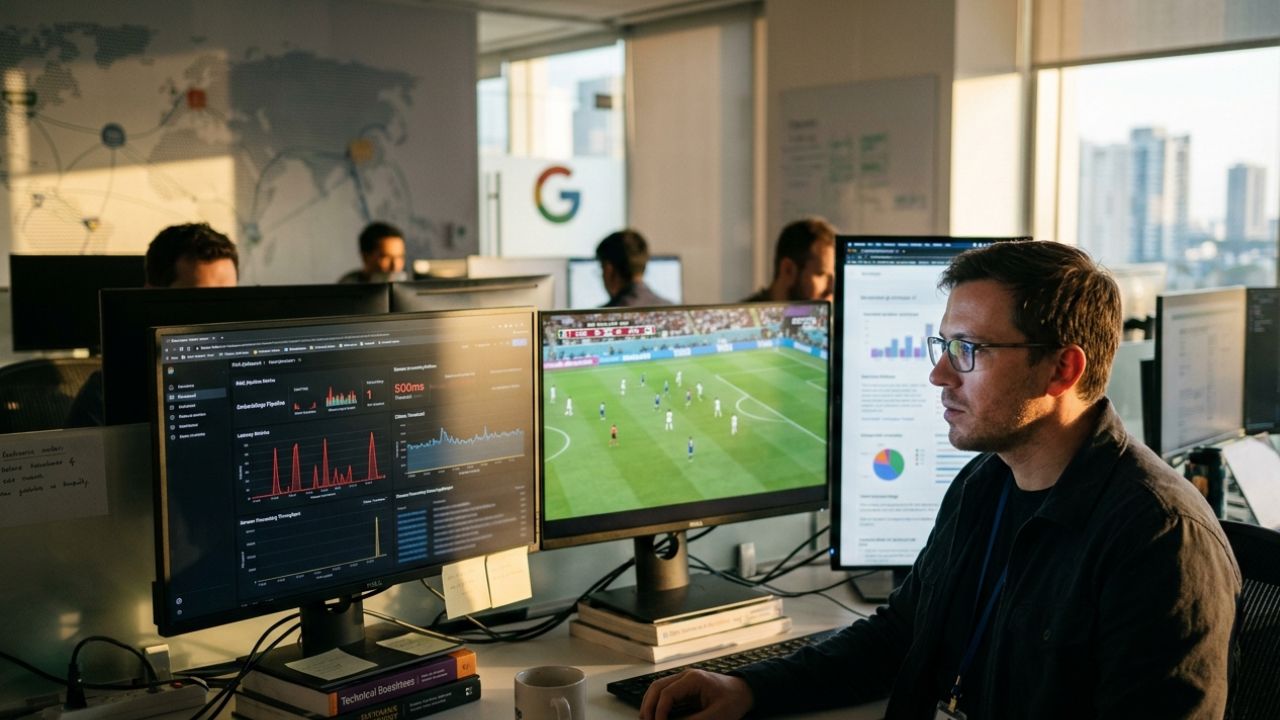
The primary enemy of real-time AI is latency. To ground Gemini in a match that is happening right now, your RAG pipeline must ingest live telemetry data, convert it into vector embeddings, and update your index in less than 500 milliseconds. If the retrieval step takes too long, the LLM will either hallucinate based on its training data or provide outdated information that the user can already see is wrong on their TV screen.
To survive this shift, engineering teams must pivot to **streaming vector updates**. This involves using technologies like Upstash or Pinecone with high-frequency ingestion workers that bypass traditional slow-moving ETL processes. The goal is to ensure that the "Context Window" of the LLM is always a mirror of reality. For a developer, this means mastering event-driven architectures where data isn't just stored—it's weaponized for inference.
"The difference between a helpful AI companion and a hallucinating toy is exactly 400 milliseconds of retrieval latency."
From CRUD Engineering to AI Orchestration
We are witnessing the final days of the CRUD (Create, Read, Update, Delete) engineer. Writing boilerplate code to move data from a SQL table to a browser is now a task for AI, not humans. The high-value work has shifted to **Context Engineering**. As a developer, your job is now to ensure the LLM has the right "memory" at the right time.
This includes mastering **Context Circulation**, a technique where the LLM's previous outputs and the live data stream are constantly cycled to maintain a coherent narrative. In a soccer match, this means the AI remembers that a player was yellow-carded ten minutes ago and factors that into its analysis of their current aggressive playstyle. Without this architectural nuance, the AI feels like a forgetful bot rather than an expert companion.
Generative UI: The Final Frontier
The most visible change will be on the screen. Generative UI means the browser receives a stream of UI metadata from the LLM. Instead of receiving just text, the frontend receives a set of instructions: "Render a Chart with these vectors," "Show a Video Highlight from this timestamp," and "Update the score ticker."
Integrating generative UI architecture is the only way to meet the standard set by Google's latest announcement. Developers must learn to build flexible, headless components that can be styled and populated by an AI agent in real-time. This is the ultimate "second-order effect" of the Gemini era—the total commoditization of the traditional layout in favor of dynamic, AI-driven experiences.
Sources and References
- Google Keyword: Partnering with National Teams for Soccer Tournament
- OpenAI: Introducing the next generation of small models for edge RAG

About the Author: Sanjay Saini
Sanjay Saini is an Enterprise AI Strategy Director specializing in digital transformation and AI ROI models. He covers high-stakes news at the intersection of leadership and sovereign AI infrastructure.
Connect on LinkedIn