The Agentic Workflow Google Hides

Your ability to write clean syntax is no longer a competitive moat against universal models like Gemini. The fundamental nature of software engineering is undergoing a seismic restructuring. Stop competing with bots and read this guide to learn the exact framework to orchestrate them before your engineering role becomes obsolete.
For decades, the software engineering industry worshipped at the altar of raw code generation. The developer who could sit down, conceptualize a complex loop, and rapidly type out flawless syntax was the undisputed king of the technology sector. However, Google's crowning as a top innovation leader, heavily driven by the massive capabilities of its Gemini model, has exposed a stark, uncomfortable truth for the modern developer: writing boilerplate code is officially a commodity skill.
The Commoditization of Boilerplate Code
Google's #1 innovation ranking for Gemini proves that we have crossed an irreversible threshold in computer science. The artificial intelligence models of today are not just autocomplete tools; they are highly capable reasoning engines that understand the full context of a repository. They can ingest thousands of lines of code, comprehend the underlying business logic, and generate functionally complete scripts in seconds. This means the time-consuming process of syntax generation—typing out the loops, establishing the database connections, configuring the APIs—can no longer justify high engineering salaries.
The real value for software engineers has shifted overnight. It has moved away from the mechanical act of typing code and pivoted sharply toward complex AI agent orchestration. Elite developers are recognizing that their core responsibility is no longer to be the primary authors of the application's code. Instead, they must become the architects who define the very boundaries in which these "universal assistants" operate. If you are spending your agile sprints writing basic crud operations, you are actively competing against an autonomous system that works faster, cheaper, and with a lower inherent error rate.
Defining the AI Orchestrator Role
What exactly does this shift entail? The modern software engineer must evolve into an AI orchestrator. An AI orchestrator does not sit down to write functions; they sit down to design ecosystems. They manage agentic coding workflows where multiple AI models are deployed simultaneously to build, test, and deploy software autonomously.
In this new paradigm, the orchestrator's primary skill sets are AI code verification and AI assisted software architecture. When an AI generates a complex microservice, the orchestrator is responsible for rigorous security auditing, ensuring algorithmic efficiency, and verifying that the generated code aligns perfectly with the enterprise's overarching architectural framework. The focus moves from "How do I build this?" to "How do I instruct the AI to build this correctly, securely, and scalably within our existing enterprise boundaries?"
This shift from coding to architecture is non-negotiable for those who wish to remain relevant in the high-stakes tech landscape of 2026. The orchestrator is the ultimate fail-safe—the human intelligence that guides the artificial intelligence, preventing catastrophic hallucinations and ensuring that the final output drives measurable business value.
The Agentic Workflow and Agile Transformation
As this universal assistant takes root within enterprise environments, the Agile Software Development Life Cycle (SDLC) is being compressed and redesigned. The traditional two-week sprint focused on manual feature creation is being replaced by rapid iteration cycles driven by continuous AI generation. This requires a completely new developer workflow, heavily reliant on systems-level prompt engineering.
Enterprise developers are no longer writing simple, single-sentence prompts. They are crafting complex, multi-layered constraint frameworks that guide the AI through massive, legacy codebases. This high-level transition from software engineer to AI orchestrator is the only structural way forward. Senior developers must protect their careers by abandoning the identity of a "coder" and adopting the mantle of a strategic technological leader who manages a fleet of autonomous, digital subordinates.
Frequently Asked Questions
Google Gemini is fundamentally altering workflows by taking over the bulk of manual syntax generation. Software engineers are no longer spending the majority of their day writing loops and boilerplate code; instead, they are shifting toward managing agentic coding workflows, verifying AI outputs, and integrating autonomous systems into larger architectural frameworks.
Gemini will not entirely eliminate junior developers, but it is drastically changing what junior roles look like. Rather than writing basic functions or fixing simple bugs, entry-level engineers will be expected to review AI-generated code, write effective prompts, and perform rigorous AI code verification to ensure the outputs meet enterprise standards.
An AI orchestrator is a senior engineering professional who designs the boundaries, rules, and architectures within which autonomous AI agents operate. They do not write raw code but instead manage multiple AI models, ensuring that these universal assistants string together complex logic to produce stable, scalable, and secure software applications.
Developers can transition by stepping away from pure syntax execution and focusing heavily on systems design, cloud infrastructure, and AI integration. This requires learning how to construct multi-agent environments, mastering advanced prompt engineering for enterprise constraints, and deeply understanding software architecture and automated testing pipelines.
To effectively manage autonomous coding agents, developers must acquire skills in systems architecture, advanced prompt chaining, automated code validation, security compliance auditing, and API ecosystem design. Understanding the limitations and hallucination patterns of Large Language Models is also highly critical.
Writing raw, routine boilerplate code is indeed becoming a commodity and largely obsolete. However, writing highly specialized, hyper-optimized code for edge cases, critical security infrastructure, and core algorithmic architecture will remain a strictly human endeavor for the foreseeable future.
A universal assistant compresses the traditional Agile Software Development Life Cycle (SDLC) by rapidly accelerating the coding and testing phases. Sprints that used to take two weeks of manual coding can now be reduced to a few days of AI generation followed by rigorous human-led code review and architectural alignment.
The future of prompt engineering is evolving into systems-level prompt architecture. Enterprise developers will create complex, multi-layered prompt frameworks that guide autonomous agents through entire codebases, dictating strict styling rules, security constraints, and operational guidelines rather than just asking for single functions.
Senior developers must elevate their perspective from the codebase to the business ecosystem. By mastering AI assisted software architecture, establishing governance models for AI outputs, and focusing on solving high-level business problems through technology rather than just writing scripts, they protect their intrinsic value.
Google's rapid AI innovation signals that agile development teams must reallocate their human resources. Teams will need fewer raw programmers and more system architects, quality assurance experts, and AI orchestrators who can safely guide and deploy the massive volume of code generated by universal assistants.
Sources and References
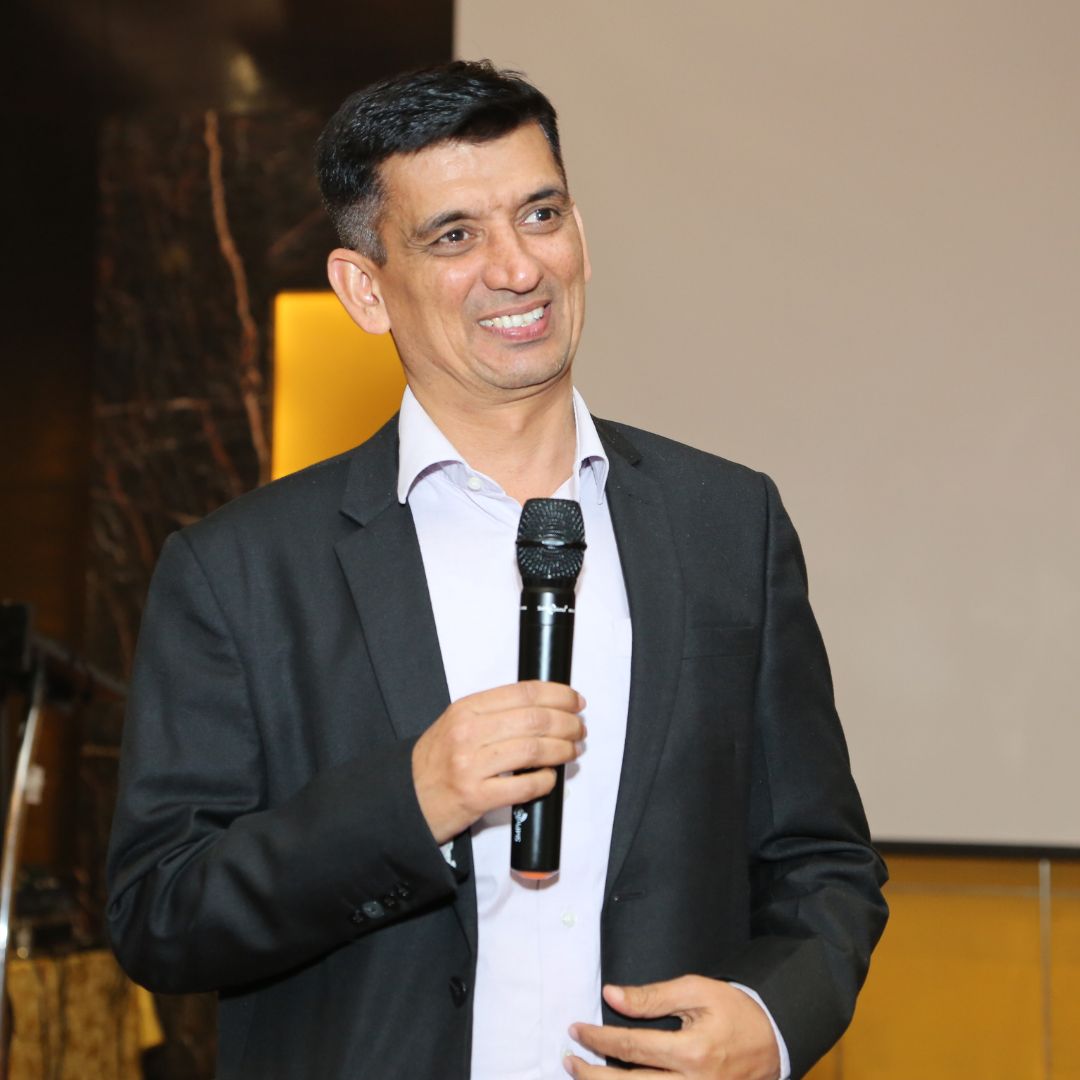
About the Author: Sanjay Saini
Sanjay Saini is an Enterprise AI Strategy Director specializing in digital transformation and AI ROI models. He covers high-stakes news at the intersection of leadership and sovereign AI infrastructure.
Connect on LinkedIn