Why Elite Developers Are Abandoning Prompt Engineering

The mainstream tech narrative over the past two years has been remarkably consistent: developers won't be replaced by AI, they will simply evolve into "prompt engineers." We were told that the primary skill of the future would be coaxing large language models to produce functional code by feeding them meticulously structured sentences. However, as the enterprise reality of generative AI sets in, a deeper, more profound technical shift is occurring.
This article takes a contrarian and highly technical stance: prompting is a transient skill. If your engineers are spending hours tweaking prompts to get the perfect block of code, they are wasting company time. The real second-order effect of AI at work isn't about code generation at all. It is the monumental shift from syntax writing to code verification and complex systems architecture.
The Myth of the Perpetual Prompt Engineer
When AI coding assistants first hit the market, they were powerful but obtuse. Developers had to use highly specific, heavily constrained language to prevent the AI from hallucinating entirely new libraries or breaking existing logic. In that era, "prompt engineering" felt like a legitimate programming paradigm. But AI models are evolving at breakneck speeds. Modern LLMs feature massive context windows, advanced zero-shot reasoning capabilities, and deep integrations directly into the IDE.
Today, the machine doesn't need to be gently guided through a multi-paragraph prompt to build a REST API. It simply needs to know the architectural goal, the database schema, and the enterprise constraints. Because the models have become incredibly adept at inferring intent, the human effort spent on "crafting the prompt" is rapidly approaching zero. The actual bottleneck has shifted downstream: when AI generates a massive microservice in seconds, who is validating that the logic is actually sound?
The Era of Code Verification and Auditing
The industry is moving from an era of code creation to an era of code auditing. Developers must stop defining themselves by the specific language syntax they write—whether that's Python, Rust, or Go—and start defining themselves by the massive, AI-generated microservices they can safely review, deploy, and secure.
An elite developer today acts more like a Senior Editor or a specialized QA Architect. When an AI agent spits out 2,000 lines of functional but unverified code, the developer's job is to ruthlessly attack that codebase. Does it handle edge cases correctly? Did the AI subtly introduce an OWASP Top 10 vulnerability, like a SQL injection vector or insecure direct object references? Does the data structure scale efficiently under load?
The Danger of AI Technical Debt
The speed at which AI generates code is a double-edged sword. Yes, it enables unprecedented productivity, but it also allows AI technical debt to accumulate at a terrifying velocity. If engineering teams blindly merge AI-generated pull requests without deeply verifying the structural integrity of the code, enterprise architectures will quickly devolve into unmaintainable black boxes.
The primary value of a senior software engineer is no longer their typing speed or their memorization of algorithms. Their value is their deep domain knowledge and their ability to prevent the AI from deploying catastrophic architectural flaws into a production environment. They must act as the ultimate safeguard against machine-generated chaos.
Mastering the AI-Assisted Architecture Workflow
To survive and thrive in this new paradigm, developers must drastically elevate their perspective. You are no longer laying bricks; you are inspecting the foundation of a skyscraper. This requires a fundamental pivot in the daily engineering workflow. You must embrace systems thinking. You aren't just creating a login function anymore; you are orchestrating an AI agent to build an entire authentication microservice that must integrate seamlessly with legacy enterprise systems.
This workflow demands a high level of proficiency in implementing AI-driven development frameworks. Teams need to build specialized CI/CD pipelines that are designed explicitly to handle AI output. These pipelines must include rigorous automated testing, aggressive linting, and mandatory human-in-the-loop architectural reviews before anything is pushed to a live environment.
How to Transition to an AI Code Verification Workflow
Workflow Adaptation Steps
Transitioning from a traditional coder to an AI systems architect requires a deliberate methodology:
- Stop Writing Boilerplate: Force yourself to offload all routine syntax generation, repetitive test writing, and structural boilerplate to AI coding assistants. Treat syntax typing as a failure of automation.
- Implement AI-Specific CI/CD Gates: Create custom delivery pipelines that specifically tag and ruthlessly test AI-generated pull requests. Automate the baseline checks so humans can focus on deep logic.
- Focus on Threat Modeling: Assume the AI is a highly productive but naive junior developer. Manually verify edge cases, data sanitization, and access controls with extreme prejudice.
- Elevate Architectural Knowledge: Shift your ongoing education away from learning the latest JavaScript framework. Focus entirely on mastering scalable system design, cloud infrastructure, and microservice orchestration.
The Future Belongs to the Orchestrators
The evolution of software engineering is accelerating. The narrative that prompt engineering is the final destination was a comforting illusion that masked the true scale of the disruption. As generative models continue to absorb the mechanical act of coding, the human imperative shifts entirely to governance, architecture, and verification.
For CTOs, tech founders, and software architects, the mandate is clear: stop optimizing your teams for how fast they can prompt an AI, and start optimizing them for how ruthlessly they can audit its output. The future of software development doesn't belong to the fastest typists; it belongs to the elite engineers who can safely orchestrate the machine.
Frequently Asked Questions
The daily workflow transitions from typing out syntax and boilerplate to designing system architectures, generating code via AI, and heavily auditing that output for security, performance, and logical accuracy. It is a shift from pure creation to orchestration and verification.
No. Prompt engineering is increasingly viewed as a transient skill. As AI models become more adept at zero-shot reasoning and contextual understanding, the need for humans to meticulously craft highly specific prompts diminishes. The enduring skill is software architecture and systems design.
Reviewing AI code requires specialized threat modeling. Developers must assume the AI output may contain subtle vulnerabilities like injection flaws, improper data handling, or logic bombs. Security validation becomes an active, manual constraint-checking process paired with automated SAST/DAST tools.
A coder focuses on the micro-level implementation of functions and syntax. An AI systems architect focuses on the macro-level behavior of interconnected microservices, defining how AI agents should interact, generating the broad strokes, and verifying the holistic integrity of the system.
No, but it will fundamentally redefine their roles. Senior engineers will no longer be valued for how fast they can code, but for their ability to safely scale massive AI-generated architectures, manage technical debt, and ensure enterprise-grade security.
Integration requires establishing strict "quality gates." This involves setting up automated test suites that run specifically against AI-generated PRs, implementing mandatory human-in-the-loop architectural reviews, and using specialized AI auditing tools before code reaches production.
The primary risks include the rapid accumulation of technical debt, architectural drift (where the system's design becomes fragmented over time), and the introduction of obscure logical bugs that are difficult for human reviewers to spot due to the high volume of code generated.
Developers must pivot their learning from specific language syntax to broader computer science principles, system design, cybersecurity, and code auditing. They need to develop a "trust but verify" mindset when reviewing AI outputs.
Engineers need advanced static and dynamic analysis tools, robust test-driven development (TDD) frameworks, AI-specific security scanners, and visualization tools that map out the architectural dependencies created by autonomous agents.
Because generative AI can produce thousands of lines of code in seconds, it can exponentially accelerate the buildup of technical debt if that code is not rigorously reviewed and refactored by human architects. Poorly verified AI code leads to massive maintainability issues.
Sources and References
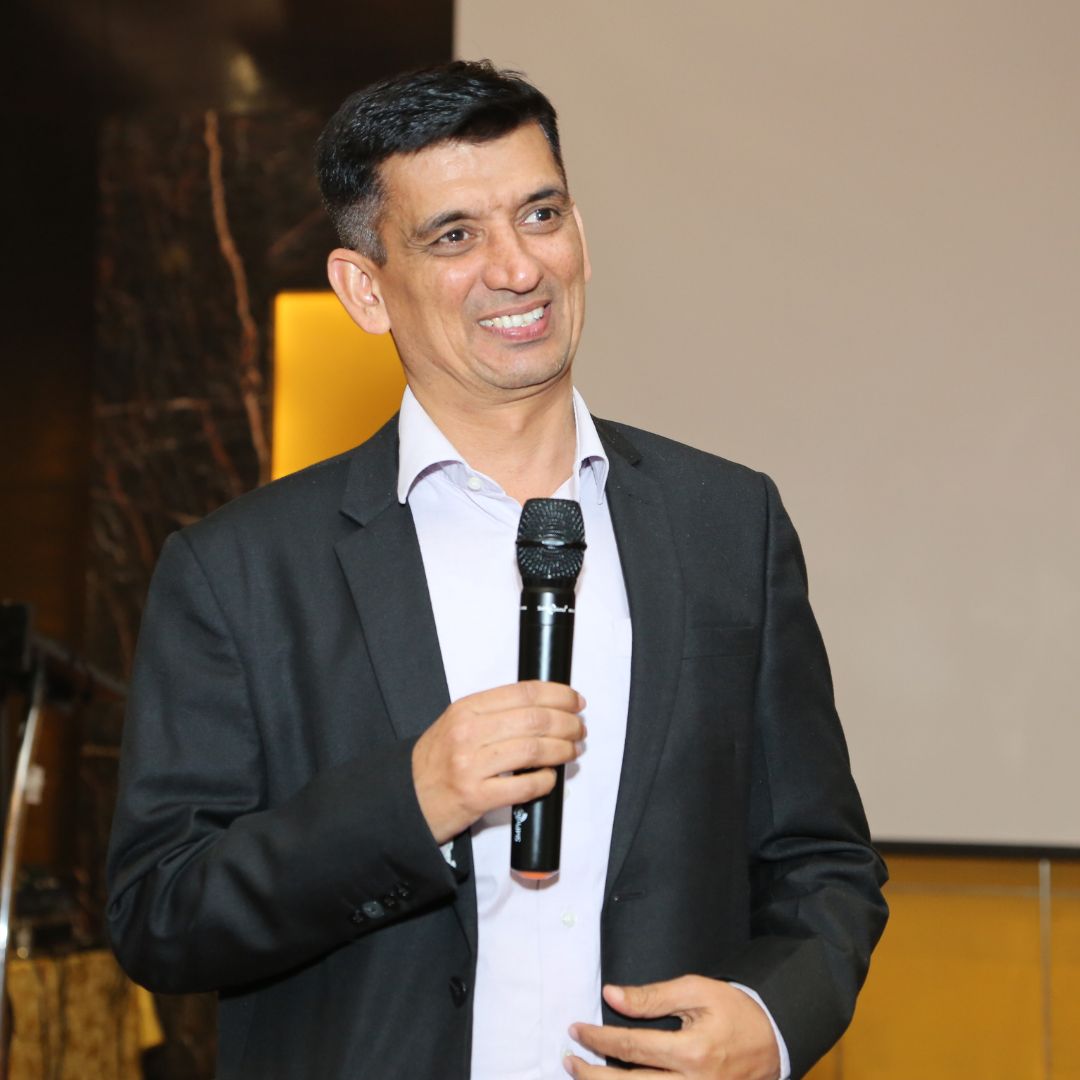
About the Author: Sanjay Saini
Sanjay Saini is an Enterprise AI Strategy Director specializing in digital transformation and AI ROI models. He covers high-stakes news at the intersection of leadership and sovereign AI infrastructure.
Connect on LinkedIn