Narayana Murthy Slams AI Panic: The Real Threat to Indian IT
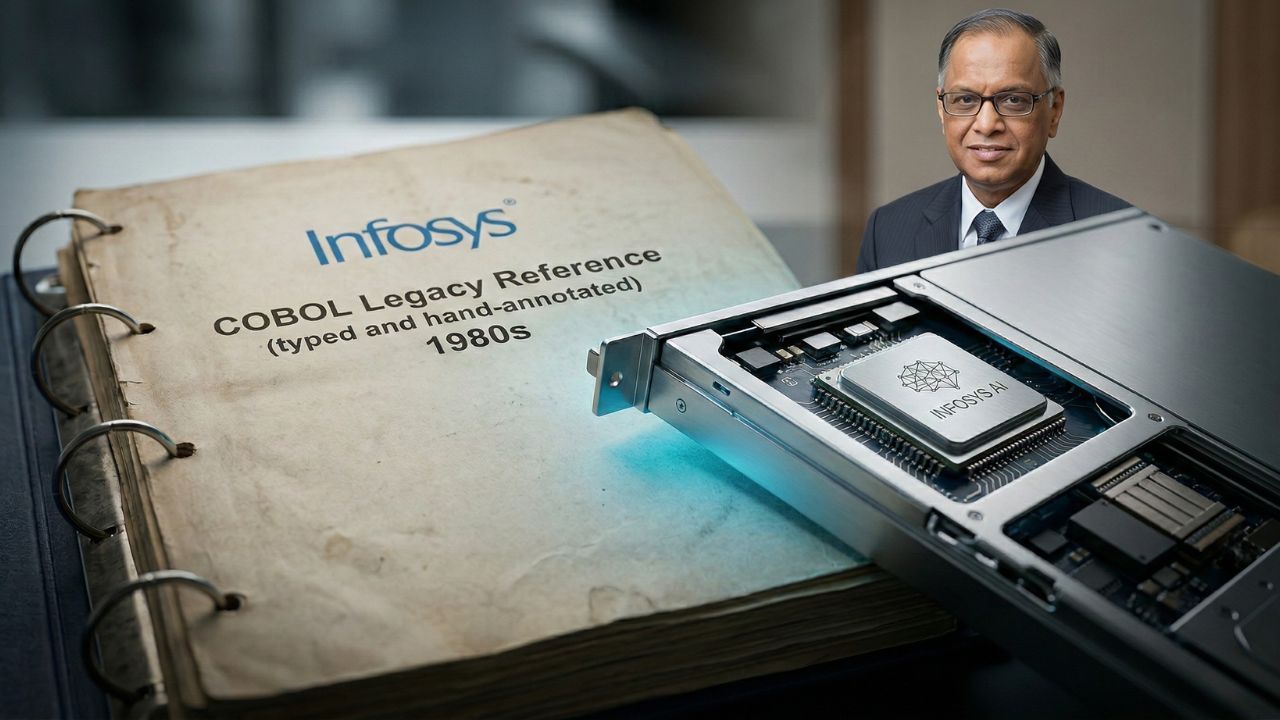
- The Hype Reality: Murthy labeled a significant portion of India's current AI products as "silly, old programs" hiding behind modern buzzwords.
- Job Security Paradigm: He categorized generative AI strictly as an assistive tool that amplifies human intelligence rather than an outright replacement.
- Market Context: The warning follows a massive tech sell-off triggered by Anthropic’s Claude automating legacy code, which heavily impacted giants like IBM.
- The Definition: True AI, according to the Infosys founder, relies on deep learning and neural networks to handle unsupervised algorithms.
Infosys founder N.R. Narayana Murthy just shattered the prevailing panic over AI-driven mass layoffs, dismissing the doomsday narrative as exaggerated noise. As global markets tremor over autonomous coding agents wiping out enterprise IT jobs, the billionaire pioneer insists the real danger isn't artificial intelligence—it's human complacency. This topic is critical for tech leaders and features prominently in our latest-leadership-news.
The "Silly, Old Programs" Epidemic
India’s tech ecosystem is currently drowning in superficial AI marketing, and Narayana Murthy is calling it out. Speaking at recent industry summits, the Infosys co-founder criticized companies for slapping the "AI" label on basic automation and traditional rule-based coding.
He drew a hard line on what qualifies as actual artificial intelligence. According to Murthy, genuine AI is built on machine learning for massive data correlation and deep learning that mimics the human brain through unsupervised algorithms. Anything less is merely a rebranded legacy system attempting to capitalize on the current tech frenzy.
Anthropic, IBM, and the Global IT Tremor
Murthy’s reality check arrives at a highly volatile moment for global IT services. US-based AI firm Anthropic recently launched workplace tools under its Claude platform capable of modernizing COBOL—a 1950s programming language that underpins global banking and government infrastructure.
The suggestion that AI could compress years of lucrative legacy modernization into mere minutes triggered a severe investor panic. IBM shares suffered their steepest one-day decline in over two decades. Investors immediately began shorting traditional IT service providers, fearing the immediate evaporation of consulting revenues.
Why Your Job Requires a "Smarter Mind"
Despite the Wall Street panic, Murthy pushed back against the fear of a white-collar apocalypse in his recent interview with Moneycontrol. He argued that AI does not automatically level the playing field.
Instead, it disproportionately rewards professionals who learn faster and think strategically. "A smarter mind will get better quality and better level of productivity from using these assistive technologies," Murthy stated. He demanded that young engineers stop viewing AI as an enemy and start treating it as an essential daily utility.
The Survival Economics of the AI Era
The future of the Indian IT sector hinges on adaptation, not resistance. Murthy’s message establishes a clear dividing line for the upcoming decade: employees who master AI tools will achieve a 10x productivity multiplier, while those who rely on outdated execution will become obsolete.
The enterprise software market will undergo a brutal correction. Companies faking their AI capabilities will face exposure, while engineers leveraging true deep-learning frameworks will command the next wave of corporate wealth. For developers and tech executives, the directive is absolute—master the foundational models or risk being outsourced to a machine.
Sources and References
- The Economic Times: US turbulence hits IT stocks; Narayana Murthy's AI warning
- Moneycontrol: Industry interviews addressing the integration of AI tools, legacy modernization, and Murthy's remarks on the necessity of a "smarter mind."