Google Stuns World: Sundar Pichai Unveils $15B ‘America-India Connect’ in Massive AI Pivot (February 2026)
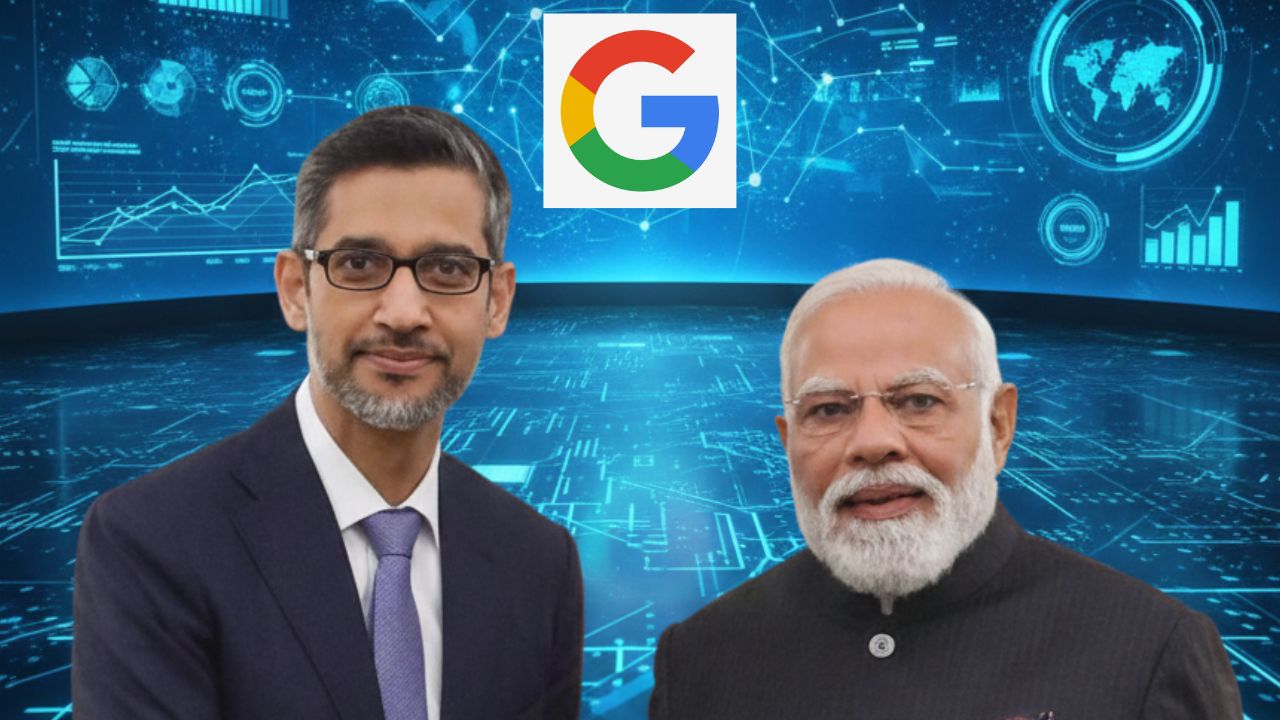
- $15 Billion Commitment: Google is deploying a massive five-year infrastructure plan focused on gigawatt-scale compute and cloud capacity across India.
- Vizag Global AI Hub: Visakhapatnam will anchor the initiative with a full-stack AI center and an international subsea cable landing station.
- America-India Connect: A newly unveiled initiative featuring four subsea fiber optic systems to link India directly with the U.S., Singapore, and Australia.
- Inclusive Innovation: Pichai emphasized that AI development must be "responsible," launching skilling programs to train millions.
Google CEO Sundar Pichai has ignited a global tech frenzy by announcing a staggering $15 billion investment to transform India into the world’s primary AI powerhouse. This announcement, part of the latest-leadership-news (February 2026), signals a decisive shift in the global technology landscape.
Speaking at the high-stakes India AI Impact Summit 2026, Pichai unveiled a full-stack AI hub in Visakhapatnam (Vizag) and a subsea fiber optic network designed to bridge the digital divide between the U.S. and the Global South. The move establishes India as a critical node in Google's long-term artificial intelligence strategy.
Google’s 'Homecoming' Mega-Deal
The announcement marks a historic shift in Google’s global strategy, placing India at the center of the artificial intelligence race. Sundar Pichai, reflecting on his student days traveling through Vizag, framed the coastal city as the future "global node" for AI.
The $15 billion investment is designed to build long-term foundational systems, including massive data centers for AI model training and storage. This aligns with the strategic shifts explored in the L&T & NVIDIA India AI deal regarding sovereign compute capacity.
At the heart of the "America-India Connect" project is a new subsea fiber optic gateway in Visakhapatnam. This infrastructure will strengthen India’s ties with Singapore, South Africa, and the U.S., creating a gigabit-speed backbone for next-generation AI services. Pichai noted that this platform shift is a "once in a generation scale" opportunity.
Inside the $15B Strategy: More Than Just Infrastructure
Google isn't just building cables; it’s embedding itself into India’s public sector. Through partnerships with Karmayogi Bharat, Google Cloud will provide digital infrastructure for more than 20 million public servants.
Additionally, a new Google Center for Climate Technology will leverage DeepMind’s science models to tackle local environmental challenges. This commitment to "responsible" AI echoes the themes of the India AI Summit Record regarding ethical technology benchmarks.
To ensure the workforce keeps pace with this rapid evolution, Pichai launched the Google AI Professional Certificate. This program aims to democratize AI literacy, ensuring that the "digital divide does not become an AI divide".
The initiative follows high-level meetings between Pichai and Prime Minister Narendra Modi, aligning with India's "Viksit Bharat 2047" vision for a developed nation. Similar high-level convergence was seen during the US-India AI Alliance announcements.
Frequently Asked Questions (FAQ)
Google CEO Sundar Pichai announced a $15 billion investment plan over five years focused on gigawatt-scale AI infrastructure and cloud capacity.
It is a newly unveiled infrastructure initiative featuring four subsea fiber optic systems designed to link India directly with the U.S., Singapore, and Australia.
Pichai named Vizag a global AI hub due to its strategic coastal location for subsea cable landings and its potential as a 'global node' for AI compute.
Why It Matters: The New AI Geopolitics
This move signals that the battle for AI supremacy is shifting away from Silicon Valley toward regional hubs with massive skilling pipelines. By naming Vizag a global AI hub, Google is betting that India’s combination of gigawatt-scale infrastructure and its 500-million-strong active user base will define the next 25 years of technology.
For the industry, this establishes a new blueprint for sovereign AI infrastructure that balances rapid innovation with national security and supply chain integrity. This transition mirrors the leadership shifts seen in the Microsoft Gaming CEO news where AI experts are taking the helm of massive divisions.