AI & DigiLocker: Using India Stack to Solve the Section 9 Child Gate
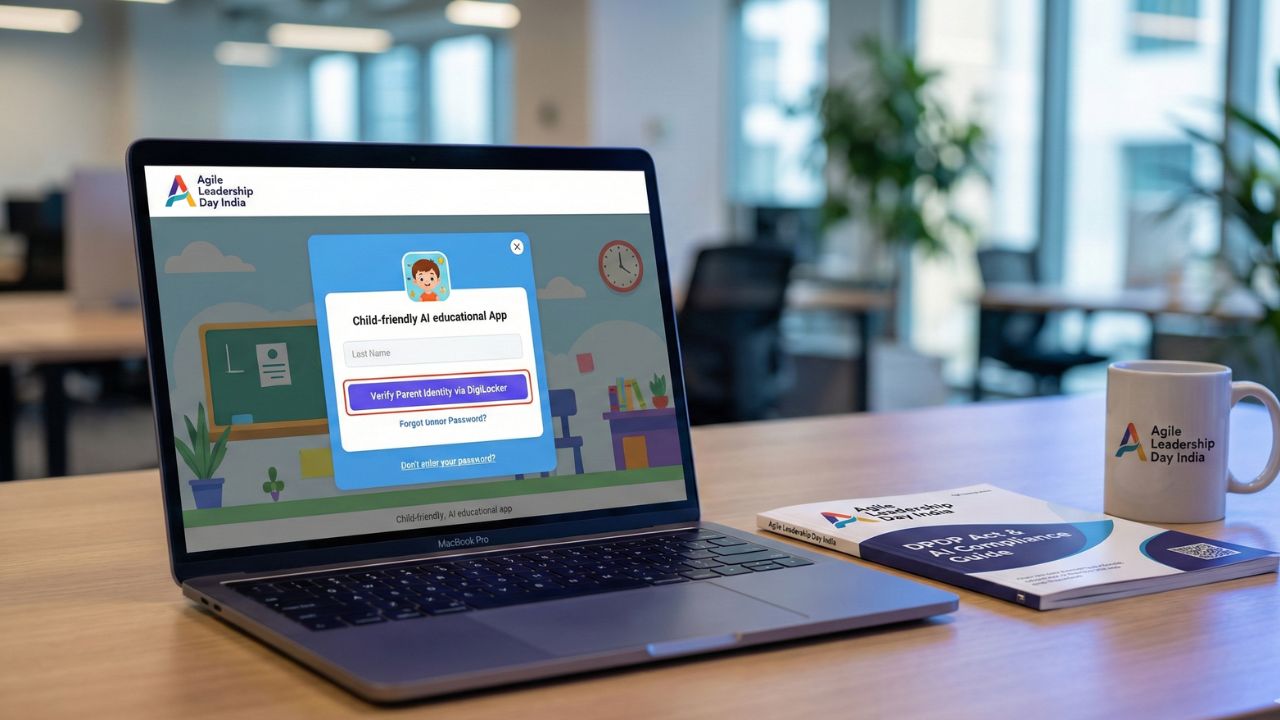
- The Section 9 Challenge: The DPDP Act mandates "verifiable parental consent" before processing any personal data of minors, a significant technical hurdle for AI apps.
- DigiLocker as the Key: Using the DigiLocker API allows AI agents to ping a parent's government-issued ID for age verification without storing the ID itself.
- Zero-Knowledge Proofs: Implement a "Yes/No" age check architecture. Your AI only needs to know if the user is over 18, not who they are.
- Tokenized Consent: Replace static checkboxes with dynamic, token-based consent logs linked to the parent's DigiLocker session.
- Reduced Liability: Offloading identity verification to India Stack (DPI) drastically reduces your own data fiduciary risks.
The "Child Gate" Problem in Indian AI
If you are building an AI tutor, a gaming bot, or a health assistant in India, you have a massive compliance roadblock: Section 9 of the DPDP Act 2023.
The law strictly prohibits tracking, behavioral monitoring, or targeted advertising for minors. More critically, it demands "verifiable parental consent" before your AI agent interacts with anyone under 18.
How do you verify a parent's identity digitally without becoming a data hoard yourself? The answer lies in India's Digital Public Infrastructure (DPI). This guide outlines the technical architecture for how to integrate ai agents with digilocker for dpdp compliance, turning a legal headache into a seamless user experience.
Note: This deep dive is part of our extensive guide on The DPDP Act & AI Compliance Guide 2026.
Step 1: The "Zero-Storage" Verification Flow
Traditional KYC involves users uploading photos of their PAN or Aadhaar cards. This is a privacy nightmare and increases your liability. Instead, integrate the DigiLocker API.
The Workflow:
- Trigger: The AI agent detects a potential minor (or defaults to an age-gate).
- Parental Ping: The app requests the user to authenticate via their parent's DigiLocker.
- The Handshake: Your system sends a request to the DigiLocker Gateway.
- The Response: DigiLocker returns a verified "Age Field" or a simple "Over 18: Yes/No" flag.
- No Storage: You log the transaction ID of the verification, not the ID document itself.
Step 2: Implementing "Verifiable Consent" Tokens
Section 9 requires consent to be verifiable. A simple "I am the parent" checkbox will not hold up in court. By using India Stack, you can generate a Consent Artifact. This is a digital token signed by the parent's verified DigiLocker session.
- Audit Trail: This token proves that a Verified ID (the parent) authorized the access for the Minor Account at a specific timestamp.
- Revocability: Parents can view and revoke these consent tokens via their own DigiLocker dashboard, giving them control and you compliance.
For robust backend management of these tokens, refer to our guide on DPDP Act Clauses for Data Processor Contracts to ensure your cloud providers respect these revocation signals.
Step 3: Privacy-Preserving Architecture (The "Clean Room")
Your AI model does not need to know the user's real name to personalize learning. Once the DigiLocker verification is complete, create a pseudonymous ID for the child.
- Input: Verified Parent Token + Child's Profile.
- Process: Hash the identity.
- Output: User_12345.
Your AI agent interacts only with User_12345. It never sees the Aadhaar data used for the gatekeeping. This "Clean Room" approach aligns perfectly with Algorithmic Transparency: Meeting the SDF Audit Standard in 2026, proving you have built safety by design.

Frequently Asked Questions (FAQ)
Register as a "Requester" with the Digital India Corporation. Use the API to request specific document attributes (like Date of Birth) from a user's verified documents (Aadhaar/PAN) without downloading the file.
It is a mechanism that proves, with a high degree of certainty, that the person granting consent is indeed the parent or guardian. DigiLocker's authenticated session provides this legal certainty.
No, and they shouldn't. The AI agent should only receive the metadata (e.g., "Age > 18") or the specific document context needed for a task, and only with explicit, granular user consent.
Use a middleware layer (an API Gateway). The LLM generates the need ("I need age verification"). The Gateway calls DigiLocker. The Gateway returns the result to the LLM context window. The LLM never touches the raw API.
Yes. The UIDAI allows "Offline XML" or tokenized usage for verification, which avoids the risks associated with storing raw Aadhaar numbers.
Implement a "Log in with DigiLocker" SSO (Single Sign-On). This authenticates the user using government-grade security without you having to build and secure your own password database.
MeitY emphasizes "Purpose Limitation." If you access DigiLocker for age verification, you cannot use that access to scrape financial data for ad targeting.
Use "Zero-Knowledge Proof" principles. Request a boolean answer ("Is Age > 18?") from the API rather than the data ("What is the Date of Birth?"). Store only the boolean confirmation.
Significantly. You shift the burden of identity verification to the government's infrastructure. If the ID is fake, the liability lies with the issuer/verifier chain, not your database.
When training AI on public data, use techniques that add statistical noise to dataset queries. This ensures that the model learns patterns (e.g., health trends) without memorizing individual citizen records.
Conclusion
Integrating how to integrate ai agents with digilocker for dpdp compliance is more than a legal checkbox. It is a strategic advantage. It allows you to unlock the massive "under-18" market in India—education, gaming, skills—while staying safely behind the shield of India's Digital Public Infrastructure.
You get verified users; parents get peace of mind.
Sources & References
- Digital Personal Data Protection Act, 2023 (Section 9).
- DigiLocker API Documentation (Government of India).