Duties of Grievance Redressal Officer: Your 2026 DPDP Compliance SOPs
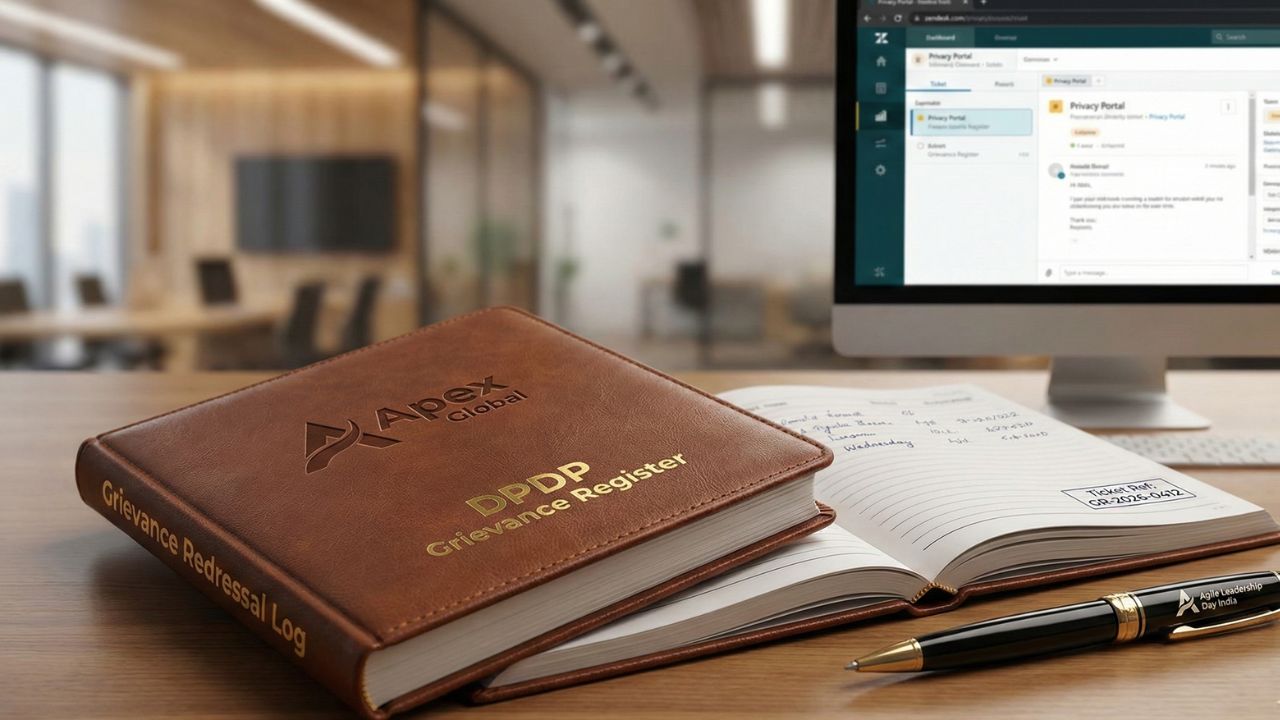
- Mandatory Role: Every Data Fiduciary, regardless of size, must appoint a Grievance Redressal Officer (GRO); it is not optional.
- The "Front-Line" Defense: The GRO is the first point of contact for Data Principals before they can approach the Data Protection Board.
- Strict Timelines: You must implement workflows that ensure grievances are acknowledged within 24-48 hours and resolved within the statutory period (typically 30 days).
- Personal Liability: Negligence in handling grievances can lead to penalties directly impacting the fiduciary's standing.
- Tech Integration: Modern GROs must use ticketing systems (Jira/Zendesk) and AI triage to handle volume effectively.
Moving Beyond the "Privacy@Company" Email
For years, grievance redressal in India was often a generic email address that no one checked. Under the Digital Personal Data Protection (DPDP) Act 2023, this negligence is now illegal. The duties of grievance redressal officer under dpdp act are codified and critical.
This officer is the statutory face of your company to the Indian public. If a user cannot find a clear way to complain, or if their complaint is ignored, you are immediately non-compliant. This guide outlines the Standard Operating Procedures (SOPs) for the GRO role, shifting from passive email monitoring to active resolution cycles.
Note: This deep dive is part of our extensive guide on The DPDP Act & AI Compliance Guide 2026.
SOP 1: The Intake & Triage Protocol
The GRO's first duty is accessibility. Your contact details must be prominently published in your privacy notice and on your website.
The Workflow:
- Omnichannel Entry: Accept grievances via email, app support bots, and web forms.
- AI Triage: Use AI agents to categorize the complaint immediately. Is it a "Right to Erasure" request or a complaint about "Algorithmic Bias"?
- Acknowledgment: Send an automated, ticketed response immediately containing a unique reference number.
If the grievance involves complex AI decision-making, you may need to consult your Algorithmic Transparency: Meeting the SDF Audit Standard in 2026 protocols to explain the outcome to the user.
SOP 2: The Resolution Timeline (The "Ticking Clock")
Unlike the GDPR which allows for extensions, Indian regulations favor speed. While specific timelines may vary based on sector rules, the industry standard under DPDP is a 30-day resolution window.
Critical Checkpoints:
- Day 1: Ticket logged and categorized.
- Day 3: Initial assessment of validity (KYC of the complainant).
- Day 15: Internal investigation complete (e.g., checking with the engineering team about a data leak).
- Day 28: Final response drafted and legal review.
- Day 30: Closure or update sent to Data Principal.
SOP 3: Managing Vendor-Related Grievances
What if the grievance is caused by a third-party SaaS vendor you use? The Data Principal complains to you, the Fiduciary, not your vendor. You must have backend SLAs with your processors to get answers fast.
Ensure your contracts reflect this urgency by reviewing our guide on DPDP Act Clauses for Data Processor Contracts: Protect Your Liability. You cannot tell a user "our vendor is slow" as an excuse.
SOP 4: The Mandatory Grievance Log
You must maintain a "Grievance Register" that is audit-ready at any moment.
Data Points to Log:
- Date of Receipt.
- Category (Consent Withdrawal, Correction, Erasure, etc.).
- Action Taken.
- Date of Resolution.
- Reason for Rejection (if applicable).
This log is your primary defense if a user escalates the matter to the Data Protection Board (DPB).

Frequently Asked Questions (FAQ)
Any senior employee capable of representing the company. Unlike the Data Protection Officer (DPO), the GRO does not necessarily need deep legal expertise, but they must have the authority to command internal teams to fix issues.
For "Significant Data Fiduciaries," the Data Protection Officer must be based in India. For the Grievance Officer, while the Act allows flexibility for standard fiduciaries, best practice implies an Indian presence to handle local legal notices and language nuances effectively.
The DPO is strategic; they ensure overall compliance, conduct audits, and advise leadership. The GRO is operational; they handle external complaints from users. In smaller firms, one person may hold both titles, but the duties are distinct.
While the Act allows the government to prescribe specific timelines, the general expectation is prompt redressal, typically interpreted as 30 days (aligned with IT Rules 2021 precedents) or 72 hours for breach-related concerns.
Yes, and they should. AI can filter spam, categorize requests (e.g., "Financial Dispute" vs. "Privacy Request"), and route them to the correct department. However, the final decision on a grievance usually requires human oversight.
Do not hide it. It should be in the footer under "Privacy Center" or "Grievance Redressal." You must publish the Name, Title, Email, and physical correspondence address.
Create a dedicated "Privacy Portal" ticket tag. Configure SLAs in Zendesk to trigger "Breach Warnings" to senior management if a ticket remains open past 25 days.
Generally, liability falls on the company (Data Fiduciary). However, if the GRO is found to be willfully negligent or aids in covering up a breach, they could face internal disciplinary action or be named in regulatory proceedings.
This is done by the user, not the GRO. If the GRO rejects a grievance, the user can appeal to the DPB. Therefore, your rejection email must be legally sound and factually accurate.
You must keep a secure, immutable log of every complaint received, the investigation steps taken, and the communication history with the user. This is evidence.
Conclusion
Defining the duties of grievance redressal officer under dpdp act is the first step toward building a responsive, trust-based organization. This role is no longer a passive title; it is the engine of your customer trust architecture. By implementing these SOPs, you ensure that small complaints do not snowball into massive regulatory penalties.
Sources & References
- Digital Personal Data Protection Act, 2023 (Section 13).
- Information Technology (Intermediary Guidelines) Rules, 2021 (for timeline precedents).