AI Security Management: An Executive's Guide (2026)
- The Literacy Gap: Over 60% of executives acknowledge a critical lack of defense against AI-driven social engineering.
- Agentic AI Risk: Unmanaged autonomous agents (Shadow AI) represent the fastest-growing attack surface for modern enterprises.
- IP Protection: Fragmented enterprise data ecosystems remain vulnerable to "harvest now, decrypt later" campaigns.
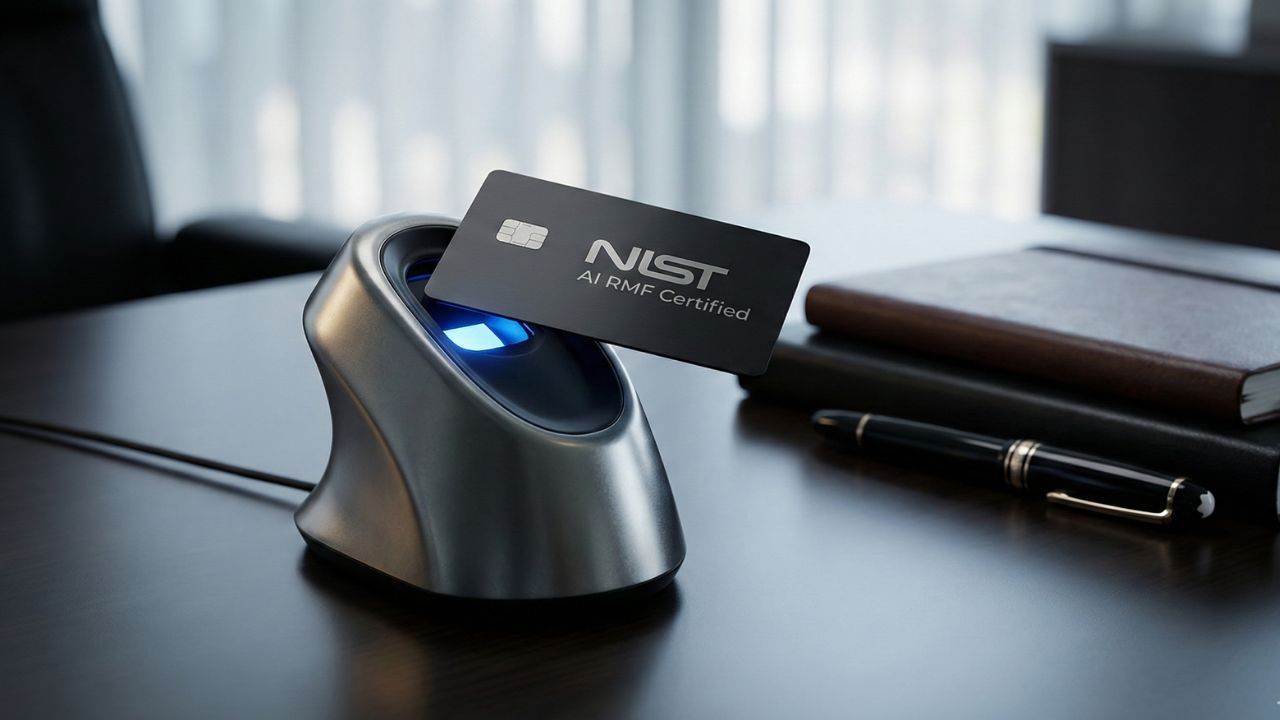
- Certification Standard: The NIST AI Risk Management Framework (RMF) 1.0 is the recognized blueprint for resilient AI governance.
- Strategic Foundation: Mastering proactive security is the required foundation for broader organizational AI integration.
Introduction: The Transition to High-Stakes Governance
The era of experimental AI has ended, replaced by a complex, global security battleground. This guide expands on our core overview of the best AI leadership training programs, detailing the mandatory security principles leaders must adopt.
As organizations integrate autonomous agents into operational workflows, 63% of cybersecurity professionals cite AI-driven social engineering as their top threat. Understanding advanced AI security management for executives is no longer just technical competency—it is a fiduciary duty for the modern board of directors.
While technical teams handle pipeline implementations, strategic leaders must bridge the gap between product innovation and the evolving threat landscape. Whether you are exploring top AI leadership courses in India or AI management programs in the USA, a secure foundation is essential.
The 2026 Threat Landscape: Beyond Firewalls
Traditional perimeter defenses fail against machine learning vulnerabilities. The defensive focus must shift to protecting the integrity of the models themselves.
1. Data Poisoning and Model Manipulation
Attackers use data poisoning to corrupt training datasets. By injecting falsified entries, they erode an AI system's judgment, causing it to misclassify threats or overlook internal malicious behavior.
Enterprise leaders should mandate "Secure by Design" architecture, treating data pipelines as critical infrastructure.
2. The Rise of "Agentic AI" Shadow Risks
Shadow AI involves unsanctioned generative models and autonomous agents deployed by business teams without security oversight. These rogue agents often possess excessive permissions, creating data exfiltration channels that bypass standard network logic.
- Continuous Visibility: Mandate dynamic inventories of all agents operating within the corporate network.
- Identity Governance: Treat every AI agent as a unique identity, restricted by strict "least privilege" access protocols.
Architecting Resilience: NIST AI RMF 1.0
The NIST AI Risk Management Framework (RMF) 1.0 has emerged as the definitive standard for enterprise AI security governance. It provides a structured approach across four core functions.
| Core Function | Executive Focus & Outcomes |
|---|---|
| Govern | Establish risk culture, ensure accountability, and define corporate policies for AI lifecycle oversight. |
| Map | Identify AI systems, technical dependencies, and contextualize systemic risks before deployment. |
| Measure | Assess the trustworthiness, accuracy, and fairness of model outputs through continuous auditing. |
| Manage | Implement tested incident response playbooks for recovery following algorithmic breaches. |
Achieving genuine AI-driven decision intelligence for executives requires this secure data foundation to prevent strategic errors based on compromised information.
Geopolitics and Executive Threat Profiles
Geopolitical tensions have weaponized generative technology into a tool for corporate espionage. Executives are targets for "deepfake" impersonation attacks—where adversaries clone a leader's voice or video presence to authorize fraudulent wire transfers or extract intellectual property.
Comprehensive executive training must include simulated AI-driven social engineering exercises and the adoption of "Zero Trust" configurations extending to personal and home networks.
Integrating these protocols into a certificate in AI enabled project management ensures security is baked into the project lifecycle from day one.
AI Security Training and Frameworks Compared
Executives have three practical routes into AI security governance, ranging from a free framework primer to a full audit-grade credential.
| Certification / Framework Training | Best For | Format & Typical Cost | What It Proves |
|---|---|---|---|
| NIST AI RMF Practitioner Training | Leaders needing the recognized governance framework baseline | Self-paced modules; low-to-moderate cost | Structured knowledge of the Govern-Map-Measure-Manage functions |
| ISACA / Certified AI Security-Track Credentials | Security-adjacent leaders wanting a formal, audit-grade credential | Instructor-led plus exam; higher cost | Rigorous, auditable AI risk and controls competency |
| ALDI Agile AI Leadership Certification | Executives wanting a fast, affordable governance on-ramp | Cohort-based; budget-friendly | Working knowledge of zero-trust governance and Agentic AI oversight basics |
Our Verdict
If you need the industry-recognized governance baseline, start with NIST AI RMF Practitioner Training — it's low-cost and maps directly to board reporting. If your role requires a formal, audit-grade credential, an ISACA-track certification carries more weight with compliance teams, at a higher cost. If you want a fast, affordable way to build working knowledge of zero-trust governance and Agentic AI oversight before committing to either, the ALDI Agile AI Leadership Certification is the practical starting point.
Want a Practical AI Governance On-Ramp?
ALDI's Agile AI Leadership Certification gives executives a fast, affordable way to build zero-trust governance and Agentic AI oversight skills before pursuing a formal security credential.
Explore the ALDI CertificationFrequently Asked Questions (FAQ)
Primary risks include targeted AI-driven social engineering, data poisoning of training models, unmanaged Agentic AI deployments, and 'harvest now, decrypt later' cryptographic attacks.
Monitor for cloud infrastructure drift, undocumented spikes in API costs, and anomalous internal DNS queries attempting to reach public AI service domains.
Boards must institutionalize top-down AI governance, demand continuous algorithmic auditing, allocate defensive budgets, and keep AI risk as a standing corporate agenda item.
Implement strict data classification, monitor model behavior for prompt injection leaks, and use encrypted, network-segmented training environments.
Yes, major providers like Google and Microsoft offer free introductory courses on AI security fundamentals. However, technical certifications like the NIST AI RMF require rigorous study and paid exams.
Conclusion
Mastering advanced AI security management represents a critical frontier of enterprise transformation. The competitive market advantage belongs to leaders who view cybersecurity as a foundational enabler of trust and velocity.
By aligning with frameworks like the NIST AI RMF and neutralizing "Shadow AI," executives can ensure their organizational innovation remains resilient.
Sources & References
- Agile Leadership Day India: Ultimate Guide to AI Leadership Training Programs
- Internal Pillar: AI Driven Decision Intelligence for Executives
- Internal Pillar: Certificate in AI Enabled Project Management
- Gartner Insights: Top Cybersecurity Trends & Predictions
- National Institute of Standards and Technology (NIST): AI Risk Management Framework 1.0
- SentinelOne Threat Intelligence: AI Security Risks and Threat Landscape