Agile Product Discovery Tools: Stop Building Features That No One Wants
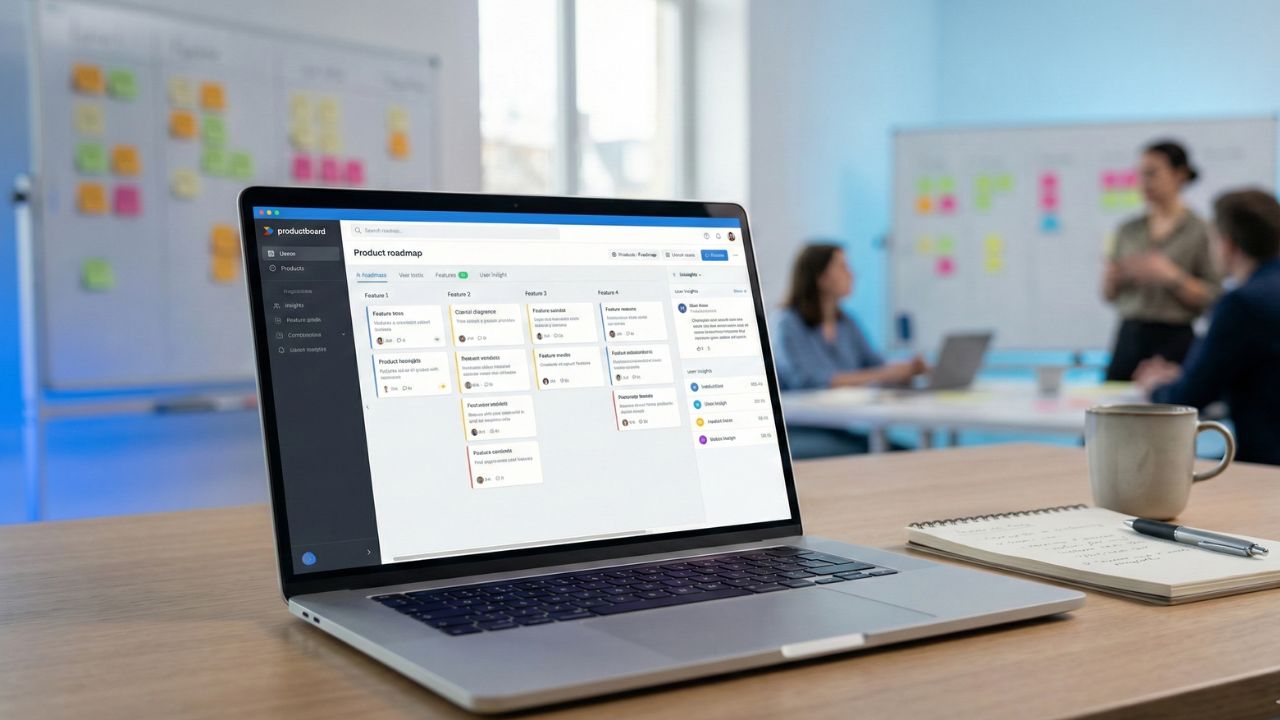
- Validate First: The best tools shift focus from "how fast can we build" to "should we build this at all," preventing wasted dev cycles.
- Dual-Track Agile: Effective software supports parallel tracks: Discovery (Product Managers/Designers) and Delivery (Developers).
- Visual Mapping: Top contenders use Opportunity Solution Trees (OST) to map customer pain points directly to potential features.
- Integration is Key: Look for tools that push validated ideas directly into Jira or Azure DevOps to maintain a seamless workflow.
- Continuous Feedback: Automating the flow of user insights into your backlog is critical for maintaining a "healthy backlog via discovery."
Great products aren't built by accident; they are discovered. Finding the right tool for this phase is a critical component of choosing the best agile project management software ecosystem. Most agile teams are efficient delivery machines, but they often deliver the wrong things.
Without dedicated agile product discovery tools for product managers, you risk becoming a "feature factory"—shipping code that creates zero value for the customer. To stop building features no one wants, you need a tech stack that facilitates Continuous Discovery. This means moving beyond simple backlog management to a rigorous process of hypothesis testing, user interviewing, and opportunity mapping before a single line of code is written.
Escaping the "Feature Factory" Trap
Standard project management tools are built for execution. Discovery tools are built for validation. When you lack a discovery layer, your backlog becomes a flat list of requirements with no context. This leads to bloated codebases, higher maintenance costs, and team demoralization.
By implementing agile product discovery tools for product managers, you ensure that every Sprint contributes directly to customer value, not just output. These tools act as a shield, protecting your engineering team from working on low-value ideas.
The "Why" Before The "What": Essential Tool Capabilities
When evaluating software for this phase, prioritize these three specific capabilities.
1. Opportunity Solution Mapping
You need a visual workspace to connect business outcomes to user problems. Flat backlogs don't show the "why." Look for tools that allow for Opportunity Solution Trees. This visualizes the path from a desired outcome (e.g., "Increase Retention") to the specific opportunity (e.g., "Users can't find reports") and the proposed solution.
2. User Insight Repositories
Where do your user interview notes live? If the answer is "Google Docs" or "Slack," you have a data silo problem. The best software acts as a searchable repository for every customer interaction. You must be able to tag snippets of conversation (e.g., "Pricing complaint," "Feature Request") and aggregate them to spot trends.
3. The "Push to Delivery" Sync
Discovery cannot happen in a vacuum. Once an idea is validated, it must flow seamlessly into your delivery tool. Look for one-click handoffs that turn a "Validated Opportunity" in your discovery tool into a "User Story" in Jira or Linear. Traceability is key; you should be able to click a Jira ticket and link back to the original user interview that spawned it.
Pro Tip: Validating ideas early saves money. If you want to quantify exactly how much, check out our guide on How to Calculate ROI of Agile Transformation to see the cost savings of reduced waste.
Top Contenders for Agile Discovery
While general whiteboard tools are popular, dedicated product management platforms offer deeper structured data handling.
- Productboard: Best For consolidating user feedback from multiple channels (Zendesk, Slack, Email). It forces Product Managers to link every feature on the roadmap back to specific user insights.
- Dovetail: Best For managing user interview notes and video analysis. It uses AI to transcribe interviews and allows you to share a "highlight reel" of users struggling with a feature directly with your engineering team.
- Miro / Mural: Best For visual collaboration and Opportunity Solution Trees. While unstructured, these are the industry standard for the "messy" early stages of brainstorming.
Prioritization: The Bridge to Delivery
Once you have a list of potential solutions, don't rely on gut feeling. Use tools that bake in prioritization frameworks like RICE (Reach, Impact, Confidence, Effort) or the Kano Model (Delighters vs. Basic Expectations). Automating this scoring process ensures that high-value, low-effort items bubble to the top of your backlog.
For larger organizations managing these priorities across 50+ teams, alignment becomes even more critical. Read more in our article on Best Agile Software for Scaled Agile Framework to see how discovery scales.

Frequently Asked Questions (FAQ)
What are the best tools for Agile product discovery?
Top dedicated tools include Productboard (for roadmapping and feedback), Dovetail (for research repositories), and Miro (for visual mapping).
How to integrate user feedback into my Scrum backlog?
Use a tool like Productboard or Jira Product Discovery that acts as a "holding tank." Triage feedback there, validate it, and only then push it to the Scrum backlog as a refined User Story.
What is the best software for opportunity solution mapping?
Miro and Mural are the leaders here. They offer pre-built templates for Teresa Torres’ Opportunity Solution Tree structure, allowing teams to map outcomes to solutions collaboratively.
How to link product discovery insights to Jira tickets?
Most modern discovery tools (like Productboard or Aha!) offer native 2-way sync. This allows developers to see the "User Insight" field directly inside the Jira issue, giving them context on why they are building the feature.
Can Miro be used as an agile discovery tool?
Yes, absolutely. While it lacks a database structure, it is excellent for the ideation and mapping phases. Many teams use Miro for the "thinking" and Jira for the "tracking."
What is the cost of poor product discovery in Agile?
The cost is "waste"—building features that go unused. This leads to bloated codebases, higher maintenance costs, and team demoralization.
How to manage user interview notes in a Scrum workflow?
Store them in a repository like Dovetail or Notion. Tag insights and link the specific URL of the insight to the related Epic in your Scrum board for easy reference.
What are the best prioritization frameworks for Product Managers?
RICE (Reach, Impact, Confidence, Effort) and WSJF (Weighted Shortest Job First) are the most effective for agile teams.
How to automate feature validation in my tracking software?
Use "Fake Door" tests or A/B testing tools (like Optimizely) linked to your backlog. If a feature doesn't hit a usage metric in the "experiment" phase, the software can auto-flag it for removal.
Is there a dedicated app for continuous discovery?
Jira Product Discovery is a newer entrant specifically designed to live alongside Jira Software, supporting the continuous discovery habits of identifying and validating ideas before delivery.
Sources & References
- Best Agile Project Management Software
- Scrum Management Tools (Healthy backlog via discovery)
- How to Calculate ROI of Agile Transformation
- Best Agile Software for Scaled Agile Framework
Great products aren't built by accident; they are discovered. The right agile product discovery tools for product managers act as a shield, protecting your engineering team from working on low-value ideas. By implementing a dedicated discovery layer in your tech stack, you ensure that every Sprint contributes directly to customer value, not just output. Start validating your hypotheses today and build the future your users actually want.