Integrate AP2: 7 Steps to Accept Agent Payments
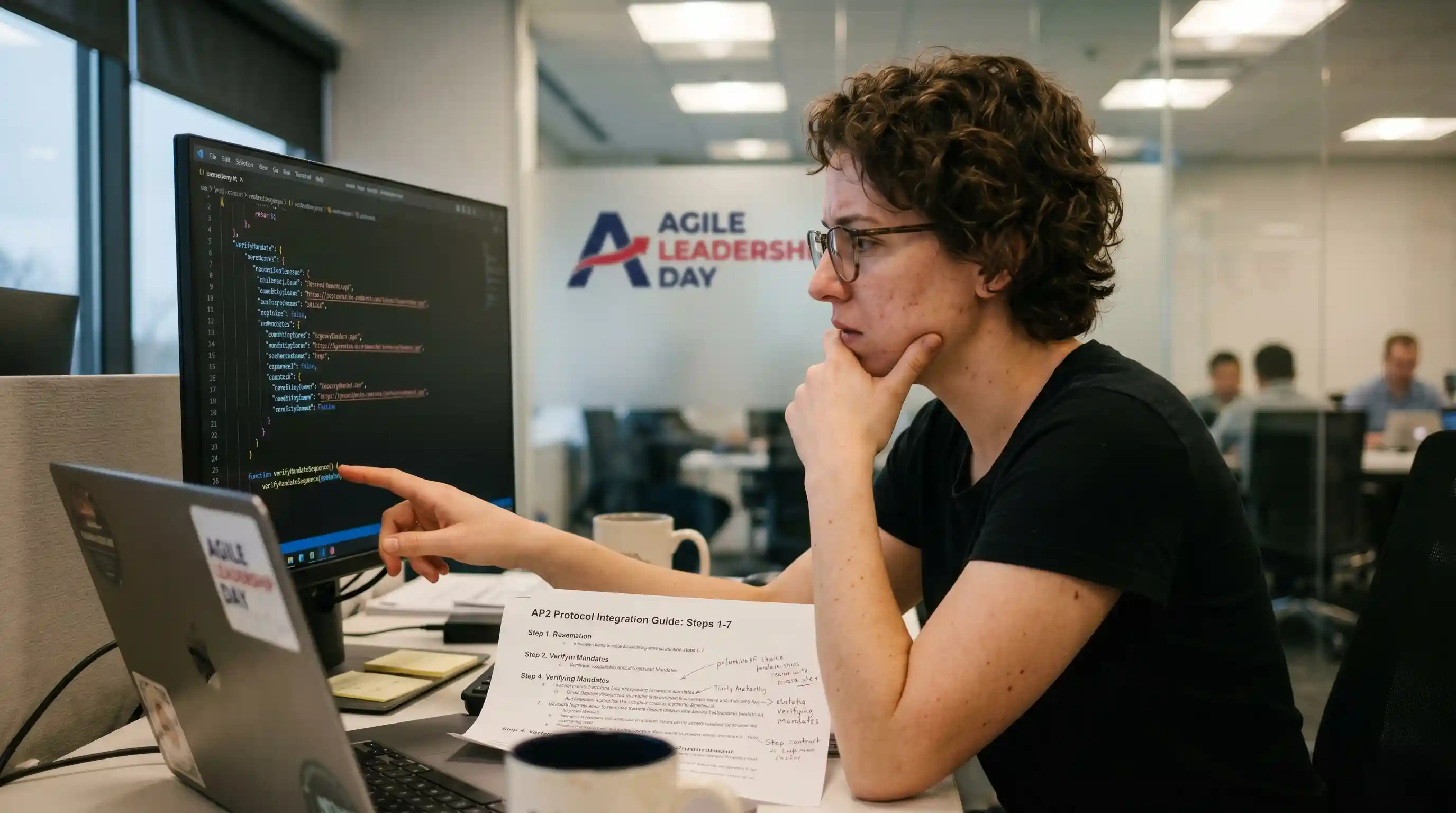
- The Dispute Trap: Failing to properly verify the three cryptographic mandates at checkout leaves merchants completely liable for unauthorized agent purchases.
- Authorization vs. Settlement: AP2 handles authorization (proving the human approved the spend); you must still pair it with a dedicated settlement rail like cards or stablecoins.
- Interoperability: AP2 natively composes with checkout layer protocols (like ACP and UCP) and discovery protocols.
- Mandatory Verification: Step 4—verifying the Intent, Cart, and Payment mandates—is the non-negotiable core of AP2 integration.
How to integrate AP2 for merchants comes down to a harsh reality: dodge the dispute trap, or pay the price. Skip step four in the integration sequence, and every single sale you process is instantly contestable.
As the volume of machine-to-machine purchasing accelerates into the trillions, exposing a programmatic cart is not enough. You must legally and cryptographically secure your revenue.
To do this, enterprises must build a robust architecture across all layers of the agentic commerce AI agent payment protocols stack.
This technical deep dive breaks down the exact seven steps required to safely accept automated purchases, verify cryptographic consent, and wire your underlying settlement networks.
The Prerequisites for AP2 Merchant Integration
Before you can authenticate a machine's right to spend money, your digital storefront must be fully accessible to that machine.
Agentic integration requires decoupling your visual storefront from your transactional database.
Step 1: Establish Machine-Readable Product Data
AI agents do not browse human-facing web pages. They query structured data feeds.
Before touching AP2, your product catalog must be exposed via machine-readable endpoints containing real-time price, availability, attributes, and compliance data. Clean data is the entry ticket.
For a deeper understanding of how these early-stage discovery layers operate, review our breakdown on MCP vs A2A vs ACP protocols.
Step 2: Expose a Callable Checkout Endpoint
Once an agent discovers your product, it needs a way to build a cart without a mouse or keyboard.
Merchants must expose a callable checkout endpoint using a Layer 2 protocol like OpenAI’s ACP or Google’s UCP.
These protocols handle the assembly of the cart. AP2 will then sit directly behind this endpoint to secure the final authorization.
Core AP2 Integration & The Dispute Trap
The core of AP2 lies in its authorization mechanics. It is an open standard backed by over 60 partners, designed to prove that a human actually delegated spending authority to an AI.
Step 3: Implement the AP2 API Schema
Your engineering team must download the official AP2 JSON-Schema definitions from the AP2 foundation's GitHub.
These schemas govern the webhooks your checkout engine will use to request and parse incoming authorization payloads from the AI agent.
Your server must be configured to accept W3C Verifiable Credentials, which is the underlying format for all AP2 data.
Step 4: Verify the 3 Signed Mandates (The Critical Trap)
This is the step that dictates your liability. Google's AP2 represents every agent purchase as a chain of three cryptographically signed statements.
Your integration must sequentially verify the intent mandate cart mandate payment mandate chain.
If your server accepts a payment without verifying the exact chronological order of these mandates, the chain breaks.
The resulting transaction is immediately contestable in a dispute, and your merchant account absorbs the financial loss.
Settlement and Final Testing
AP2 is an authorization layer, not a payment network. To actually receive funds, you must bridge the AP2 framework to a settlement rail.
Step 5: Wire Your Settlement Rail
Once your server successfully validates the AP2 mandates, it must route the transaction to a settlement provider.
You must select the rail based on the use case. Consumer purchases typically ride standard card networks.
For sub-cent machine-to-machine API traffic, your integration should route to stablecoin protocols like x402.
Step 6: Configure Dispute and Chargeback Webhooks
Because agentic commerce lacks explicit regulatory laws in 2026, liability lives in your contracts and your audit trails.
Configure your database to permanently retain the signed AP2 mandate chains.
In the event of a chargeback, your dispute resolution webhook will automatically submit these verifiable credentials to the card network, proving the agent had human authorization.
Step 7: Test the Agent Payment Flow in Sandbox
Never push an AP2 integration to production without running full simulated agent flows.
Use sandbox environments to trigger incomplete mandate chains, simulate dynamic pricing errors between cart assembly and payment, and verify that your system successfully rejects unmandated checkout attempts.
Conclusion & CTA
Integrating the AP2 protocol is the definitive line between a scalable automated revenue channel and a catastrophic liability risk.
By rigidly enforcing the validation of cryptographic mandates at checkout, you ensure your enterprise is protected from the coming wave of agentic payment disputes.
Don't wait for a costly chargeback to expose your infrastructure flaws—audit your API checkout endpoints and begin implementing the AP2 schema today.

Frequently Asked Questions (FAQ)
Merchants integrate AP2 by exposing machine-readable product feeds, setting up a callable checkout endpoint (via ACP or UCP), and configuring server-side webhooks to receive and validate the three cryptographically signed AP2 mandates before routing to a settlement rail.
You need an API-first checkout engine capable of processing W3C Verifiable Credentials, a structured real-time product data feed, and a direct connection to a settlement layer like traditional card processors or stablecoin networks (e.g., x402).
Your backend must cryptographically check the signatures of the Intent, Cart, and Payment mandates provided by the agent. You must verify they chain correctly and that the final cart contents strictly match the human's original Intent parameters.
The choice depends on your target audience. Consumer retail agent purchases typically settle over legacy card rails via processors like Stripe, while high-velocity, machine-to-machine micropayments are best paired with stablecoin protocols like x402.
Developers use the AP2 sandbox environments provided by the AP2 GitHub repositories. You must simulate agent traffic, testing both successful mandate chains and intentionally broken signatures to ensure your system properly rejects unauthorized transactions.
Yes. ACP (Agentic Commerce Protocol) handles the Layer 2 checkout process (assembling the cart), while AP2 handles the Layer 3 authorization (proving the human consented). They compose together to complete a single transaction.
For enterprises with modern, API-first checkout infrastructure, integration can take a few sprints. The heaviest lift is usually structuring legacy product catalogs into real-time, machine-readable feeds that autonomous agents can successfully parse.
The most fatal mistake is skipping Step 4—failing to rigorously verify and log the three signed mandates. If you bypass mandate verification, you forfeit your cryptographic proof of authorization, leaving you fully exposed to chargeback disputes.
When a dispute occurs, you extract the retained Intent, Cart, and Payment mandates from your database. You submit these W3C Verifiable Credentials to the payment network or acquiring bank as definitive proof that the human user authorized the specific agent spend.
The official, open-source specifications, JSON schemas, and integration guidelines for the AP2 protocol are maintained by the core working group and can be accessed directly via their public GitHub repositories.