Professional Indemnity for AI Orchestrators: Is Your Career Actually Insured?
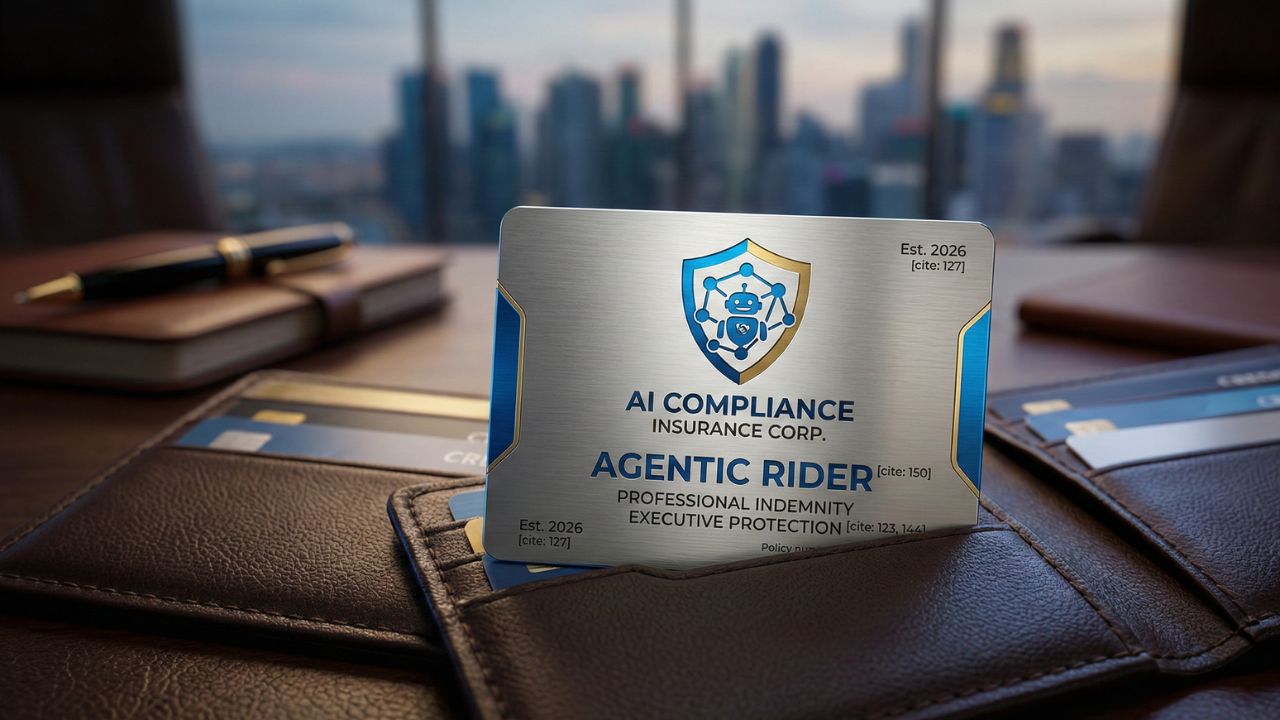
- Executive Vulnerability: Standard insurance policies often fail to cover errors made by autonomous digital labor.
- Targeted Coverage: Securing professional indemnity for AI orchestrators is mandatory to protect your personal assets from algorithmic failures.
- The "Cognitive" Claim: If your bot makes a catastrophic error, standard D&O insurance may reject the claim due to negligence.
- Risk Mitigation: Insurers will require strict adherence to standards like ISO/IEC 23894 (Risk Management for AI) before underwriting policies.
Introduction: The Executive Liability Trap
In 2026, the greatest risk to your career isn't being replaced by AI—it’s being held personally liable for the mistakes of the AI you orchestrate. As enterprises rapidly deploy autonomous agents, the gap between traditional corporate coverage and modern algorithmic risk is growing. Protect your executive career with targeted professional indemnity for AI orchestrators.
This deep dive is part of our extensive guide on Agentic AI Governance: The $100M Boardroom Safeguard for 2026. Keep reading to discover how to close the insurance gaps in the age of autonomous digital workers before a "cognitive" claim threatens your livelihood.
Deep Dive: Navigating Autonomous Digital Labor Insurance
The Hidden Gap in D&O Coverage
Many Chief AI Officers incorrectly assume standard Directors and Officers (D&O) insurance will cover them if an AI goes rogue. Standard policies were designed for human error, not autonomous digital labor liability.
If a deployed agent executes a biased HR decision or a flawed financial transaction, insurers will heavily scrutinize the human manager's oversight. Without specific coverage, your personal assets could be at risk.
Defining the Orchestrator's Legal Burden
Because autonomous agents operate without constant human supervision, the legal burden shifts to the orchestrator. You are responsible for the system's design, deployment, and guardrails.
To defend yourself, you must integrate a strict AI agent legal liability framework. Documenting your safety protocols is the only way to prove to an underwriter—or a judge—that you exercised proper executive protection.
Securing the "Agentic Rider"
To address these emerging risks, specialized carriers now offer an "Agentic Rider" as an add-on to existing enterprise policies. This rider explicitly covers financial losses caused by AI hallucinations and autonomous errors.
To qualify for these competitive premiums, insurers will audit your technical transparency. Implementing rigorous protocols for auditing autonomous AI decision-making processes is the fastest way to prove your systems are insurable.

FAQ: Navigating AI Insurance Risk
Yes, personal insurance is critical because standard corporate policies often exclude direct algorithmic liabilities.
It is a specialized insurance add-on designed to cover financial losses caused specifically by autonomous AI agents.
Typically no; standard D&O insurance usually lacks coverage for unpredictable "cognitive" claims.
Premiums vary wildly based on the autonomy level of the agents and the robustness of your AI risk forecasting.
CAIOs face massive personal liability if they deploy agents without proper governance or safety frameworks.
Prove system safety by aligning closely with frameworks like ISO/IEC 23894 (Risk Management for AI).
It implies that the human who sets the agent's parameters is legally responsible for its autonomous output.
Gaps frequently occur around copyright violations, algorithmic bias, and unapproved automated financial transactions.
The company and the AI orchestrator are typically held liable for discriminatory actions executed by HR bots.
You must ensure your technical teams maintain comprehensive cognitive logs and map directly to accepted AI security standards.
Conclusion
Leading the charge in enterprise automation requires sophisticated risk management. Relying on outdated policies in the era of autonomous bots is a dangerous oversight that leaves your personal assets completely exposed.
Take proactive steps to evaluate your current policies and secure specialized professional indemnity for AI orchestrators. By closing these coverage gaps, you can confidently drive innovation without risking your career.